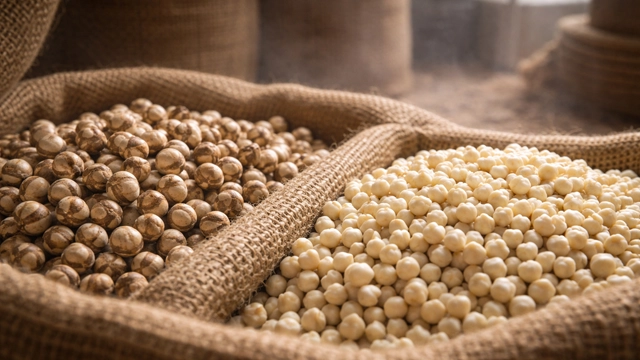
New Study Reveals Dynamic Fungal Shifts and Toxin Production in Herbal Grain Under Heat and Humidity
When Functional Food Meets Fungal Risk
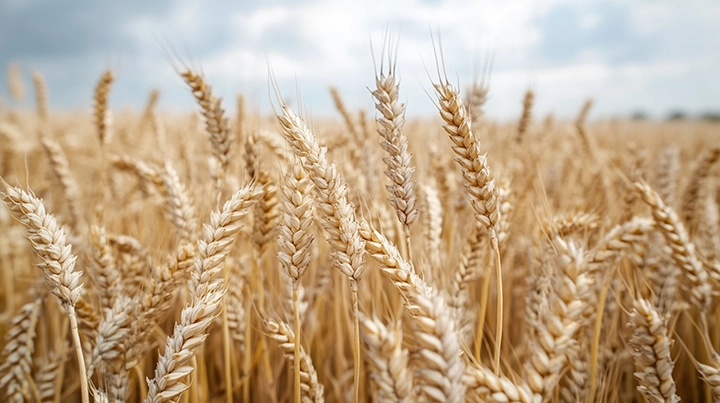
Coix seed—better known as Job’s tears or 薏苡仁 (Yìyǐrén)—holds a special place at the crossroads of traditional medicine, global wellness, and modern agriculture. It is celebrated as both food and healing grain, and its story stretches across centuries and continents. Yet, as a recent study by Guo et al. (2025) makes clear, the journey from field to table is increasingly fraught with a modern, invisible threat: fungal contamination and the build-up of dangerous mycotoxins. For all the progress in food processing and transport, the lesson remains the same: the safety of a harvest is shaped by every step along its path.
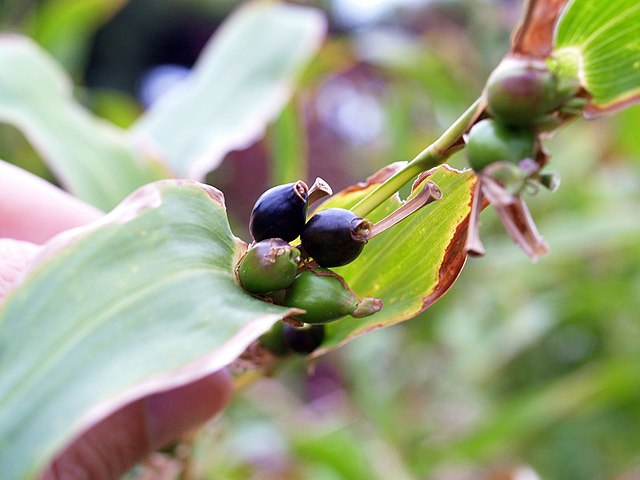
The Experiment: One Grain, Many Risks
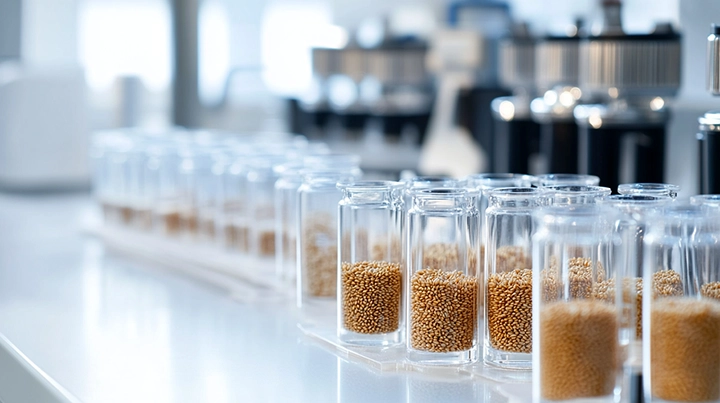
To unravel the risks, the researchers studied Coix seed in three different forms: unshelled, shelled, and polished. Each form was stored under two sets of conditions: one mimicking high temperature and high humidity typical of tropical storage or transport, and the other representing ambient room conditions. Using DNA metabarcoding, they tracked shifts in fungal communities, while LC–MS/MS (liquid chromatography–tandem mass spectrometry) quantified mycotoxin accumulation over time. Samples were examined at four weeks and three months, reflecting realistic storage intervals encountered in global supply chains.

Results: How Fungi and Toxins Take Hold
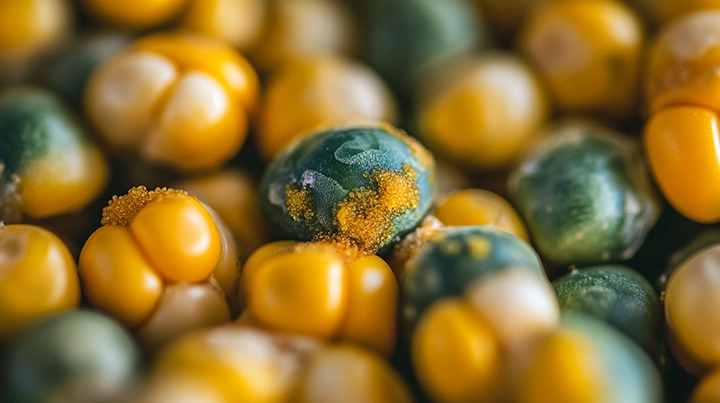
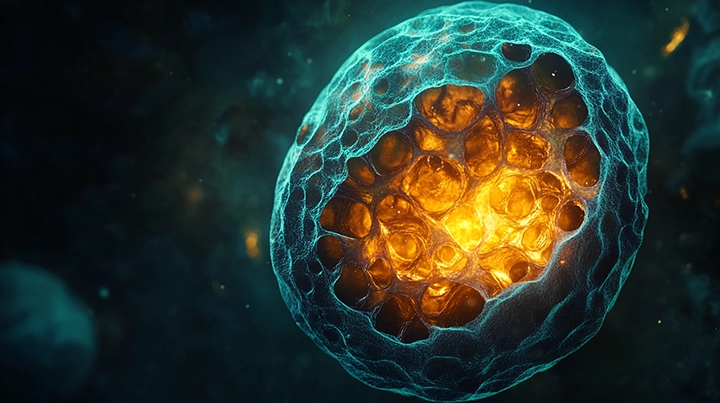
The results reveal how easily Coix seed can transition from medicinal food to mycotoxin risk. Under warm, humid conditions, Aspergillus species dominated, accompanied by rising levels of aflatoxins, among the most potent naturally occurring liver carcinogens. Under more moderate, ambient conditions, risk did not disappear—it shifted. Fusariumspecies increased in prevalence, producing zearalenone (ZEN), an estrogenic mycotoxin known to disrupt endocrine function.
Rather than eliminating danger, storage conditions merely exchanged one fungal threat for another. Across all treatments, mycotoxin concentrations rose steadily from four weeks to three months, underscoring that time itself is a risk multiplier—even when grains appear visually intact.

The Protective Role of the Hull
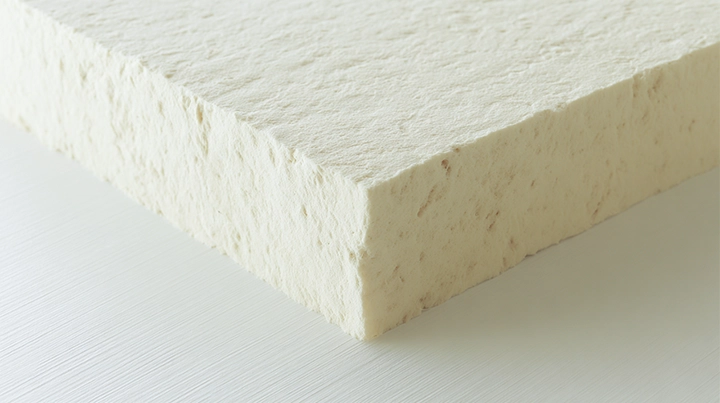
One of the study’s most practical insights concerns the outer hull. Unshelled Coix seeds consistently harbored lower fungal loads and reduced mycotoxin levels compared with shelled or polished seeds. The hull functions as a natural protective barrier, limiting moisture ingress, oxygen exposure, and fungal penetration. While polishing improves appearance and convenience, it also strips away this biological defense, increasing susceptibility during storage and transport.
This finding challenges modern processing priorities that favor refinement over resilience.
Industry Implications: A Wake-Up Call for Modern Food Systems
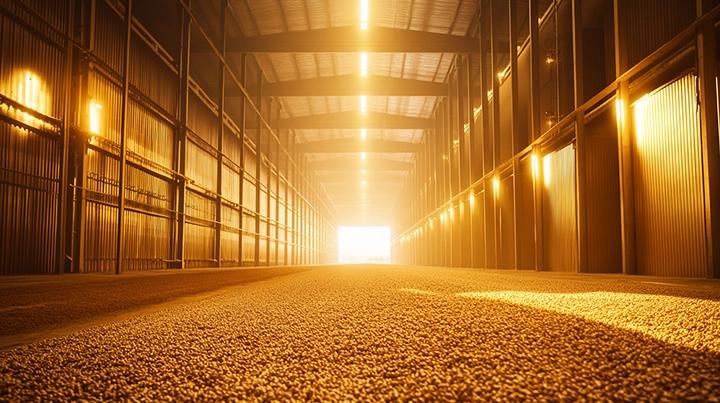
For producers, exporters, and regulators, the implications are significant. Coix seed is often shipped long distances and stored in bulk, conditions that magnify fungal risk. Current drying and storage standards—especially in tropical and subtropical regions—may be insufficient to control mycotoxin accumulation over time.
Equally important is the study’s warning against visual safety bias. Polished grains may look cleaner and command higher prices, yet they can carry higher invisible risks. This trade-off is not unique to Coix seed and likely applies to other herbal grains, spices, and functional foods.
A promising development highlighted in the research is the use of DNA metabarcoding as an early-warning system. By detecting shifts in fungal communities before toxin levels spike, producers could intervene proactively rather than react after contamination is established.

Practical Recommendations
The study supports several actionable strategies:
- Maintain unshelled storage whenever feasible to preserve natural protection.
- Minimize exposure to heat and humidity during storage and transport.
- Adopt DNA-based fungal monitoring, especially for high-value or medicinal grains.
- Educate stakeholders that visual cleanliness does not equal safety.
- Use moisture-proof packaging for shelled or polished products intended for long storage.
These measures shift food safety from reactive testing toward preventive risk management.
Old Wisdom Meets New Challenges
This research sits at the intersection of traditional knowledge and modern science. Coix seed has long been valued for its health benefits, yet today’s globalized supply chains introduce slow-building, invisible hazards that historical practices never faced at this scale. Protecting functional foods now requires both respect for natural plant defenses and advanced molecular surveillance.
Sometimes, what appears to be “just a shell” is the difference between nourishment and risk.

References
- Guo, X. et al. (2025). Dynamic changes in fungal communities and mycotoxin production in Coix seed under different storage conditions. Food Control, xx(x), xxx–xxx.
- World Health Organization (WHO). Mycotoxins.
https://www.who.int/news-room/fact-sheets/detail/mycotoxins - Food and Agriculture Organization (FAO). Mycotoxin prevention and control in foodgrains.
- Zearalenone — PubChem.
https://pubchem.ncbi.nlm.nih.gov/compound/Zearalenone - Aflatoxin B1 — PubChem.
https://pubchem.ncbi.nlm.nih.gov/compound/Aflatoxin-B1