The Roots of a Problem: Farming the Same Crop, Year After Year
Every farmer knows that soil is more than just dirt—it’s a living tapestry, woven together by countless microorganisms. But what happens when we ask that soil to support the same crop, season after season, without a break? A new study published in Scientific Reports (2025) pulls back the mulch on this question, revealing how continuous cropping doesn’t just exhaust plants—it quietly transforms the entire underground world of fungi.
The research focused on Pseudostellaria heterophylla, a valuable medicinal herb widely grown in China. For three years, scientists tracked how the fungal community in the soil changed with each planting. Using high-throughput DNA sequencing, they didn’t just count what was there—they watched who rose, who fell, and what roles those fungi played in keeping the soil healthy or sick.
Fungal Dynamics: Winners, Losers, and Newcomers
At the start, the soil teemed with diversity. Dominant fungal groups included Ascomycota (a phylum home to both helpful decomposers and worrisome pathogens), Mortierellomycota (associated with organic matter breakdown), and Basidiomycota (which includes many beneficial symbionts). There were also minor but significant contributions from Glomeromycota and Mucoromycota, each bringing their own skills to the table.
But as the years rolled on, the balance shifted. Helpful decomposers like Mortierella held their own, but pathogenic fungi—especially Fusarium—began to rise. Penicillium, with its dual reputation for producing both antibiotics and spoilage, was also present, as were species like Clonostachys, Auricularia, and Mycena. Year by year, the community lost diversity, with decomposers and pathogens increasingly dominating, especially in the second season of planting.

Functional Shifts: Not Just Who’s There, But What They’re Doing
What set this study apart was its focus on function, not just names. The researchers looked at what roles these fungi played in the soil. Decomposer fungi—saprotrophs—surged in the second year, likely breaking down the residue left by the crops. But this was a double-edged sword: while breakdown is necessary, too much decomposition without balance can tip the system toward instability.
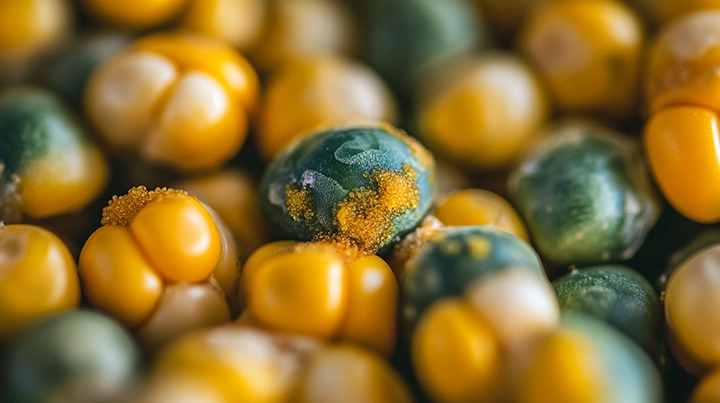
Of greater concern was the steady increase in pathogenic fungi—pathotrophs—such as Fusarium, notorious for producing mycotoxins like deoxynivalenol (DON) and zearalenone (ZEN). These pathogens set the stage for disease in future crops, even as they quietly multiplied below ground. Meanwhile, symbiotic fungi—those that cooperate with plant roots to exchange nutrients—showed inconsistent patterns, hinting at disrupted plant–fungus partnerships and raising questions about the long-term health of the soil–crop relationship.

The Cost of Monoculture: Soil Pays the Price
The consequences of these shifts ripple far beyond a single planting. As diversity drops and pathogens rise, the soil becomes less resilient, more disease-prone, and increasingly reliant on chemical inputs just to keep yields steady. Fewer mutualistic fungi mean that future crops must work harder for nutrients, undermining plant health and boosting susceptibility to stress. In essence, repeated monoculture quietly “fires” the soil’s best engineers, replacing them with saboteurs.
This microbial drift is a stark reminder: even as plants survive, the living architecture below ground is being hollowed out, one growing season at a time.
Fungal Suspects in Focus
The study identified several key players worth watching in any system of repeated cropping. Fusarium species stand out for their pathogenicity and mycotoxin production. Mortierella offers benefits as a decomposer and potential soil improver, while Penicillium wears two faces—sometimes beneficial, sometimes a spoiler. Clonostachys includes potential biocontrol agents, and Aspergillus, often seen in deteriorated soils, is another source of concern due to its ability to produce aflatoxins.

Implications for Sustainable Agriculture
What emerges from this research is a plea for “fungal literacy” among farmers, agronomists, and policymakers alike. Long-term food security depends on more than just what grows above the ground. It requires nurturing the microbial communities that make soil fertile, resilient, and healthy for generations. Strategies like crop rotation, cover cropping, organic amendments, and periodic soil microbial assessments can help tip the balance back toward diversity and health.
Soil isn’t just a stage for roots—it’s a living community, shaped and reshaped by every farming decision we make. This study makes it clear: repeated cropping doesn’t just exhaust plants, but fundamentally transforms the microbiological world beneath. The real harvest of the future will come not just from what we sow, but from how wisely we care for what’s unseen. If we want resilient fields and secure harvests, it’s time to listen to the fungi beneath our feet.

References
Official / institutional sources
Food and Agriculture Organization of the United Nations (FAO). Soil biodiversity and sustainable agriculture. https://www.fao.org/soils-portal/soil-biodiversity/en/
World Health Organization (WHO). Mycotoxins in food. https://www.who.int/news-room/fact-sheets/detail/mycotoxins