The Rising Costs of Mould: A Global Concern
As climate change accelerates, it’s not just storms and floods that are driving up costs—it’s what happens after the water recedes. Across the world, the growing mould crisis is turning homes into hazard zones and wallets into empty shells.
Mould remediation isn’t cheap. In North America, the average mould removal job costs between $2,000 and $6,000, and in severe cases involving structural damage or widespread infestation, homeowners might face bills exceeding $20,000.
Global figures paint an even grimmer picture. The worldwide mould remediation industry is projected to surpass $15 billion by 2028, fueled by rising moisture intrusion and extreme weather events (MarketWatch, 2024). Insurance claims for mould-related damage have also soared, with many providers tightening policies or excluding mould coverage altogether.
What’s driving this surge? Climate change is intensifying rainfalls, prolonging humid seasons, and increasing the frequency of water emergencies like floods and storms. Homes that were once safe havens are now becoming vulnerable to these quiet, creeping invaders. Moisture finds its way into basements, crawl spaces, and attics, setting the stage for colonies of mould to take root.
This isn’t just a local nuisance—it’s a global challenge. The World Health Organization (WHO) has long emphasized that indoor dampness and mould significantly increase the risk of respiratory illnesses worldwide, particularly for children, the elderly, and those with weakened immune systems. They urge governments to adopt stronger building codes and public health policies to address this growing threat.
From coastal cities dealing with rising sea levels to inland towns hit by unseasonal storms, the risk is growing. And for every flooded floor or burst pipe, there’s an unseen aftermath waiting to spread.

Source: Wikimedia Commons — CC BY-SA 4.0
Canada’s Costly Climate Year: Lessons for the World

Source: Wikimedia Commons — CC BY-SA 4.0
In 2024, Canada endured an unprecedented year, with weather-related property losses reaching an overwhelming $8.5 billion—almost triple the total from 2023. This isn’t isolated. It’s part of a global trend, but Canada’s example is especially telling.
Insurers across the country responded swiftly. Premiums rose by an average of 5.28% in 2025, and in Alberta, the spike hit a painful 9.07%, largely driven by disasters like the Calgary hailstorm and the Jasper wildfire.
The strain is visible across Canadian households:
- 74% of Canadians see climate change as the direct cause of their rising insurance costs, an increase of 8% over the previous year.
- 36% have already felt the sting of higher property insurance rates.
- 66% are anxious about potential floods and water damage, especially in British Columbia, Quebec, and Atlantic Canada.
- 71% worry about winter storms (up from 63%).
- 68% fear extreme cold and burst pipes, especially in Ontario, where that number climbs to 72%.
Canada’s experience is a cautionary tale for homeowners worldwide. As climate patterns continue to shift, the combination of physical damage and hidden biological threats like mould creates a double burden—one that demands our attention and action.
The Quiet Threat: Mould Moves In
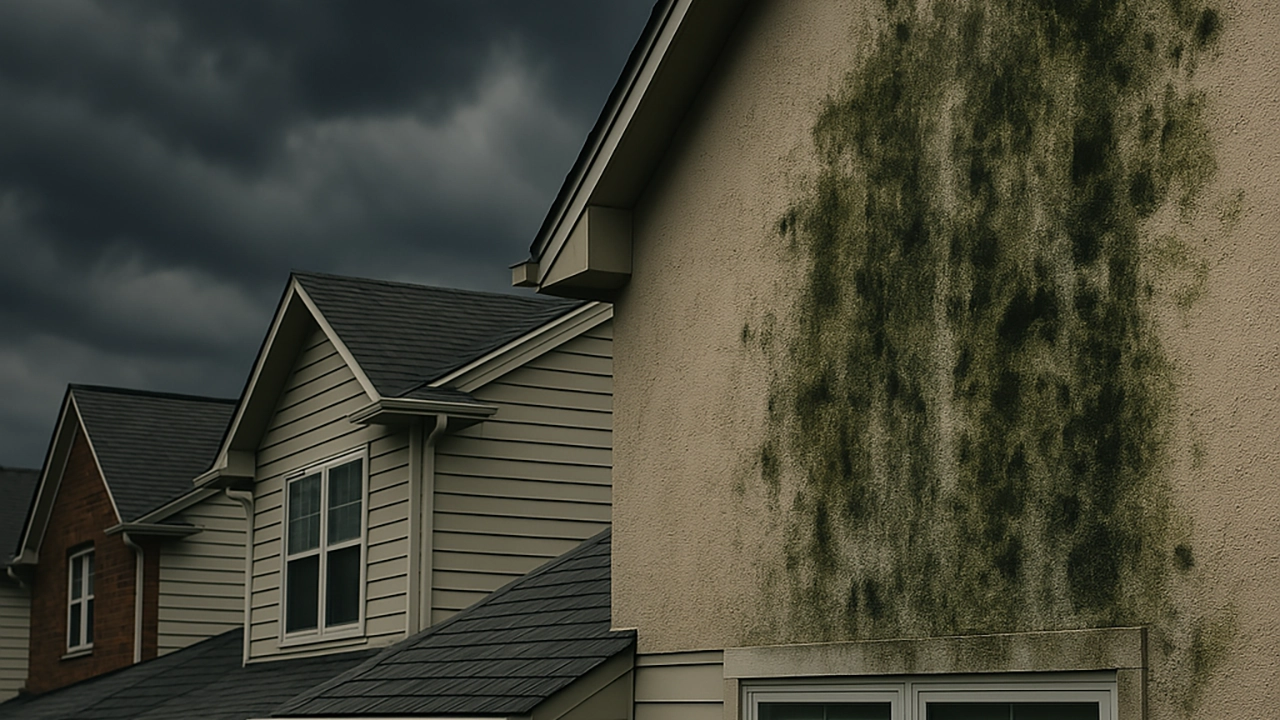
Beyond the visible wreckage of storms and rising insurance costs, there’s an invisible threat creeping into our homes: mould.
Flooding and water damage are not merely inconveniences. They create the perfect breeding ground for mould, which thrives in damp, poorly ventilated areas. No wonder 61% of Canadians fear mould growth following severe weather—a concern mirrored by homeowners worldwide.
Already, water-related emergencies account for nearly 70% of property damage responses. Moisture seeps into unseen corners, creating a haven for mould spores to flourish. Left unchecked, these spores silently spread, compromising both the integrity of our homes and the health of those living inside.
This is not a uniquely Canadian problem. Across the southern United States, mould blooms rapidly after hurricanes. In Europe, relentless rains leave even historic structures battling damp and decay. In Asia, post-monsoon mould is an annual adversary.

Source: Wikimedia Commons — CC BY-SA 3.0
What This Means for Our Homes — and Our Health
The implications extend far beyond peeling wallpaper or musty smells. Prolonged exposure to mould has been linked to respiratory issues, allergies, and more severe health risks, especially for children, the elderly, and those with pre-existing conditions.
Mould quietly undermines the health of our homes and families. It corrodes building materials, degrades air quality, and, if ignored, turns minor inconveniences into costly crises.
Yet there is hope. With awareness and proactive care, homeowners can fight back against this quiet menace.

Source: Wikimedia Commons — CC BY-SA 4.0
Here’s Why This Matters
While the climate may be out of our control, our preparedness is not. Simple, consistent actions make all the difference:
- Maintain your home diligently — keep a watchful eye for signs of water intrusion.
- Clear gutters and drainage systems, especially before rainy seasons.
- Promote airflow in all parts of the house to keep moisture at bay.
- Call trusted local mould consultants at the first sign of growth for immediate inspection and guidance.
These practical steps are not just about home maintenance—they are about protecting health, preserving property value, and finding peace of mind amid uncertainty.
Across the globe, families taking these measures are not only saving money but also ensuring safer, healthier living spaces.
A Gentle Closing: Strength in Awareness and Care
There’s no need to wait for the next weather alert or insurance notification to act. Each step taken today fortifies homes against tomorrow’s challenges.
Take a moment to inspect the house with fresh eyes. Look for signs of moisture, ensure drainage flows away from the foundation, and let fresh air circulate throughout. Share knowledge with family members about recognizing water damage and mould growth early.
By doing so, households everywhere can strengthen their defences against the rising tide of climate impacts. Protecting our homes is not just about bricks and beams—it’s about safeguarding our loved ones and the memories that live within those walls.
Wherever home may be, caring for it remains one of our most profound responsibilities.

Source: Wikimedia Commons — CC BY 4.0
References
Official & Academic Sources