Mold as Material, Not Menace
When most people think of mold, they picture a health hazard, a blotch on the wall, or a reason to throw out leftovers. But in the world’s most advanced laboratories and industrial bioreactors, those same fungi are celebrated as powerhouses of production. From antibiotics and enzymes to green pigments and biofuels, fungi are being carefully grown—not just to survive, but to deliver the goods for our biobased future.
Yet for all their promise, fungi come with one stubborn problem: once you’ve cultivated a biofactory, how do you actually unlock it? Cracking open these resilient cells is where science meets serious engineering.

The Strongest Walls in Microbiology
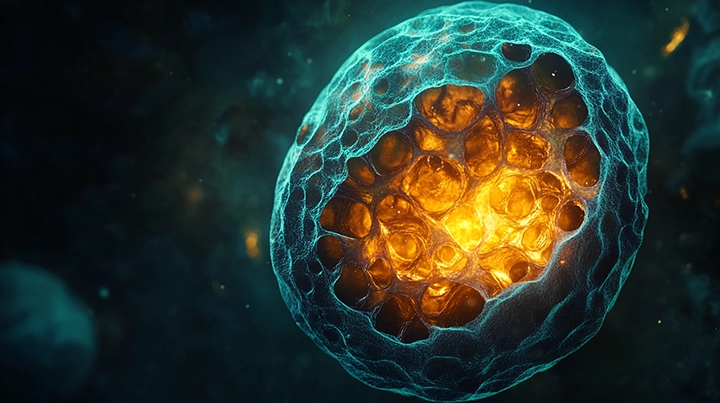
Fungi are survivors. Their cell walls are thick with chitin, glucans, mannans, and tough proteins, making them resistant to stress, cleaning agents, and even drought. This rugged design is why they persist in our homes and hospitals, but it’s also what makes them such valuable biofactories—capable of withstanding harsh industrial conditions.
But what’s an advantage in nature becomes a technical challenge when you need to extract enzymes, lipids, or metabolites for pharmaceuticals, food, or energy. Unlike bacteria, which are easily lysed with a jolt of sound or chemicals, fungi demand a more sophisticated approach.

Engineering Solutions: How Industry Unlocks Mold
A recent review in Engineering in Life Sciences brings us behind the scenes to the “great escape” of fungal products. The tools and tricks are as varied as the industries that use them.
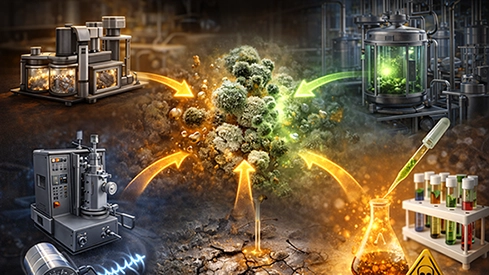
Mechanical disruption methods—like bead milling—are popular in large-scale operations. Bead mills grind fungi into a fine paste, efficiently cracking open cell walls, but the process is energy-hungry and generates heat that can damage sensitive products. Ultrasound is a favorite in smaller or mid-sized labs, sending sound waves that shatter cells, but it too requires significant energy. High-pressure homogenization blasts cells apart by forcing them through narrow valves at intense speeds, but it’s a blunt-force technique that risks shearing delicate molecules.
For products that can’t take the heat or force, enzymatic lysis is a gentler, albeit more costly, alternative. Carefully selected enzyme cocktails nibble away at cell wall polymers, releasing the target compounds without brute force. Chemical and thermal methods offer further options—cheap and simple, but sometimes too harsh for fragile molecules.
The most effective industrial protocols often blend these strategies, using enzyme pre-treatments to soften cells before finishing the job mechanically. It’s an intricate dance—one that must be tailored to each fungal species and the desired end product.

Why Fungal Species Matter
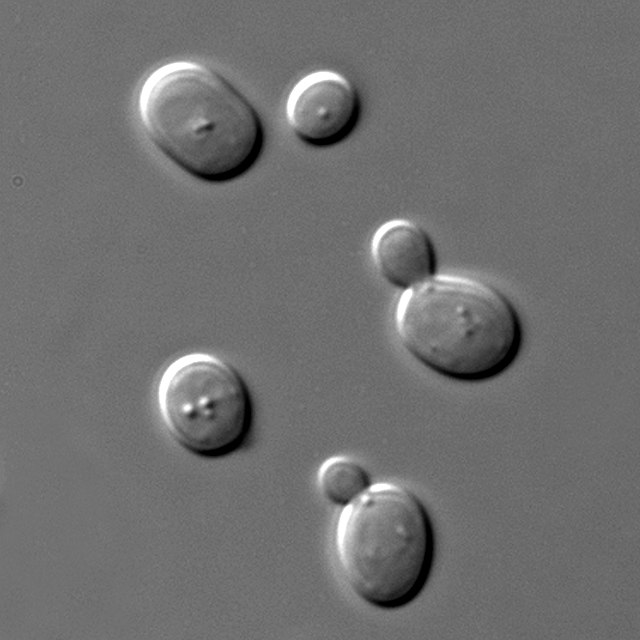
No two fungi are quite alike, and that diversity is both an asset and a challenge. For instance, Saccharomyces cerevisiae(baker’s yeast) is relatively easy to disrupt—a boon for winemakers and brewers. In contrast, Aspergillus niger and Mucor indicus require intense mechanical treatment to access their valuable contents, while Trichoderma reesei, famed for its industrial enzymes, is exceptionally tough but yields enormous returns when properly processed.
Matching the disruption method to the species and product is crucial for efficiency, yield, and cost. Knowing your mold, in other words, is as important as knowing your market.
A Sustainable Future: Energy, Efficiency, and the Circular Bioeconomy
As demand for fungal products rises, so does concern about the energy required to unlock them. Mechanical methods, though effective, can drive up costs and carbon footprints. That’s why the industry is innovating: exploring low-energy enzyme blends, pulsed electric field (PEF) treatments for non-thermal lysis, and integrating cell disruption steps directly with fermentation to recapture waste energy.
Sustainability is not a side note—it’s a driving force. In the coming years, the efficiency with which we “crack open” mold could shape the entire bioeconomy, determining what’s viable, affordable, and scalable.

Mold’s Double Life: Biofactory and Allergen
It’s worth noting that many of the superstar fungi in industrial biomanufacturing—Aspergillus niger, Penicillium chrysogenum, Trichoderma reesei—are the very same genera we track for health risks in indoor environments. In one setting, they’re the source of allergy and asthma triggers; in another, they’re harnessed for antibiotics, enzymes, and sustainable materials. The duality is striking, and a reminder of how our relationship with mold is always evolving.
MoldNewsHub Perspective: Mold as Opportunity
For readers of MoldNewsHub, this story is a peek into the world where mold becomes opportunity. These fungi, so often cast as villains, are increasingly the source of solutions for greener chemistry, smarter medicine, and a sustainable bioeconomy. And at the center of it all? The technical wizardry of cracking open the world’s toughest microbes—transforming resilience into resource.
So next time you see mold, remember: sometimes, what’s hard to break is exactly what’s worth unlocking.
References
Academic Sources
- Meyer, V., Andersen, M. R., Brakhage, A. A., Braus, G. H., Caddick, M. X., Cairns, T. C., de Vries, R. P., Haarmann, T., Hansen, K., et al. (2016). Current challenges of research on filamentous fungi in relation to human welfare and a sustainable bio-economy: a white paper. Fungal Biology and Biotechnology, 3, 6. https://doi.org/10.1186/s40694-016-0024-8
- Lopes, M., Gomes, A. S., Silva, C. M., & Belo, I. (2018). Microbial lipids and added value metabolites production by Yarrowia lipolytica from lignocellulosic materials. Renewable and Sustainable Energy Reviews, 89, 142–152. https://doi.org/10.1016/j.rser.2018.03.019
Official Sources
- U.S. Department of Energy (DOE) — Bioenergy Technologies Office (BETO): https://www.energy.gov/eere/bioenergy/bioenergy-technologies-office
- International Energy Agency (IEA) — Bioenergy: https://www.iea.org/