Meta Description
Basement mold is not a cleaning problem. It is a structural and environmental signal — one that typically indicates ongoing moisture pathways that no amount of surface treatment will resolve. Here is how to understand what it is telling you, and what to do about it.
The Room That Works Against You
A basement is not simply another room within a home. It sits below grade, where the building meets the earth, where temperature differences between the cool ground and warmer interior air are more pronounced, and where moisture naturally accumulates rather than dissipates. Unlike living spaces above ground, basements operate under a set of persistent disadvantages for moisture management: cooler surfaces that promote condensation, limited airflow, proximity to groundwater, and often a combination of porous materials that absorb and retain moisture.
These are not temporary conditions that improve with cleaning. They are structural realities that require structural responses.
Within this environment, mold does not struggle to survive. It finds everything it needs — moisture, organic material, stable surfaces, and limited airflow — and it develops gradually, often for weeks or months before any visible sign appears.

How Basement Mold Actually Begins
Basement mold is rarely the result of a single dramatic event. Flooding can certainly initiate it, but the more common pattern is subtler: ongoing moisture intrusion or retention from sources that go unnoticed for extended periods.
Water enters basements through several pathways that are easy to miss. Groundwater seeps through foundation walls and floor slabs, particularly after heavy rain or in high water table areas. Condensation forms on cold concrete surfaces, pipes, and any material that is significantly cooler than the surrounding air — which in a basement, includes most of the structure. Exterior drainage that directs water toward the foundation rather than away from it allows gradual seepage. And slow plumbing leaks — a connection that drips slightly, a supply line that weeps — can sustain a persistently damp area for months without producing a visible puddle.
Once moisture is present, airborne spores — which exist in the basement air just as they exist throughout any indoor environment — settle and germinate. Porous materials commonly stored or built into basements provide both structure and nutrition: wood framing, drywall, insulation, cardboard boxes, paper-backed materials, and fabric. What begins as a localized colony expands as long as the moisture source remains.
Why Basement Mold Stays Hidden
The defining challenge of basement mold — the reason it consistently becomes more serious than mold in other parts of the home — is its tendency to develop in locations that are not routinely inspected.
Behind drywall. Inside wall cavities. Under flooring installed over concrete. Within insulation batts. Along the base of foundation walls where concrete meets floor. In the space between the exterior foundation wall and any interior finishing.
By the time a musty odor becomes noticeable, or surface staining appears on visible materials, the mold has typically been growing in these hidden locations for some time. The visible symptom is not the beginning of the problem — it is evidence that an established colony has grown large enough to affect what can be detected from the living space.
This delayed visibility is what makes basement mold fundamentally different from bathroom tile mold or kitchen surface mold. It is not primarily a surface issue. It is a structural one.

The Structural Damage Dimension
Beyond the health and air quality implications, basement mold causes progressive structural damage that compounds over time when the moisture source is not resolved.
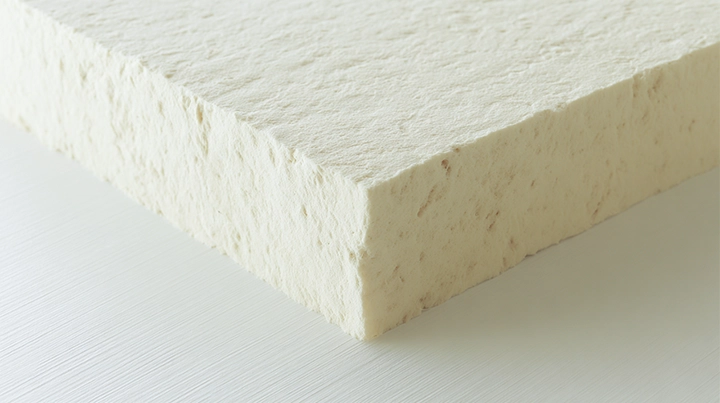
Wood framing that remains persistently damp loses structural integrity gradually. Mold digests cellulose — the primary component of wood — weakening joists, sill plates, and structural members that support the floors above. Drywall that absorbs moisture and develops internal mold contamination becomes soft, loses its structural function, and eventually requires complete replacement. Insulation saturated with moisture loses its thermal performance, which often increases condensation on the surfaces it was meant to protect — creating a feedback loop that worsens conditions over time.
The cost of addressing basement mold increases significantly with delay. Surface mold detected early, with the moisture source still manageable, can often be resolved without major structural intervention. Mold that has been developing for months within wall cavities and framing members typically requires removal and replacement of affected materials — a substantially more involved and expensive process.
Understanding the Moisture Pathways
Effective basement mold prevention requires identifying which moisture pathway is active — because different sources require different interventions.
Groundwater intrusion — water that enters through cracks in the foundation wall or slab — requires waterproofing solutions: crack injection, interior drainage systems, sump pump installation, or exterior excavation and membrane application depending on severity. Cleaning mold from the surface of a wall through which groundwater continues to move will not resolve the problem.
Condensation — water that forms on cold surfaces when warm, humid air contacts them — requires either reducing the humidity of the basement air (dehumidification), or raising the surface temperature of cold materials (insulation). A cold pipe or concrete wall in a humid basement will continue producing condensation regardless of how well the mold on it is cleaned.
Poor exterior drainage — land that slopes toward the foundation, gutters that discharge near the foundation, or downspouts that empty adjacent to the building — allows surface water to saturate soil against the foundation walls and find pathways inside. This requires grading correction and proper gutter extension before interior solutions become effective.
Plumbing leaks — slow drips from supply lines, drain connections, or water heater condensation — require identification and repair. A plumber’s inspection of basement plumbing, including the water heater, utility sink, and any washing machine connections, is a reasonable early step when a moisture source is not immediately apparent.

What to Do When Basement Mold Appears
A structured response to basement mold produces better outcomes than reactive cleaning.
Step 1: Identify the moisture source. Before any cleaning or remediation, establish where the moisture is coming from. Look for water staining on walls and floors that indicates the direction of travel, check pipes and connections for drips, examine the exterior grade and gutter discharge points, and measure humidity with a hygrometer. The moisture source must be addressed for any remediation to last.
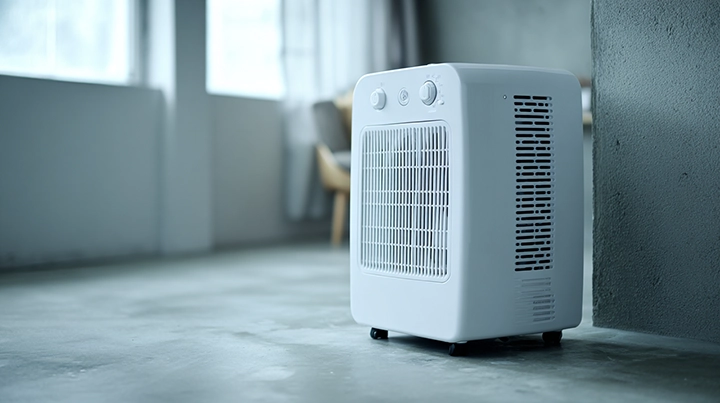
Step 2: Measure and monitor humidity. According to the EPA, indoor humidity should be maintained below 60%, with 40–50% being optimal. In basements, achieving this typically requires a dehumidifier running continuously during warm months, when warm exterior air entering the basement cools and deposits moisture. A hygrometer placed in the basement provides direct measurement.
Step 3: Assess hidden areas. Do not limit assessment to visible surfaces. Check wall cavities by probing any soft spots in drywall. Inspect the underside of flooring where it meets the perimeter walls. Look behind stored items that have been in place for extended periods — these often conceal mold that has developed on the wall surface behind them.
Step 4: Remove and replace porous materials that are contaminated. Mold within drywall, insulation, carpet, or cardboard cannot be reliably cleaned. These materials must be removed and replaced. Non-porous surfaces — concrete, metal, glass — can be cleaned with appropriate solutions and dried thoroughly.
Step 5: Improve ventilation and airflow. Stagnant basement air allows humidity to accumulate. A dehumidifier with continuous drainage, supplemented by a circulating fan, significantly changes the moisture dynamics of an otherwise static space.
Step 6: Consider professional assessment for significant or structural contamination. When mold covers an area larger than approximately 1 square meter, when it is present within structural framing, or when the moisture source is not clearly identifiable, professional remediation and assessment is the appropriate response.

FAQ: Basement Mold
Q: Why is mold more common in basements than other rooms? Because basements combine the factors that enable mold most consistently: elevated humidity from temperature differences between the cool ground and warmer interior air, reduced airflow, proximity to groundwater, and porous organic materials. These are structural conditions, not the result of neglect.
Q: Can I just clean basement mold and be done with it? Surface cleaning removes visible growth but does not address the moisture source that sustains it. Basement mold will return as long as the underlying moisture pathway — whether groundwater intrusion, condensation, or a plumbing leak — remains unresolved. Cleaning is a temporary measure; moisture control is the solution.
Q: What are the most common hidden moisture sources in basements? Groundwater seepage through foundation cracks, condensation on cold pipes and concrete surfaces, exterior drainage directed toward rather than away from the foundation, and slow plumbing leaks from supply lines or drain connections. Each requires a different intervention.
Q: How do I know if the mold has spread into the walls? Signs include: soft or spongy drywall when pressed, musty odor that persists after visible cleaning, paint or wallboard that bubbles or discolors without explanation, and mold that returns within days of cleaning. Any of these suggests contamination beyond the visible surface.
Q: What humidity level should a basement maintain? Below 60% relative humidity, with 40–50% being optimal. Most basements require continuous dehumidification during warm months to maintain these levels. A hygrometer provides direct measurement to confirm whether current ventilation and dehumidification are achieving adequate control.
Q: When should I call a professional? When mold covers a large area, when it is present within wall cavities or structural framing, when the moisture source cannot be identified, or when mold returns repeatedly despite remediation efforts. Structural contamination and ongoing water intrusion require assessment and solutions beyond what household cleaning can provide.
References
Official Sources
- U.S. Environmental Protection Agency — A Brief Guide to Mold, Moisture and Your Home: https://www.epa.gov/mold/brief-guide-mold-moisture-and-your-home
- CDC — Mold: https://www.cdc.gov/mold-health/about/index.html
Industry & Consumer Sources
- USS Foundation Solutions — Negative Effects of Mold in Your Basement and What You Can Do to Prevent It: https://www.usstn.com/blog/negative-effects-of-mold-in-your-basement
Article prepared by the MoldNewsHub editorial team based on peer-reviewed research and publicly available scientific literature.