According to BROWNFIELD
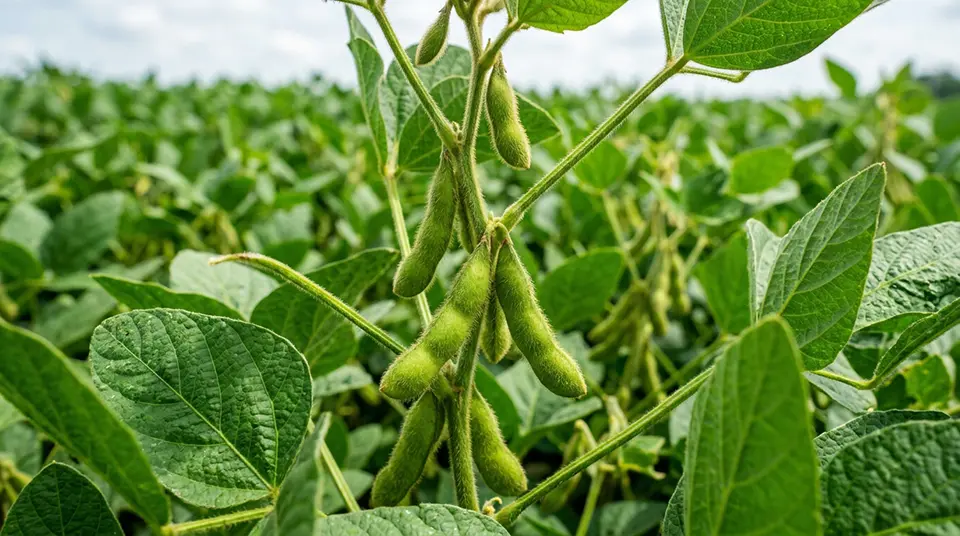
Soybean growers in the U.S. Midwest could face an increased risk of white mold as crop canopies continue to close. Agronomist Corey Klaphake of CHS warned that the disease may become more problematic in the coming weeks, particularly in fields with a history of previous outbreaks.

White mold develops most readily under cool, wet conditions after soybean plants form a dense canopy. As leaves and branches fill the space between rows, airflow through the crop decreases. The resulting environment can retain moisture and create favorable conditions for the disease to spread — as Klaphake explained to Brownfield Ag News, “there’s not as much air movement through there. That’s when white mold is going to take off, especially if you have a good history of it in your fields.”
Fields that have experienced white mold in earlier seasons may face greater concern. Previous disease history can help growers identify areas requiring closer observation, especially when weather conditions and crop development align with the pathogen’s preferred environment — the causal fungus, Sclerotinia sclerotiorum, survives in soil as hardened structures called sclerotia that can persist for years between outbreaks.

A heat dome covering much of the Midwest may have delayed the disease by producing conditions less favorable for white mold. However, that delay does not eliminate the threat. If temperatures decline while moisture remains present beneath closed canopies, disease pressure could still increase during the reproductive stages of soybean growth.
Klaphake said fungicides can provide preventive control, but application timing is critical. The strongest protection generally occurs when fungicides are applied during the R1 and R2 growth stages, when soybean plants are beginning to flower or are in full bloom.
Many soybean fields have already moved beyond that window, limiting the effectiveness of late preventive applications. Fungicides cannot reverse infection that has already occurred, making early assessment and timely treatment important when field history and weather indicate elevated risk — as Klaphake put it, “from a preventative standpoint, fungicides do work on white mold. But they’ve got to be applied early to get that best effect, that R1, R2 stage. And we’re kind of already past that.”
Growers should therefore consider canopy density, crop stage, recent rainfall, temperature patterns, and previous white mold problems when evaluating current conditions. Fields with thick plant growth and restricted air movement may require particular attention as humidity accumulates beneath the canopy.
White mold can cause substantial economic damage when outbreaks become severe. Yield losses may range from 20% to 50%, depending on disease intensity and field conditions. The disease can reduce plant productivity and create uneven areas of damaged soybeans across affected fields.
The current threat varies by location because crop development and weather conditions are not uniform across the Midwest. Some areas may remain too warm for rapid disease development, while cooler and wetter fields could become more favorable as canopies close.
Klaphake’s warning emphasizes prevention rather than predicting that every soybean field will experience an outbreak. White mold risk depends on the interaction between weather, canopy conditions, crop growth stage, and field history. Growers who are already beyond the ideal fungicide window may need to focus on monitoring fields and documenting affected areas for future disease-management decisions.
References
University of Nebraska–Lincoln, CropWatch. Sclerotinia Stem Rot.
Bayer Crop Science. Understand White Mold Disease in Soybeans.
According to BROWNFIELD