According to
According to MSN
When 49-year-old Sharon Lord accepted an offer to receive cavity wall insulation installed under a government scheme, she believed she was making a sensible investment in her four-bedroom home in Burnley, Lancashire. Instead, what she got was rising damp, rampant black mould, structural damage, and a repair cost so high it might exceed the value of her house. Her story reflects a growing number of Britons trapped in homes that have become colder, less healthy, and burdened with massive remediation bills due to botched retrofit insulation works.
The Promise of Insulation
Government-backed energy efficiency schemes—such as ECO4 and the Great British Insulation Scheme (GBIS)—offer free or subsidized insulation to homeowners, aiming to reduce energy consumption, cut bills, and lower carbon emissions. For many participants, the offer seemed ideal: improved thermal comfort and lower heating costs, at no upfront cost.
But those gains depend heavily on correct installation, property suitability, moisture control, and quality oversight. Without these, insulation can trap moisture, damage building fabric, degrade performance, and create an environment for mould growth.

Source: Wikimedia Commons, CC BY-SA 2.0
The Insulation Turns Against Her
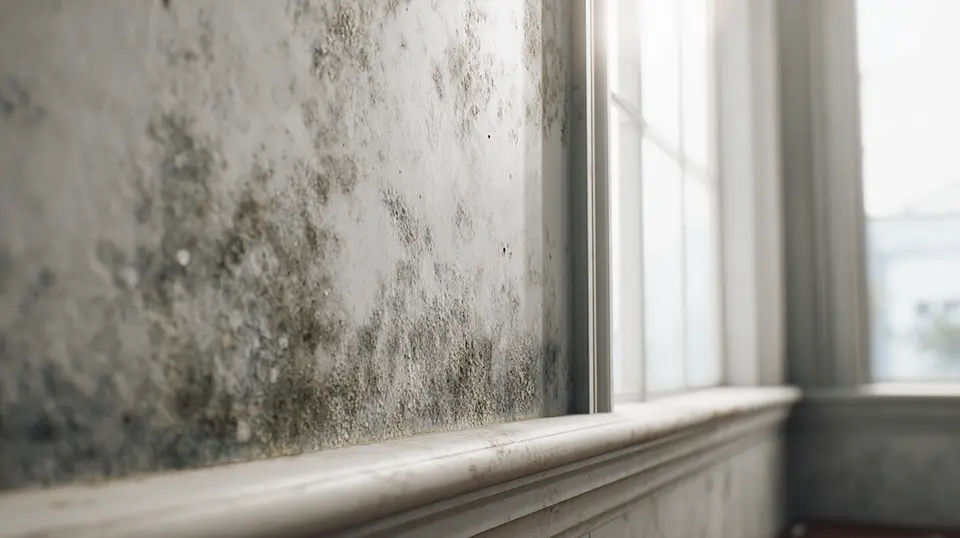
In 2014, Lord was approached by a door-knocker offering free insulation under a government program. The insulation was installed, but soon after, she began to notice signs of trouble: damp patches on walls, especially in her eldest child’s bedroom. The black mould set in rapidly.
When Lord contacted the installing company, she was told simply to wash the walls daily. She used bleach and water, but the patches reappeared. Cracks appeared near windows and on external walls; condensation worsened; floors became sodden. By the next winter, the house was “wet through all the time.” She claims she felt colder inside her bedroom than outside.
With nowhere to turn, Lord learned that the installing firm, Heatwave Energy Systems, had gone into liquidation. A surveyor later estimated repair costs above £128,000 for a property worth perhaps £75,000–£80,000. The repairs would require stripping external walls, gutting internal structures, replacing beams, and leaving the home uninhabitable during reconstruction.
As a single parent, Lord says she lacks the resources to carry out the work, leaving her trapped in a deteriorating home, constantly battling mould, moisture, and cold.
A Pattern of Failure Across Thousands of Homes
What happened to Lord is not isolated. Earlier this year, government officials revealed that approximately 30,000 homes fitted with solid wall insulation under the ECO4 and GBIS schemes have been found to suffer from faulty installation. These failures range from damp, condensation, structural cracks, to mould infestations.
In response to mounting complaints and evidence of damage, 39 companies were suspended from doing further installations. But for many homeowners whose houses were retrofitted in earlier programs, redress is elusive. Some compensation recourse or remediation programs apply only to more recent installations, leaving older cases like Lord’s in limbo.

Source: Wikimedia Commons, CC BY-SA 4.0
Why Insulation Can Go Wrong
The damage you read about in Lord’s case arises from several technical failures:
- Lack of moisture control: Insulation can trap moisture inside walls when ventilation, damp-proofing, or external drainage is inadequate.
- Cold bridging and condensation: Incomplete or imperfect insulation can leave cold spots where condensation occurs, feeding mould growth.
- Poor workmanship or design: Incorrect installation in unsuitable wall types doesn’t allow the building to breathe.
- Structural defects or water ingress: External leaks, cracks, or poor design can introduce moisture that saturates insulation.
- Unsuitable premises: Older homes or properties with damaged masonry or weak cavity walls may not tolerate retrofit insulation without careful preparatory work.
When insulation becomes waterlogged, it can lose thermal capacity and eventually degrade, propelling a cycle of cold, damp, and mould.
Source: Generated by AI based on UK retrofit building science data
Health and Safety Impacts
Black mould, often Stachybotrys chartarum, thrives in persistently damp environments. Its spores can cause respiratory irritation, asthma exacerbation, skin irritation, and in extreme, chronic exposure, even neurological symptoms.
For households like Lord’s—especially with children, potentially vulnerable occupants, or pre-existing respiratory conditions—the presence of mould is a serious health hazard.
One tragic UK case raised awareness: the death of two-year-old Awaab Ishak in 2020, attributed to respiratory failure from mould exposure in his home, led to increased scrutiny on housing conditions and landlord obligations.

Source: Wikimedia Commons, CC BY-SA 4.0
Policy, Redress, and the Human Toll
Many affected homeowners feel abandoned. Lord says that while current schemes may improve oversight for new installations, those harmed earlier remain neglected. Legal and financial recourse is limited when the installing firms have folded and government protections are selective.
Support groups such as the SSB Law Victims Support Group now assist victims in navigating redress options, documenting damage, and applying pressure for remedy schemes. They argue this is more than a housing scandal—it is a public health and justice crisis.
Some homeowners report worse health, respiratory distress, exacerbated allergies, and worsening pre-existing conditions. There have even been claims linking mould exposure from failed insulation to deaths in some cases.
Moving Forward: What Must Be Done
For retrofit programs to be safe and effective, three priorities stand out:
- Strong quality control and oversight — independent audits during and after installation to detect failures early.
- Mandatory warranties and remediation clauses — guarantees that installations can be reversed or fixed at no cost if they damage homes.
- Support for past victims — extended compensation or remediation programs for homeowners whose insulation was installed under earlier schemes.
Homeowners also need better information, climate-appropriate installation standards, and access to trusted inspectors before and after retrofit work.
As Lord says, “All I want is my home put back to the condition it was before the insulation went in.” For thousands like her, the cost of that promise has become tragically high.
References
According to MSN