According to SPACE DAILY
Hidden Beneath Oregon’s Forests Lies Earth’s Largest Known Organism
When people think of the largest living organism on Earth, they often imagine massive blue whales, towering redwood trees, or sprawling coral reefs. However, scientists have identified a far more surprising record holder hidden beneath the forest floor of eastern Oregon. The largest known organism on the planet is a single fungus, an enormous individual of Armillaria ostoyae, commonly known as the honey fungus, growing beneath the soil of the Malheur National Forest.
Covering nearly four square miles (approximately 10 square kilometers), this giant fungal network stretches across an area larger than many cities. Despite its immense size, most of the organism remains invisible to the human eye, hidden underground as an interconnected web of microscopic structures known as mycelium.
The discovery has transformed scientific understanding of both fungal biology and the scale at which life can exist.

The Real Fungus Exists Underground
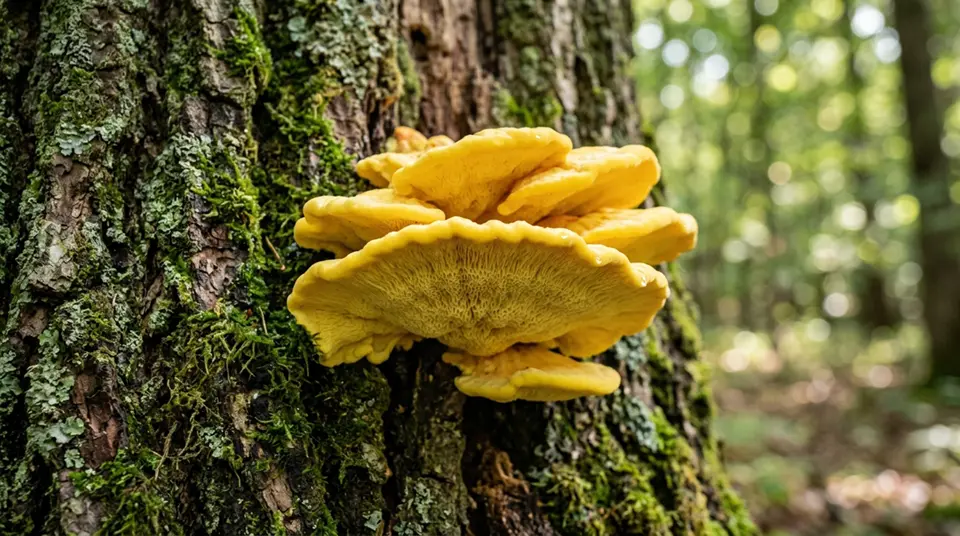
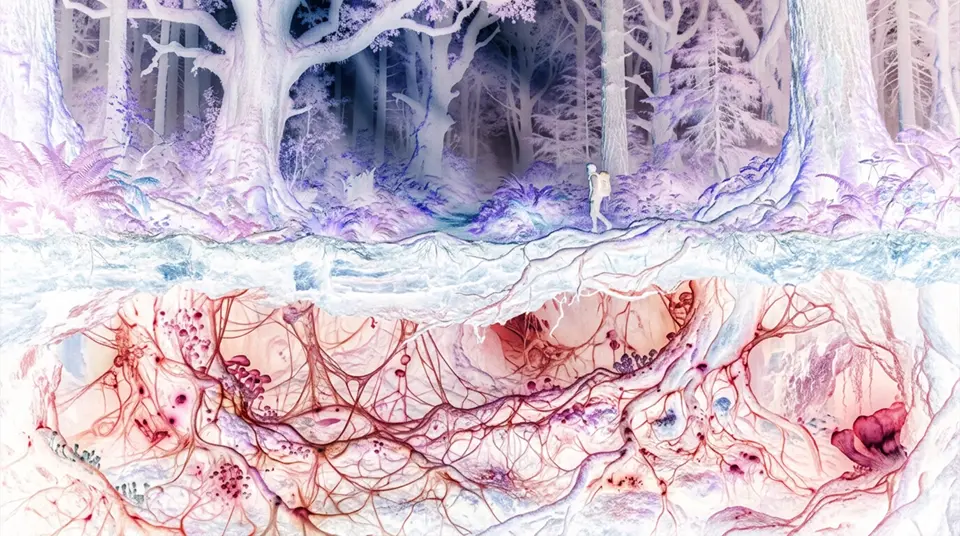
Unlike animals or trees, fungi do not grow as clearly defined individual bodies. What people typically recognize as mushrooms are only temporary reproductive structures, comparable to fruit produced by a much larger organism. The true body of a fungus often exists underground in the form of mycelium, a network of thread-like filaments called hyphae.
In the case of Oregon’s giant honey fungus, genetic testing revealed that what appeared to be separate fungal colonies across the forest were actually part of a single organism sharing identical DNA.
Researchers confirmed that the fungus had expanded gradually over thousands of years, creating an enormous living network beneath the forest ecosystem.
Structure of a Mycelial Network
Meet Armillaria: Forest Recycler and Tree Pathogen
The fungus belongs to the genus Armillaria, a group of fungi widely known for their ability to colonize tree roots and forest soils. While many fungal species act primarily as decomposers, Armillaria species occupy a more complex ecological role. They can function both as decomposers of dead wood and as parasites capable of infecting living trees.
This dual lifestyle has earned honey fungi a reputation as both ecological recyclers and significant forest pathogens.
Scientists estimate that the Oregon fungus may be thousands of years old, with some estimates suggesting an age ranging from 2,000 to more than 8,000 years. Determining the exact age remains challenging because fungal growth occurs gradually underground and leaves few direct historical records.
Even conservative estimates place the organism among the oldest living entities known to science.

Redefining Biological Size
The discovery raises important questions about how size should be measured in biology.
While blue whales remain the largest animals by mass, and giant sequoias remain among the largest individual trees, the Oregon fungus surpasses both when measured as a continuous living organism occupying a single genetic identity.
Its enormous underground reach demonstrates that biological success does not always depend on visibility.
Size Comparison of Giant Organisms
| Organism | Approximate Size |
|---|---|
| Blue Whale | Up to 30 m |
| Giant Sequoia | Up to 95 m tall |
| Oregon Honey Fungus | ~10 km² |
| Great Barrier Reef | 344,400 km² (colony ecosystem) |
Generated by AI based on USDA Forest Service and published fungal ecology data.
Nature’s Hidden Infrastructure
The fungal network spreads through root systems and soil, absorbing nutrients and interacting with countless organisms throughout the forest. The mycelium serves as both a feeding structure and a transportation network, moving nutrients and water across large distances.
Researchers often describe mycelial systems as nature’s hidden infrastructure because of their crucial role in maintaining ecosystem function.
The discovery of the giant honey fungus has also contributed to growing scientific interest in fungal intelligence and communication.
Although fungi lack brains or nervous systems, studies have shown that mycelial networks can respond to environmental changes, redirect growth toward nutrient-rich areas, and alter behavior based on external conditions.
Some researchers compare fungal networks to biological information-processing systems, capable of adapting to changing environments through decentralized decision-making.
While such comparisons should not be interpreted as evidence of consciousness, they highlight the remarkable complexity of fungal life.
Fungi Sustain Forest Ecosystems
The Oregon fungus also demonstrates the ecological significance of fungi within forest ecosystems.
Forests depend on fungal communities for nutrient cycling, decomposition, soil formation, and plant health. Fungi break down dead organic material, releasing essential nutrients back into the environment and supporting future plant growth.
Without fungal decomposers, forests would become overwhelmed by accumulated dead wood and organic debris.
At the same time, honey fungi can cause substantial damage to living trees.
Armillaria ostoyae infects root systems, disrupting water transport and weakening tree health. Infected trees may exhibit reduced growth, canopy decline, yellowing foliage, and increased vulnerability to drought and other environmental stressors.
In severe cases, infection can result in tree death.
Because of these effects, forest managers closely monitor Armillaria species in both natural forests and commercial timber operations.

Disease, Death, and Renewal
Despite its reputation as a pathogen, scientists emphasize that the giant fungus remains an important component of the forest ecosystem.
By killing weakened trees and decomposing dead wood, the fungus contributes to natural forest succession. Openings created by tree mortality allow sunlight to reach the forest floor, creating opportunities for new vegetation and increasing habitat diversity.
This process illustrates the complex balance between disease, decomposition, and ecological renewal.
The discovery has also helped reshape public perceptions of fungi.
For much of modern history, fungi received relatively little scientific attention compared with plants and animals. However, advances in genetics, ecology, and molecular biology have revealed that fungi play essential roles in nearly every terrestrial ecosystem.
Scientists now recognize fungi as one of the most diverse and influential kingdoms of life on Earth.
Millions of Fungal Species Remain Undiscovered
Current estimates suggest that millions of fungal species may exist worldwide, though only a small percentage have been formally described.
Many fungal species remain hidden underground, inside plants, within soils, or in remote ecosystems that have yet to be thoroughly explored.
The giant Oregon fungus serves as a powerful reminder of how much remains unknown about fungal biodiversity.
Global Distribution of Forest Ecosystems
Generated by AI based on global forest distribution and fungal ecology research.
Challenging the Concept of Individuality
Its existence also challenges conventional ideas about individuality.
Humans naturally identify organisms based on visible bodies with clear boundaries. Fungi, however, blur these distinctions. A single fungal organism can spread across vast areas while remaining physically connected beneath the surface.
This raises fascinating biological questions regarding what defines an individual organism and how life organizes itself at different scales.
The Oregon honey fungus is not entirely unique.
Other large fungal networks have been identified in Europe, North America, and elsewhere, although none currently surpass the size of the Oregon specimen. Researchers continue searching for additional giant fungal organisms, and future discoveries may further alter our understanding of biological extremes.
Climate Change and the Future of Fungal Networks
Climate change and environmental disturbances add another layer of complexity.
Changing temperature patterns, drought conditions, wildfire frequency, and forest management practices may influence fungal growth and distribution. Scientists are increasingly studying how fungal networks respond to environmental stress and what role they may play in ecosystem resilience.
Because fungi interact with plants, microbes, insects, and wildlife, understanding these relationships has become a priority for forest conservation and climate adaptation research.
The giant honey fungus highlights a broader scientific reality: some of the most important organisms on Earth remain largely unseen.
Beneath every forest lies a vast underground world where fungi connect ecosystems, recycle nutrients, influence plant health, and shape environmental processes. These hidden networks operate continuously, often without human awareness.
The discovery of the world’s largest known organism demonstrates that size alone does not determine visibility. While whales dominate the oceans and giant trees tower above landscapes, one of Earth’s greatest living entities quietly expands beneath the soil, linking roots, decomposing wood, and sustaining the ecological processes that support forest life.
Far from being merely mushrooms that appear after rain, fungi represent some of the most ancient, resilient, and influential forms of life on the planet. The giant honey fungus of Oregon stands as a remarkable example of the hidden power of the fungal kingdom and a reminder that some of nature’s greatest wonders remain concealed beneath our feet.
References
According to SPACE DAILY