According to IFLSCIENCE
The Discovery That Could Reshape Evolutionary Biology
Scientists are continuing to reshape humanity’s understanding of life on Earth after new research strengthened the theory that animals, plants, and fungi may all trace their origins back to an ancient group of microorganisms known as the “Asgard archaea.” The discovery adds another layer to one of biology’s biggest questions: how complex life first emerged from simple microbial organisms billions of years ago.

Understanding Archaea and the Origins of Complex Cells
The study focuses on a mysterious branch of archaea, single-celled microorganisms that differ from both bacteria and modern eukaryotes. Eukaryotes include nearly all complex organisms on Earth, including humans, animals, plants, algae, and fungi. For decades, scientists struggled to explain how simple microbial life evolved into organisms with nuclei, mitochondria, and advanced cellular systems.
Researchers now believe the answer may lie with the Asgard archaea.

Why Scientists Believe Asgard Archaea Are Important
The name “Asgard” comes from Norse mythology, continuing a scientific tradition of naming newly discovered archaeal groups after mythological worlds and gods. Within this group are Lokiarchaeota, Thorarchaeota, Odinarchaeota, and Heimdallarchaeota, each representing different branches of the microbial lineage believed to sit close to the root of all eukaryotic life.
According to the research, these microorganisms contain genes once thought to exist only in complex organisms. Scientists identified proteins associated with cell structure, membrane transport, and internal cellular organization — features previously believed unique to eukaryotes.
The finding supports the hypothesis that eukaryotic cells did not appear suddenly, but instead evolved gradually from archaeal ancestors capable of increasingly sophisticated biological functions.
Challenging the Traditional Three-Domain Model
One of the major implications of the study is its challenge to the long-standing “three-domain” model of life. Traditionally, life has been categorized into Bacteria, Archaea, and Eukarya as separate domains. However, growing evidence suggests eukaryotes may actually have emerged from within the archaeal branch itself, effectively reducing the tree of life to two primary domains.
If confirmed, this would represent one of the most important shifts in evolutionary biology in decades.
The Symbiotic Partnership That Changed Earth
Researchers believe the transition toward complex life may have occurred when an Asgard archaeon formed a symbiotic relationship with a bacterium that eventually evolved into mitochondria — the energy-producing structures found in modern eukaryotic cells. This partnership likely transformed Earth’s biological future by allowing cells to generate more energy and support greater complexity.
The theory, often referred to as symbiogenesis, has gained support through advances in genome sequencing and microbial analysis technologies.

Exploring Extreme Microbial Environments
Scientists involved in the research emphasized that the discovery does not mean Asgard archaea are direct ancestors of humans, animals, or fungi in a simple linear sense. Instead, they likely represent close evolutionary relatives of the lineage that eventually gave rise to all eukaryotic organisms.
The research also highlights how much remains unknown about microbial ecosystems. Many Asgard archaea were discovered in extreme environments such as deep-sea sediments, hydrothermal vents, and oxygen-poor marine habitats. These regions are notoriously difficult to study, meaning scientists are only beginning to understand the diversity and evolutionary significance of these organisms.
Metagenomics and the Rise of Invisible Life Detection
In recent years, advances in metagenomics — the study of genetic material recovered directly from environmental samples — have transformed microbial science. Previously invisible organisms can now be reconstructed digitally from fragments of DNA found in soil, ocean mud, and other ecosystems.
This technological leap has allowed scientists to identify entire branches of life that had never been cultivated in laboratories before.
A Shared Ancestry Between Animals, Plants, and Fungi
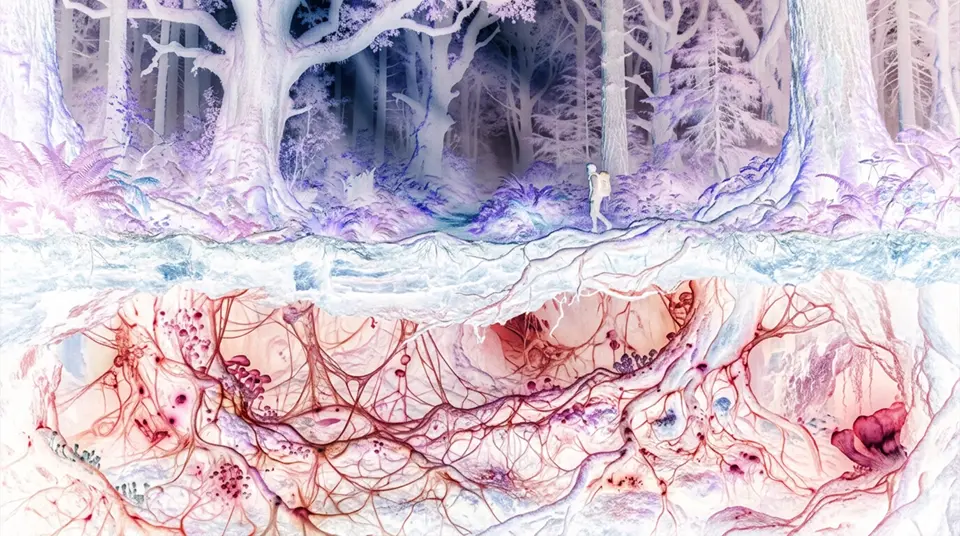
The discovery of Asgard archaea represents more than a technical breakthrough. It also reshapes humanity’s philosophical understanding of biological identity. Animals, fungi, and plants appear vastly different on the surface, yet research increasingly suggests these kingdoms may share a deeply intertwined microbial ancestry rooted in ancient ocean ecosystems.
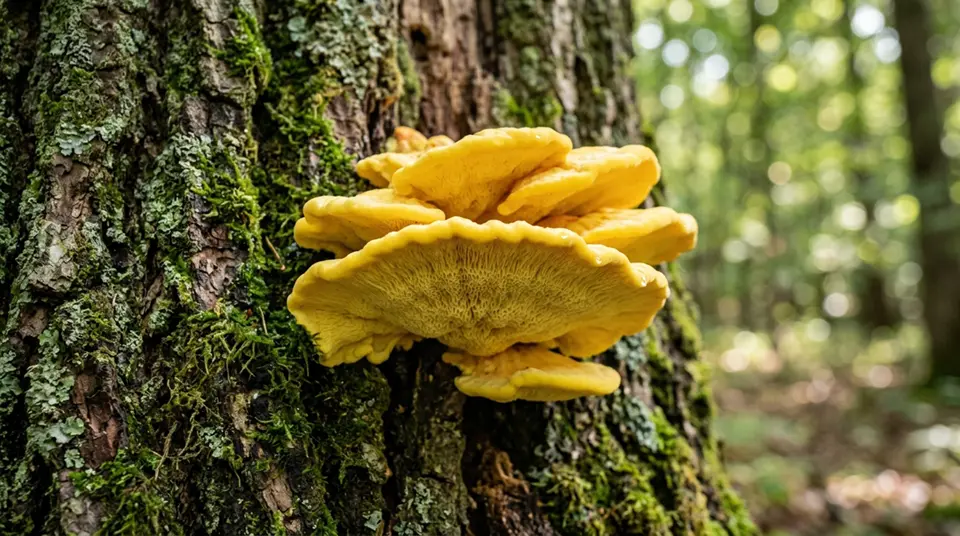
Fungi are particularly significant in this evolutionary discussion because they occupy a unique position between microbial simplicity and multicellular complexity. Modern fungi display sophisticated cellular organization, nutrient transport systems, and symbiotic relationships with plants and ecosystems worldwide. Understanding their evolutionary origins could provide clues about how multicellular cooperation first evolved.
Researchers noted that studying ancient microbial evolution may also improve understanding of modern biological systems, including immunity, metabolism, cellular repair, and environmental adaptation.

Implications for Astrobiology and Life Beyond Earth
The findings arrive during a period of rapidly expanding interest in evolutionary microbiology, astrobiology, and the search for life beyond Earth. Some scientists believe understanding how complexity emerged on Earth could help researchers identify potential biosignatures on distant planets.
If simple microbial communities can evolve into highly complex ecosystems under the right environmental pressures, it raises broader questions about how common complex life may be across the universe.
Scientific Uncertainty and Ongoing Debate
Despite the excitement surrounding the discovery, scientists caution that many questions remain unresolved. The fossil record for microorganisms is extremely limited, and evolutionary relationships reconstructed from genomic data can still be debated. Researchers continue comparing archaeal genomes with eukaryotic cellular machinery to better understand where the boundaries between simple and complex life truly began.
Future studies may reveal even older or more primitive microbial lineages that further alter the evolutionary tree.
Still, the growing body of evidence surrounding Asgard archaea is increasingly difficult to ignore. What once appeared to be a sharp biological divide between simple microbes and complex organisms now looks more like a gradual continuum shaped over billions of years.
The research reinforces a humbling idea: beneath the enormous diversity of life on Earth — forests, animals, fungi, and humans alike — may lie a shared microbial ancestry hidden deep within ancient oceans long before complex civilization ever existed.
References
According to IFLSCIENCE