According to USA TODAY
A Quiet Menace Beneath Our Feet
A lethal fungus is on the move across America’s soil, carried not by sneezes or handshakes but by dust and wind. Valley fever (coccidioidomycosis) is no longer a rare disease confined to the parched deserts of the Southwest. It is spreading north and west, creeping into cooler, once-safe regions of the country.
Public health experts warn that climate change, drought, and heavy rainfall are creating the perfect conditions for the fungus Coccidioides to thrive. In places like California’s Central Coast and Oregon’s green valleys, a disease once considered regional is becoming a national threat.
The surge is invisible until it isn’t. Spores rise unseen from disturbed soil; a single breath can carry them deep into the lungs. And yet, because its symptoms mimic flu or pneumonia, Valley fever is often misdiagnosed, delaying treatment and endangering lives.

Source: CDC Public Health Image Library, Public Domain
From Local to National Threat
For decades, Valley fever was a disease of Arizona and California’s interior valleys—hot, dry, and dusty environments. But data from the California Department of Public Health (CDPH) show a dramatic increase in cases: from about 1,000 a year in the early 2000s to nearly 12,500 cases in 2024—a record high.
Monterey County on the Central Coast, famous for its strawberries and ocean breezes, now records hundreds of cases annually. “It’s very difficult to avoid dust in our environment,” said Christie Michie of the county health department. “What we don’t want is people to get really sick with Valley fever.”
Public health projections are sobering. By the end of the century, scientists expect Coccidioides to flourish well north of the Canadian border and into the Midwest. Already, infections have been documented as far north as Washington and Oregon—areas that were once too cool for the fungus to thrive.
How the Fungus Spreads
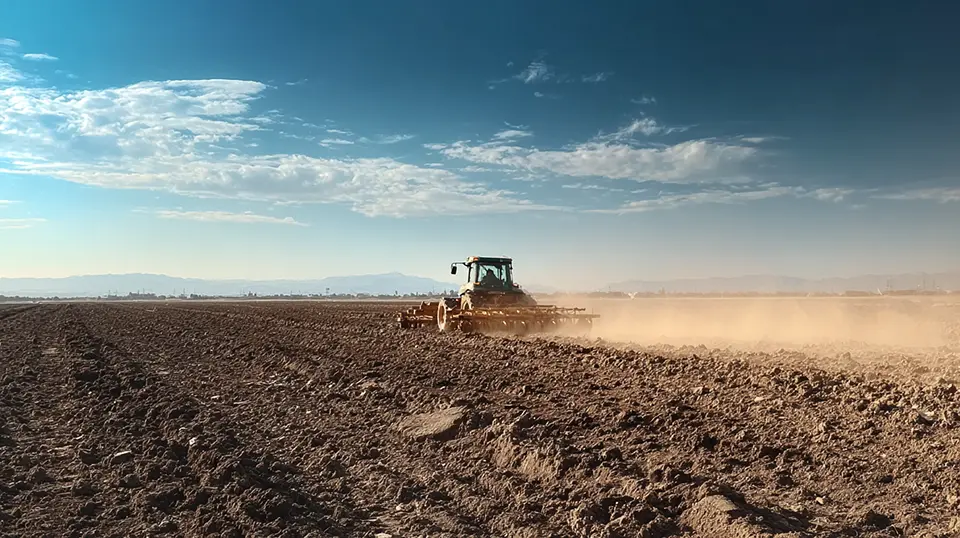
Valley fever is caused by Coccidioides immitis and Coccidioides posadasii, soil-dwelling fungi native to the Americas. They produce hardy spores called arthroconidia, which become airborne when soil is disturbed by wind, construction, or farming.
Exposure does not always cause disease, but when it does, the illness can range from mild to life-threatening. Symptoms typically appear one to three weeks after inhaling spores and include cough, fever, rash, fatigue, headache, and shortness of breath.
For most, symptoms resolve within weeks. But about 5–10% of patients develop serious or chronic lung complications. In around 1%, the infection disseminates to other parts of the body—the brain, bones, or skin—causing meningitis, hydrocephalus, and even death.
Those most at risk include people with weakened immune systems, pregnant women, individuals with diabetes, and Black and Filipino populations, who are disproportionately affected by severe disease.

Source: Wikimedia Commons, CC BY-SA 4.0
A Disease Fueled by Extreme Weather
Heavy rainfall followed by drought creates ideal conditions for Coccidioides spores. Wet seasons encourage fungal growth in the soil; dry periods turn that soil to dust, ready to be carried by wind. “Even a single spore can cause the disease,” said Dr. George Thompson, codirector of the University of California, Davis Center for Valley Fever.
This weather pattern—sometimes described as the “grow and blow” cycle—has intensified under climate change, as once-predictable seasons give way to extremes. More intense storms, longer droughts, and new dust corridors provide the fungus with unprecedented mobility.
Hidden in Plain Sight
Because Valley fever resembles other respiratory infections, it is often missed by clinicians. Patients may endure rounds of ineffective antibiotics while the fungus spreads unchecked.
Kern Medical Center’s Valley Fever Institute in Bakersfield has taken up the task of education, hosting monthly Zoom calls for patients. “It can go undiagnosed,” said Bianca Torres, a program coordinator whose father was hospitalized with the disease. “It’s important to also advocate for yourself.”
Some cases are stark reminders of the stakes. Bill Perske, a 39-year-old butcher from San Luis Obispo County, had never heard of Valley fever when he developed a cough and fever in late 2023. Months later, he experienced migraines, vomiting, and seizures. An MRI revealed hydrocephalus—a buildup of fluid in his brain caused by disseminated Valley fever.
He now lives with a port to drain the fluid. “If not, you could just die, straight up,” Perske said. “You get written off as a statistic.”

Source: Wikimedia Commons, CC BY-SA 4.0
New Frontiers of Infection
Valley fever is no longer limited to farmworkers, construction crews, or prison inmates in arid regions. Suburban residents, weekend golfers, and even pets are at risk. Registered nurse Dana Brucker’s dog developed Valley fever from spores in her backyard in Bakersfield.
“Awareness is our biggest weapon,” Brucker said. “People don’t realize you can catch this in your own yard.”
The disease now threatens a wider cross-section of society, from agricultural laborers to office workers moving into newly developed neighborhoods.
Public Health Response
California’s health authorities are urging clinicians to consider Valley fever in patients with unexplained pneumonia—especially during peak seasons. Some hospitals, like Salinas Valley Health, have even designated in-house “cocci gurus” to spearhead diagnostics and treatment.
“There’s not a lot of awareness at all,” said Brucker. “But now we’re at the point where if you’ve got pneumonia, we’re thinking about it right up front,” added Dr. Allen Radner, an infectious disease specialist who sees multiple new cases a day during fall.
Antifungal medications, such as fluconazole or itraconazole, can reduce the risk of severe outcomes if started promptly. However, there is no vaccine, and one infection, while conferring lifelong immunity, can leave lasting damage.
The Climate Connection
The story of Valley fever is a microcosm of how climate change can shift the map of infectious disease. Warmer temperatures expand the fungus’s habitable range. Drought and dust storms provide dispersal. Urban sprawl and construction disturb soils, exposing more people.
Researchers are racing to refine predictive models that combine climate data, soil analysis, and human case reports to forecast where Coccidioides will emerge next. This approach may help public health agencies allocate resources, warn communities, and prepare clinicians.
But forecasting alone is not enough. “We must build systems to diagnose, treat, and track fungal disease with the same urgency we apply to viral outbreaks,” Dr. Thompson has said in previous interviews.
My Perspective: A National Wake-Up Call
Valley fever embodies the convergence of two forces: neglected fungal disease and accelerating climate change. It shows how a once-regional pathogen can quietly become a nationwide threat when environmental conditions shift.
Yet public health investment in fungal disease lags far behind that for viruses and bacteria. Without sustained surveillance, clinician training, and research funding, more Americans will fall ill without ever knowing why.
The lesson from California’s Central Coast to Oregon’s green hills is clear: the ground itself is changing beneath us. Valley fever is not an anomaly—it is a warning.
What Needs to Happen Next
- Surveillance: Expand soil and air spore monitoring across the U.S. to track Coccidioides spread.
- Education: Train healthcare providers in endemic and emerging areas to recognize Valley fever early.
- Equity: Protect high-risk populations, including farmworkers and marginalized communities, with better housing, protective gear, and medical access.
- Research: Invest in vaccine development and new antifungal drugs.
- Climate Adaptation: Incorporate fungal disease risk into broader climate-health planning.
Valley fever is no longer just a Southwestern problem. It’s a national test of whether public health can adapt as quickly as the fungi beneath our feet.
References
- Centers for Disease Control and Prevention (CDC). “Coccidioidomycosis (Valley Fever).”
- California Department of Public Health (CDPH). Valley Fever Annual Reports.
- The Lancet Planetary Health. “Climate change and fungal disease.” Lancet Planet Health (2024).
- Carbon Brief. “How Climate Change Is Empowering Fungi.” (2024).
According to USA TODAY