
According to GOERIE
Indoor mold remains one of the most misunderstood environmental health issues in residential and commercial buildings. While mold is often treated as a cosmetic or cleanliness concern, experts emphasize that certain mold types can pose real health risks when allowed to grow unchecked. A newly released educational resource focused on identifying harmful mold types seeks to address this knowledge gap by helping the public better understand what mold is, why it forms, and which varieties warrant particular attention.
The release reflects a growing recognition that awareness and early identification are critical components of mold risk management. Rather than reacting only once mold becomes visible or severe, experts increasingly advocate for proactive education that empowers occupants to recognize warning signs before indoor air quality is compromised.
From my perspective as a reporter focused on environmental health, this initiative highlights a shift in how mold is being framed: not merely as a maintenance issue, but as an indoor environmental hazard that benefits from informed decision-making.

Source: Wikimedia Commons, CC BY-SA 4.0
Why Mold Identification Matters
Mold is a natural part of the environment, and not all mold growth is inherently dangerous. However, problems arise when mold develops indoors, where ventilation is limited and occupants are exposed over extended periods.
Correct identification matters for several reasons:
- different molds have different health implications,
- some species spread more aggressively than others,
- certain molds indicate chronic moisture problems, and
- remediation strategies vary depending on mold type and extent.
Without basic knowledge, occupants may underestimate serious growth or overreact to benign surface mold. Educational resources aim to bridge this gap by offering clear, evidence-based distinctions.
The Conditions That Allow Harmful Mold to Thrive
Harmful indoor mold growth is rarely accidental. It almost always signals persistent moisture issues, such as:
- water leaks or plumbing failures,
- flooding or water intrusion,
- condensation from poor ventilation,
- high indoor humidity, or
- damp building materials that fail to dry properly.
Once moisture is present for 24 to 48 hours, mold spores—which are already present in indoor air—can begin to colonize surfaces. Over time, colonies expand, releasing spores and fragments into the air that occupants breathe.
Educational efforts emphasize that mold prevention begins with moisture control, not cleaning products alone.

Source: Wikimedia Commons, CC BY-SA 4.0
Common Harmful Mold Types Found Indoors
The educational resource highlights several mold types frequently associated with indoor health concerns. While visual identification alone is not definitive, recognizing common patterns can prompt timely investigation.
1. Stachybotrys chartarum
Often referred to as “black mold,” this species grows on water-damaged cellulose-based materials such as drywall and wood. It is associated with prolonged moisture exposure and is known for producing mycotoxins under certain conditions.
2. Aspergillus spp.
A large and diverse group of molds commonly found indoors. Some species are linked to allergic reactions and respiratory issues, while others can cause infections in immunocompromised individuals.
3. Penicillium spp.
Frequently found in water-damaged buildings, Penicillium spreads rapidly and can contribute to indoor air contamination through airborne spores.
4. Cladosporium spp.
This mold can grow on both damp and dry surfaces, including fabrics, wood, and HVAC systems. It is a common trigger for allergies and asthma symptoms.
5. Alternaria spp.
Often associated with moisture-damaged areas and condensation-prone surfaces. Alternaria is known to exacerbate respiratory allergies.
The presence of these molds indoors does not automatically indicate severe health risk, but their identification often signals underlying moisture problems that should not be ignored.

Source: Wikimedia Commons, CC BY-SA 3.0
Health Implications of Harmful Mold Exposure
Health responses to mold exposure vary widely. Some individuals may experience no symptoms, while others are more sensitive. The educational resource emphasizes that risk depends on duration, concentration, and individual vulnerability.
Potential health effects include:
- nasal congestion and sinus irritation,
- coughing, wheezing, or shortness of breath,
- headaches and fatigue,
- skin or eye irritation, and
- worsening asthma or allergic conditions.
In rare cases, particularly among immunocompromised individuals, certain molds can cause more serious infections.
What is often overlooked is that symptoms may develop gradually. Because mold exposure can mimic seasonal allergies or common respiratory infections, it may go unrecognized for extended periods.
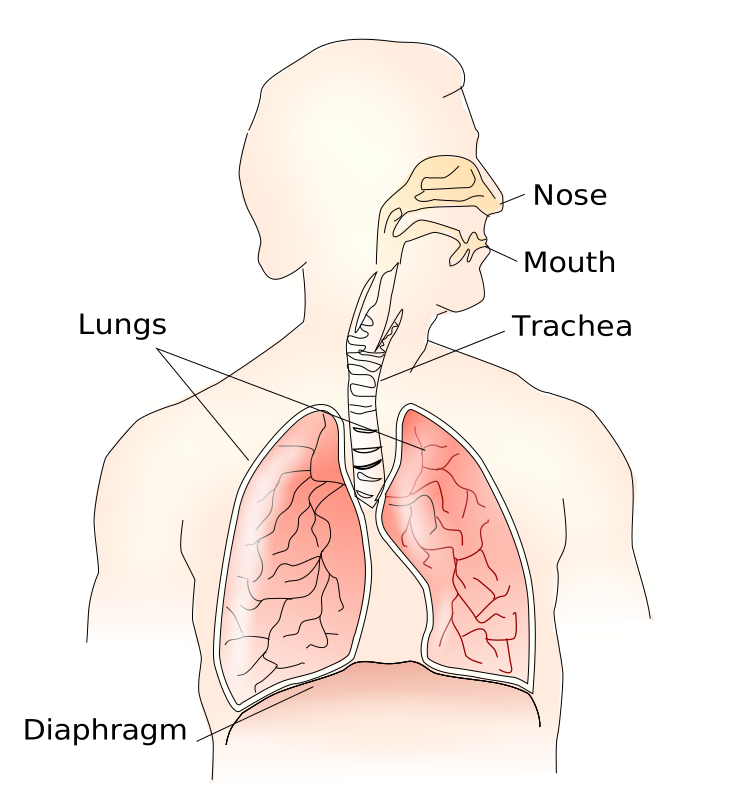
Source: Wikimedia Commons, CC BY-SA 3.0
My Perspective: Education as the First Line of Defense
What stands out in this initiative is its emphasis on education rather than alarm. Mold remediation is expensive, disruptive, and often stressful for occupants. By contrast, early awareness allows for simpler interventions—fixing leaks, improving ventilation, or controlling humidity—before mold becomes entrenched.
This approach reflects a broader shift in environmental health: empowering individuals with knowledge so they can make informed decisions rather than reacting in crisis mode.
Importantly, educational resources also help counter misinformation. Not all dark-colored mold is dangerous, and not all mold requires extreme remediation. Balanced information supports proportional responses.
From Identification to Action
The educational material stresses that visual identification alone is not a substitute for professional assessment. However, it provides guidance on when to seek expert help, such as when:
- mold covers a large area,
- growth returns after cleaning,
- occupants experience unexplained health symptoms, or
- mold follows water damage or flooding.
In these cases, professional inspection and testing may be appropriate to determine species, extent, and remediation strategy.
Equally important is addressing the root cause. Removing visible mold without resolving moisture issues often leads to recurrence.
Broader Implications for Indoor Environmental Health
Indoor mold issues are becoming more common as buildings grow more airtight and climate patterns produce more frequent humidity extremes. Educational initiatives play an increasingly important role in adapting to these changes.
By improving public understanding of mold types and risks, such resources support:
- healthier indoor environments,
- reduced long-term remediation costs,
- better communication between occupants and professionals, and
- more effective moisture management practices.
From a public-health perspective, this preventative focus aligns with broader efforts to improve indoor air quality and reduce environmentally driven health complaints.

Source: Wikimedia Commons, CC BY-SA 4.0
References
EPA – Indoor Air Quality (IAQ)
Bennett & Klich (2003) – Clinical Microbiology Reviews, Mycotoxins
According to GOERIE