According to NATURE
A Hidden Network Beneath Coffee Fields
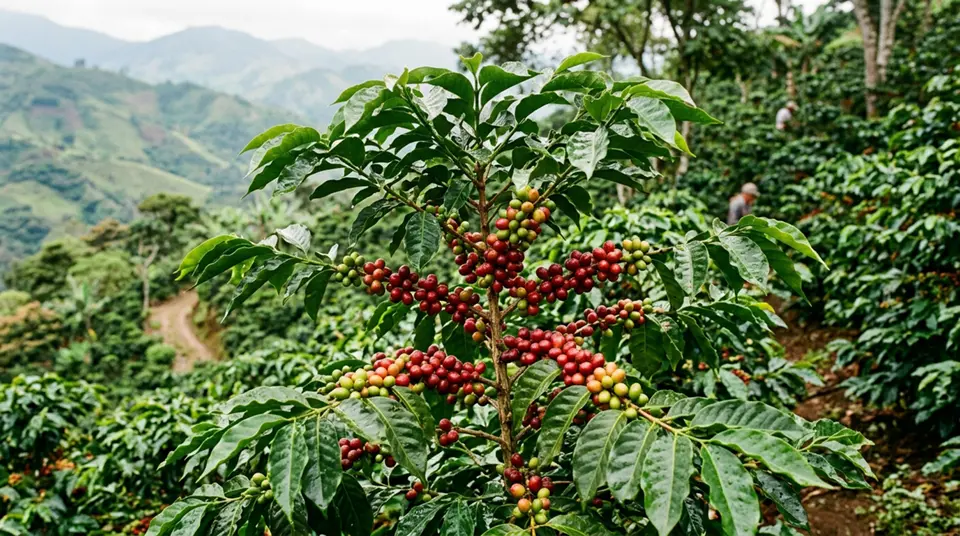
Beneath the surface of coffee plantations in Brazil’s Cerrado region, a complex and largely invisible network of fungi is quietly shaping plant health and productivity. Recent research on Coffea arabica cultivation highlights the ecological importance of arbuscular mycorrhizal fungi (AMF), organisms that form symbiotic relationships with plant roots and enhance nutrient efficiency in challenging soil conditions.
The Cerrado, known for its low-fertility tropical soils, presents a demanding environment for agriculture. In such conditions, the interaction between plants and soil microorganisms becomes critical. The study focuses on how AMF communities function within the rhizosphere—the zone of soil surrounding plant roots—across multiple coffee genotypes.

Symbiosis That Supports Growth
Arbuscular mycorrhizal fungi establish a mutually beneficial relationship with coffee plants. Through this association, fungi extend the root system’s reach, allowing plants to access nutrients such as phosphorus and nitrogen more effectively. In return, the plant supplies the fungi with carbohydrates derived from photosynthesis.
This exchange improves nutrient use efficiency and enhances the plant’s resilience to environmental stress. In nutrient-poor soils like those found in the Cerrado, such symbiosis plays a crucial role in sustaining crop productivity.

Examining Diversity Across Coffee Genotypes
The study analyzed 35 different Coffea arabica genotypes to assess whether variations in plant genetics influence fungal activity and community composition. Researchers measured spore density, root colonization, and fungal diversity using both morphological identification and advanced statistical analyses.
Interestingly, the results showed no significant differences in spore density or root colonization among the genotypes. This suggests that, under consistent environmental and management conditions, AMF interactions follow a generalist pattern rather than being strongly influenced by plant genetic variation.
A Diverse Fungal Community
Despite the uniformity in colonization levels, the study identified a rich diversity of fungal species. A total of 13 AMF genera were recorded, indicating a complex and dynamic microbial ecosystem within the soil.
Among the most frequently observed genera were Glomus, Claroideoglomus, and Racocetra. These fungi are known for their adaptability and effectiveness in forming symbiotic relationships with a wide range of plant species.
The presence of such diversity highlights the resilience of fungal communities and their ability to persist across different plant genotypes.

Subtle Variations in Community Structure
Advanced analytical methods, including canonical correspondence analysis (CCA), principal component analysis (PCA), and hierarchical clustering, were used to explore patterns within the fungal communities.
The findings revealed only minor variations in community composition, with no clear grouping based on coffee genotype. This reinforces the idea that environmental factors and management practices may play a more significant role than plant genetics in shaping fungal communities under these conditions.
Implications for Soil Management
The ecological role of AMF extends beyond individual plant growth. By contributing to nutrient cycling and soil structure, these fungi support overall soil health and sustainability.
The study suggests that monitoring mycorrhizal activity could become an important tool in integrated soil management. By understanding the composition and function of fungal communities, farmers may be able to optimize agricultural practices and improve long-term productivity.
Toward Locally Adapted Fungal Solutions
One of the key implications of the research is the potential to develop locally adapted fungal consortia—combinations of beneficial fungi tailored to specific environmental conditions. Such approaches could enhance crop resilience and reduce dependence on chemical fertilizers.
In regions like the Cerrado, where soil fertility is naturally limited, leveraging native fungal communities may provide a sustainable pathway for agricultural development.
A Broader Perspective on Agricultural Systems
The findings contribute to a growing recognition of the importance of microbial ecology in agriculture. Rather than viewing soil solely as a physical medium, this perspective emphasizes its role as a living system shaped by interactions between plants and microorganisms.
Fungi, in particular, are emerging as key drivers of these interactions, influencing not only plant growth but also ecosystem stability.
Challenges and Future Research
While the study provides valuable insights, it also highlights the complexity of fungal ecosystems. Further research is needed to understand how environmental variables, agricultural practices, and climate change may influence these interactions over time.
Developing practical applications based on these findings will require collaboration between researchers, farmers, and agricultural institutions.
A Hidden Force in Coffee Production
The term “underground baristas” captures the essential role these fungi play in supporting coffee cultivation. Though unseen, they contribute to the quality and sustainability of coffee production by enhancing nutrient availability and plant resilience.
As global demand for sustainable agriculture grows, the importance of such natural systems becomes increasingly clear. Understanding and harnessing the power of mycorrhizal fungi may be a key step toward more resilient and efficient farming practices.
References
According to NATURE