According to EXPRESS
A Simple Spray Against a Stubborn Problem
Mould remains one of the most persistent and underestimated issues in modern homes, particularly during autumn and winter when moisture, poor ventilation, and colder temperatures converge. While many commercial products promise fast results, some households are turning to simple, affordable solutions—like a viral two-ingredient mould spray that’s gaining traction on social media for its ease and effectiveness.
Cleaning expert and content creator Chantel Mila, known for her practical cleaning hacks, recently shared a mould-fighting formula composed of just two common household ingredients: hydrogen peroxide and washing-up liquid. The solution, which she calls “powerful,” is promoted not just as a mould remover—but also as a preventive agent against recurrence.
What the Spray Contains
According to Chantel, the mixture consists of:
- 1 cup of hydrogen peroxide (3%)
- 1 tablespoon of washing-up liquid
- (Optional: a few drops of clove oil or tea tree oil)
This combination, she claims, is effective in treating mould on various surfaces including bathroom tiles, washing machine seals, and fabrics. The formula is simple to prepare and is stored in a dark spray bottle to preserve the potency of hydrogen peroxide, which can degrade when exposed to light.
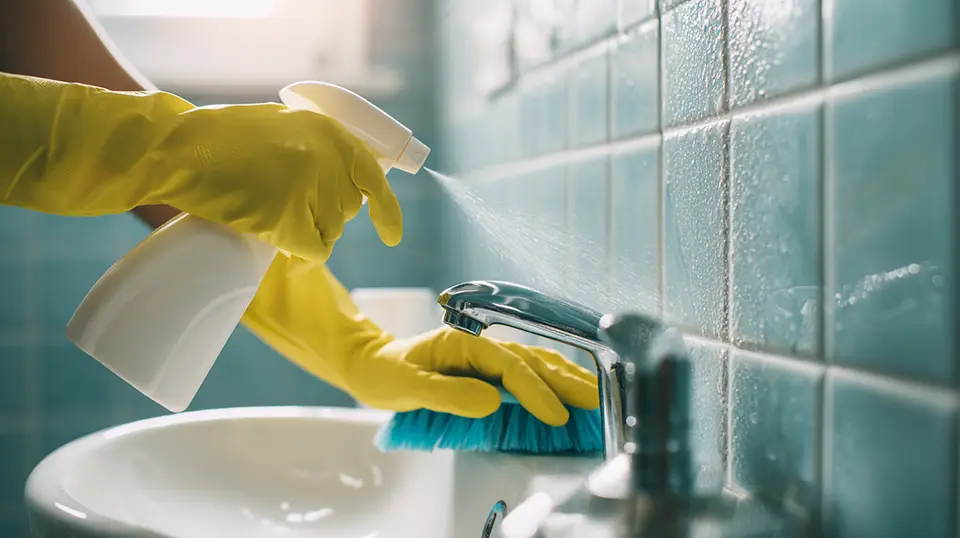
The process involves spraying the affected area, letting it sit briefly, and then wiping it away with a cloth. It is important to ensure surfaces are completely dried afterward to prevent further growth.

Source: Wikimedia Commons (CC BY-SA 3.0)
Why Hydrogen Peroxide?
Hydrogen peroxide is a mild antiseptic commonly used in homes for minor wounds and disinfection. However, it also has known antifungal and bleaching properties, making it an effective mould treatment agent.
When applied to fungal colonies, it reacts by releasing oxygen, which helps break down the mould structure and kill spores.
Multiple studies have supported its use in low concentrations (typically 3% for household use) as a disinfectant against Aspergillus, Penicillium, and Cladosporium, three of the most common indoor mould species.
Unlike bleach, which may only remove surface stains, hydrogen peroxide penetrates porous materials more deeply—making it more effective in targeting the root of the infestation without producing toxic fumes.

Biological Microscope (XSP-00) with 40X objective,
Olympus E-620 with Olympus Zuiko EC-20 2x teleconverter and a microscope tube adapter with no optical element.
Source: Wikimedia Commons (CC BY-SA 4.0)
Why Dish Soap?
Washing-up liquid (or dish soap) acts as a surfactant, helping to loosen dirt and mould residues on surfaces. It breaks down biofilms that mould colonies often produce, making it easier for the hydrogen peroxide to reach and destroy fungal cells.
When used together, these two ingredients work in tandem—one lifting residues, the other chemically neutralizing spores.
Optional Additions: Clove and Tea Tree Oil
Clove and tea tree oil are popular essential oils known for their antifungal and antibacterial properties. Both oils contain compounds—such as eugenol in clove oil and terpinen-4-ol in tea tree oil—that have been shown to inhibit mould growth in laboratory settings.
However, while effective, these ingredients should be used sparingly. Essential oils are potent and can cause skin or respiratory irritation in sensitive individuals, especially when used in poorly ventilated areas. Moreover, they are not always necessary for the spray to be effective.
Real-World Application and Effectiveness
Mila’s recipe has gained attention not just for its affordability, but for the apparent real-world results demonstrated in her video and user testimonials. The application on shower corners, washing machine rubber seals, and tile grouting appears to restore surfaces to a clean, mould-free condition.
However, experts caution that while visible mould may be removed, full eradication depends on treating the cause—not just the surface symptoms. If underlying moisture or condensation issues persist, mould may return.

Source: Wikimedia Commons (CC BY-SA 4.0)
When Is DIY Enough—and When It Isn’t
DIY mould removal is considered effective for:
- Small mould patches (under 1m²)
- Non-porous surfaces (tiles, glass, plastic)
- Early-stage or superficial growth
- Maintenance cleaning in bathrooms and laundry areas
However, DIY methods are insufficient in cases of:
- Widespread or hidden mould (behind walls, under carpets)
- Porous materials like unsealed drywall, ceiling tiles, or wood
- Musty odours that persist despite cleaning
- Mold-related health symptoms (respiratory irritation, skin rashes)
In such scenarios, homeowners are advised to consult licensed mould remediation professionals to prevent structural damage and safeguard occupant health.
Health Risks Associated With Indoor Mould
Mould exposure poses varying health risks depending on species, exposure level, and individual sensitivity. Common symptoms include:
- Nasal congestion, coughing, and wheezing
- Skin irritation or eye redness
- Exacerbation of asthma
- Infections in immunocompromised individuals
Particularly at risk are children, the elderly, and those with respiratory or immune conditions. The World Health Organization (WHO) has emphasized the importance of maintaining dry, well-ventilated housing to reduce fungal exposure.
Why Mould Worsens in Autumn and Winter
During colder months, several factors increase mould risk:
- Increased condensation due to temperature differences between indoor and outdoor air
- Poor ventilation from closed windows and heavy insulation
- Drying clothes indoors, raising indoor humidity
- Steam from hot showers and cooking in enclosed spaces
Preventative strategies include regular airing out, using extractor fans, insulating cold surfaces, and keeping relative humidity below 60%.

Source: Wikimedia Commons (CC BY-SA 4.0)
Benefits of DIY Mould Treatments
- Cost-effective – Ingredients are low-cost and already present in many homes.
- Lower toxicity – Unlike bleach-based products, hydrogen peroxide decomposes into water and oxygen.
- Accessible – Requires no special tools or certifications.
- Environmentally friendly – Produces fewer VOCs than chemical cleaners.
Precautions and Safety Tips
- Use gloves when applying the spray, especially on skin-sensitive areas.
- Ensure good ventilation when spraying in enclosed areas.
- Avoid contact with eyes or ingestion.
- Never mix hydrogen peroxide with vinegar in the same container—this creates peracetic acid, a skin and lung irritant.
- Store in a dark bottle, away from children or pets.
Expert Commentary
Environmental hygienist Dr. Lorna Mills commented:
“Hydrogen peroxide is a practical and safer alternative to bleach for mould cleaning at the household level. However, regular cleaning must be coupled with moisture control to prevent recurrence.”
Meanwhile, respiratory physician Dr. James Wilder noted:
“Many patients aren’t aware that recurrent cough or sinus issues could be linked to their living environment. Mould is often invisible until it’s already causing symptoms.”
Conclusion: Powerful, Practical, But Not a Panacea
Chantel Mila’s viral mould spray recipe demonstrates the value of practical knowledge in promoting healthier living spaces. While not a substitute for professional intervention in severe cases, the two-ingredient solution offers a low-cost, non-toxic option for households facing routine mould concerns—especially as colder, damper months set in.
Still, consistent cleaning habits, ventilation, and prompt attention to moisture issues remain the most effective long-term strategies against mould recurrence.
References
- Hydrogen peroxide – Wikipedia
- Aspergillus – Wikipedia
- Penicillium – Wikipedia
- Cladosporium – Wikipedia
- CDC – Fungal Diseases
- Vinegar – Wikipedia
- Peracetic acid – Wikipedia
According to EXPRESS