According to BLACK MOUNTAIN NEWS
A New Approach to Detecting an Invisible Problem
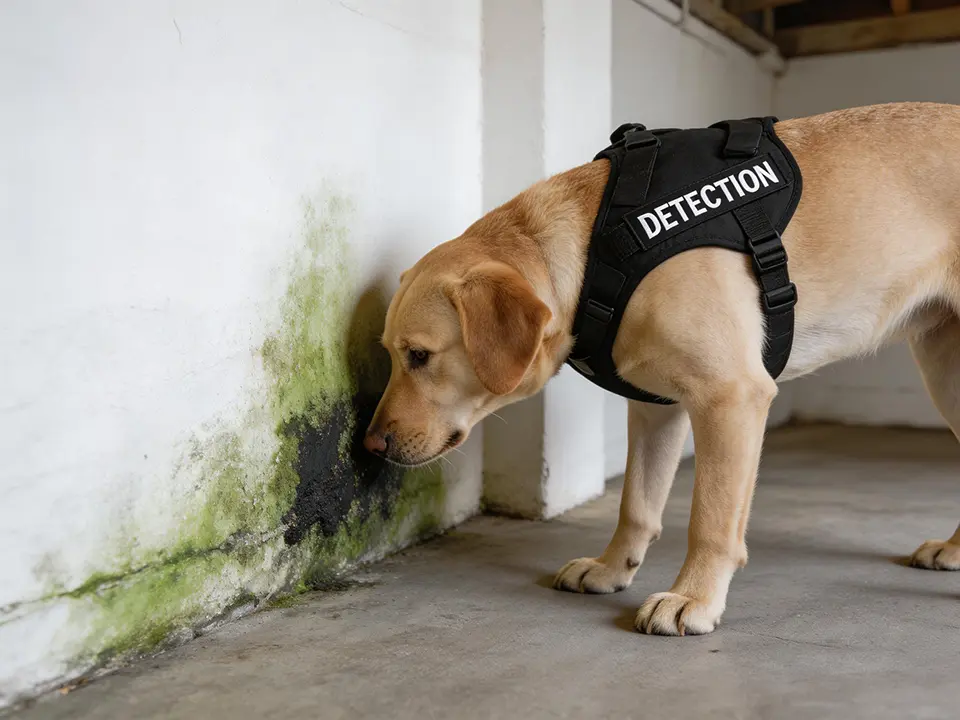
A unique mold detection method is gaining attention in Black Mountain, North Carolina, where a specially trained dog is being used to locate hidden mold in residential properties. The report highlights how canine scent detection, commonly used in law enforcement and medical fields, is now being applied to environmental inspection (CDC Mold Basics).
Mold often develops in concealed areas such as behind walls, under flooring, or within ventilation systems, making it difficult to identify through visual inspection alone. The use of trained dogs offers an alternative approach to detecting contamination that may otherwise go unnoticed.
How Mold Detection Dogs Work
The detection dog is trained to recognize the specific scent signatures associated with mold growth. Through conditioning and repeated exposure, the animal learns to identify volatile organic compounds (VOCs) released by fungal colonies.
When the dog detects these compounds, it signals to its handler, indicating the potential presence of mold in a specific area. This allows inspectors to focus their investigation on targeted locations rather than conducting invasive or time-consuming searches across entire structures.
The method relies on the dog’s highly sensitive olfactory system, which is capable of detecting substances at concentrations far below human perception.

Advantages Over Traditional Inspection Methods
Traditional mold detection often involves visual inspection, moisture measurement, and air sampling. While these methods remain essential, they can be limited when mold is hidden within structural components (EPA Mold Guide).
The use of detection dogs provides a non-invasive way to identify potential problem areas quickly. This can reduce the need for unnecessary demolition or exploratory work, saving time and resources.
Additionally, early detection can help prevent further spread by allowing homeowners to address issues before they become more severe.
Applications in Residential and Commercial Settings
Although the report focuses on residential use, the technology has potential applications in a range of environments. Commercial buildings, schools, and healthcare facilities may also benefit from early mold detection (WHO Indoor Air Quality).
In environments where indoor air quality is critical, such as hospitals or childcare centers, identifying hidden contamination can be particularly important.
The adaptability of detection dogs allows them to operate in various settings, making them a versatile tool in environmental assessment.
Mold as a Hidden Environmental Hazard
Mold is a common environmental organism that thrives in areas with excess moisture. It can develop in response to leaks, flooding, condensation, or inadequate ventilation (CDC Dampness and Mold).
Because mold can grow in concealed spaces, its presence is not always immediately visible. By the time visible signs appear, the contamination may already be extensive.
The report underscores the importance of identifying mold early to reduce potential damage to property and minimize exposure.

Health Considerations Related to Mold Exposure
Exposure to mold can affect individuals differently. For some, it may result in mild symptoms such as irritation or allergic reactions. For others, particularly those with respiratory conditions or weakened immune systems, exposure may lead to more significant health concerns (WHO Air Pollution and Health).
Airborne spores released by mold can contribute to indoor air quality issues. While not all mold exposure leads to illness, reducing exposure is considered an important aspect of maintaining a healthy living environment.
Integration With Standard Remediation Practices
The use of detection dogs is not presented as a replacement for traditional remediation methods. Instead, it is positioned as a complementary tool that enhances the identification process.
Once mold is detected, standard remediation procedures—such as removing contaminated materials, addressing moisture sources, and restoring air quality—remain necessary (EPA Remediation Guide).
The combination of detection and remediation provides a more comprehensive approach to managing mold.
Scientific Basis of Scent Detection
Dogs have long been used to detect substances such as narcotics, explosives, and even certain medical conditions. Their ability to identify specific chemical signatures makes them well suited for detecting mold-related compounds.
The report suggests that this application builds on established principles of scent detection, adapting them to environmental health contexts.
Ongoing training and certification are required to ensure accuracy and reliability in detection.
Common Indoor Mold Species
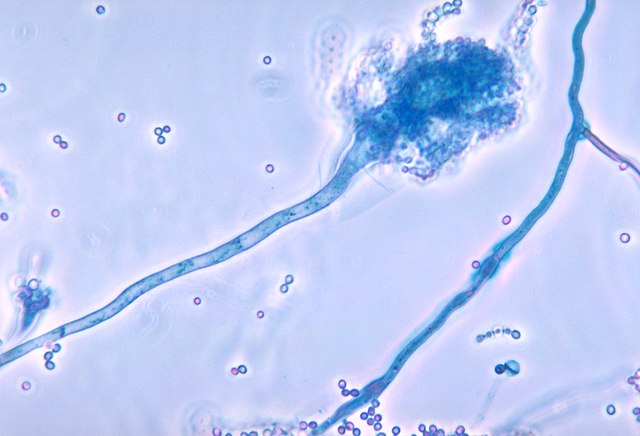
The types of mold that detection dogs may identify include common indoor species such as Aspergillus fumigatus, Penicillium chrysogenum, and Cladosporium cladosporioides.
In environments with prolonged moisture, Stachybotrys chartarum, often referred to as black mold, may also be present. These fungi produce airborne spores and chemical compounds that can be detected under certain conditions.
Understanding these species provides context for the environmental conditions being assessed.
Early Detection as a Preventive Strategy
The report emphasizes that early detection is a key factor in preventing extensive mold damage. Identifying contamination at an early stage allows for more targeted and less disruptive interventions.
This approach aligns with broader principles of preventive maintenance, where addressing issues early reduces long-term costs and risks.
Growing Interest in Innovative Environmental Tools
The use of detection dogs reflects a growing interest in innovative methods for addressing environmental challenges. As awareness of indoor air quality increases, new technologies and approaches are being developed to improve detection and management.
These innovations complement traditional practices and expand the range of tools available to homeowners and professionals.
A Practical Tool for Modern Environmental Challenges
The report concludes that while mold remains a persistent issue in many buildings, new methods such as canine detection provide additional options for addressing the problem.
By combining scientific understanding with practical application, these approaches contribute to more effective management of indoor environments.
References
WHO. Air Pollution and Health.
According to BLACK MOUNTAIN NEWS