According to INDEPENDENT
Return to the Forest
Someone drops a wicker basket quietly onto a bed of autumn leaves near Potsdam. Brown-capped porcini glisten beside honeyed armillaria, purple brittlegills gleam in the dappled light—and creeping among them, subtle but deadly, lie green death caps. For Wolfgang Bivour, a veteran fungi connoisseur, that moment is more than food gathering: it is a lesson, a warning, and a bridge to reconnect humans with forest life.

Source: Wikimedia Commons, CC BY-SA 4.0
Over recent years, mushroom hunting—which once sustained rural Germans in lean times—has quietly reawakened across cities. Under the impulse of pandemic restrictions, growing vegan diets, and an ecology-minded public, urbanites are treading forest paths anew. Bivour and others lead crowds under towering oaks each autumn, teaching them Latin names, edibility rules, ecological roles—and the stark dangers of misidentification.
A Legacy Revisited
After World War II, foraging was practical necessity. But Germany’s economic boom of the 1950s relegated the practice to fading memory in urban life. In the shadows it lingered—in rural families, in old hands of forests. Today, fueled by social media images and an earnest search for culinary authenticity, the old craft is rediscovered. Guided tours, Instagram posts, and Bivour’s own “Pilz-Podcast” help reshape foraging from quaint antiquity to eco-chic hobby.
Karin Flegel of Urania Potsdam notes that classes fill within hours—an indicator of revived demand. Many participants first came to “hit the woods” during lockdown, then stayed for the scent of soil, the marvel of nature, and the possibility of a wild dinner.
The Thrill of Discovery—and the Fear
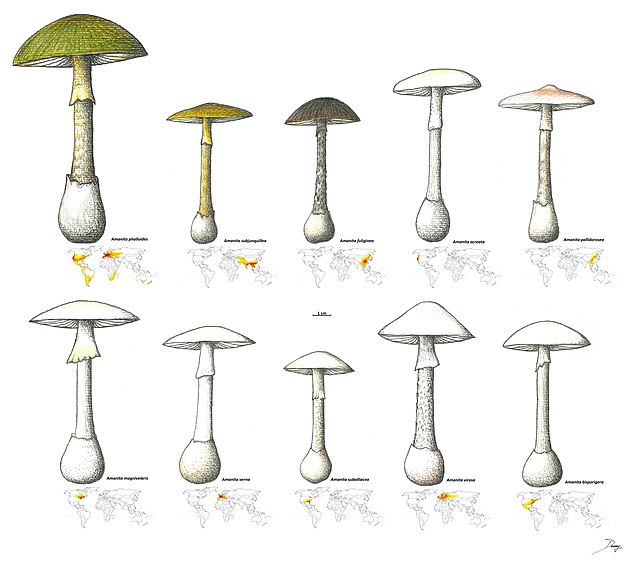
Yet for all romantic appeal, mushroom foraging carries grave risk. The green death cap (Amanita phalloides) is the most lethal and infamous threat in German woodlands. It can be mistaken for edible species—indeed, its resemblance to the common white button mushroom tempts even those with caution.

Source: Wikimedia Commons, CC BY-SA 4.0
Germany’s Federal Institute for Risk Assessment (BfR) estimates that death caps are responsible for at least 80% of fatal mushroom poisonings in the country.
Medical centers in Hannover report rising admissions from mushroom poisoning—again, death caps predominate.
“Mushrooms: confusion can be life-threatening,” warns the BfR, noting that amateur collectors often misidentify deadly species.
In severe poisoning, A. phalloides toxins (amatoxins) disrupt liver RNA polymerase II, causing acute liver failure.
One recent study, covering poisonings in southeastern Germany from 2005 to 2022, found that A. phalloides accounted for the largest share of severe cases.
As climate change shifts fungal ranges, the number of exposures may rise.
New Foragers, New Cautious Ways
Among the new wave is Tim Köster, a 25-year-old student. He admits he “doesn’t dare yet”—preferring to bring mushrooms to experts for validation. Others carry guidebooks, use apps cautiously, and avoid foraging alone. The shared sentiment: excitement tempered by respect for wild danger.
Experienced foragers and biologists stress fundamental rules:
- Only collect if you are absolutely certain of identity.
- Keep a full specimen (cap, stem, gills) to aid later identification.
- Use local advisory centers or mycological societies to validate uncertain finds.
- Never rely solely on smartphone apps—they make errors too.
- Limit yourself initially to a few well-known edible species (e.g. porcini, bay boletes, slippery jacks) until confidence builds.
In many German towns, “mushroom verification booths” pop up in autumn markets or educational centers, allowing collectors to submit finds for expert review. Bivour himself often receives calls from hospitals needing help identifying suspicious finds or suspected poisonings.
Cultural and Ecological Richness
What draws people beyond food is the narrative: mushrooms are soil engineers, nutrient recyclers, and symbionts in forest networks. Bivour doesn’t just point out a porcini—he speaks of its mycelial web, how it partners with roots, how it signals forest health.
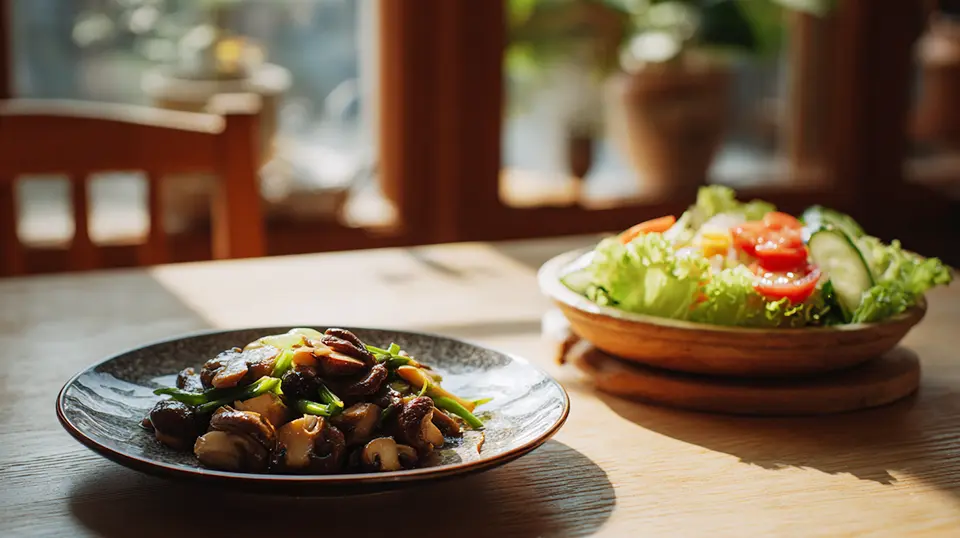
From a culinary perspective, foragers prize the difference between supermarket varieties and forest-wrought flavor: porcini sautéed in butter, bay boletes grilled on bread, wood hutch mushrooms in stews. For those embracing vegan or plant-based diets, wild mushrooms offer umami depth and seasonal variety.

Source: Wikimedia Commons, CC BY-SA 4.0
Challenges Ahead
This revival, though vibrant, must reckon with risks and responsibilities:
- Poisoning dangers: Mistakes cost lives. Education and strict safety must accompany enthusiasm.
- Regulating foraging: Some forests limit harvesting to prevent overcollection or disturbance to ecosystems.
- Changing fungal habitats: Climate change may shift mushroom species’ ranges, introducing new risks in unfamiliar areas.
- Cultural mismatch: Many immigrants may be unfamiliar with European toxic species and rely on assumptions from their homelands, increasing risk.
- Fragmented knowledge: The decline of traditional wisdom means many are learning from scratch—reliant on modern tools or short courses.
This mushroom renaissance strikes me as symbolically rich: in seeking forest bounty, people reclaim a forgotten bond with nature. Urban dwellers trading concrete for leaf litter, viral mushroom selfies for wild humility—they’re reaching toward grounded experience. But I worry that romanticism may outpace caution. One green death cap in the basket can turn joy into tragedy.
Source: Wikimedia Commons, CC BY-SA 4.0
The surge is a beautiful thing—if handled with discipline. If each forager treats the forest as a teacher, not just a pantry, then this resurgence can be sustainable. If each mushroom collected inspires awe, not arrogance, then foraging can once again be a wise, humble passion—not a gamble.
According to INDEPENDENT