According to THE CONVERSATION
I. The Census of the Interior: Fungi Emerge from the Shadows
In the sprawling, bustling metropolis that is the human body, we’ve long focused on the loudest residents: the trillions of bacteria we call the microbiome. They are the undeniable superstars of modern health research, the headline-grabbers. Yet, a quieter, often overlooked kingdom—the fungi—has been diligently toiling in the background, a subtle but essential part of our internal ecosystem. This fungal community, known as the mycobiome, is finally stepping out of the shadows, and what researchers are finding is less a microscopic oddity and more a profound co-pilot in the journey of health.
To grasp the mycobiome’s scale, imagine a crowded city street. The bacteria are the vast, elbow-to-elbow throng, filling every corner. The fungi, by comparison, are the scattered, distinct individuals—far fewer in number, perhaps making up less than 1% of the total microbial population, particularly in the gut. But this numerical minority is deceptive. Like a handful of giants standing among millions of average people, fungi are significantly larger than bacteria, meaning they command a noticeable share of the overall biological mass. Their influence, it turns out, is measured not just in headcount, but in impact.

Source: Wikimedia Commons, CC BY-SA 4.0
II. The Dual Citizen: Candida and the Immune System’s Training
The very concept of a fungal community within us might conjure uneasy thoughts—the specter of infection, a fear rooted in moments when these organisms turn opportunistic. But to view the mycobiome solely through the lens of disease is to miss the fundamental, delicate truth: for the majority of us, for most of the time, these fungi are not invaders but long-term, established residents maintaining a biological equilibrium, a state known as homeostasis.
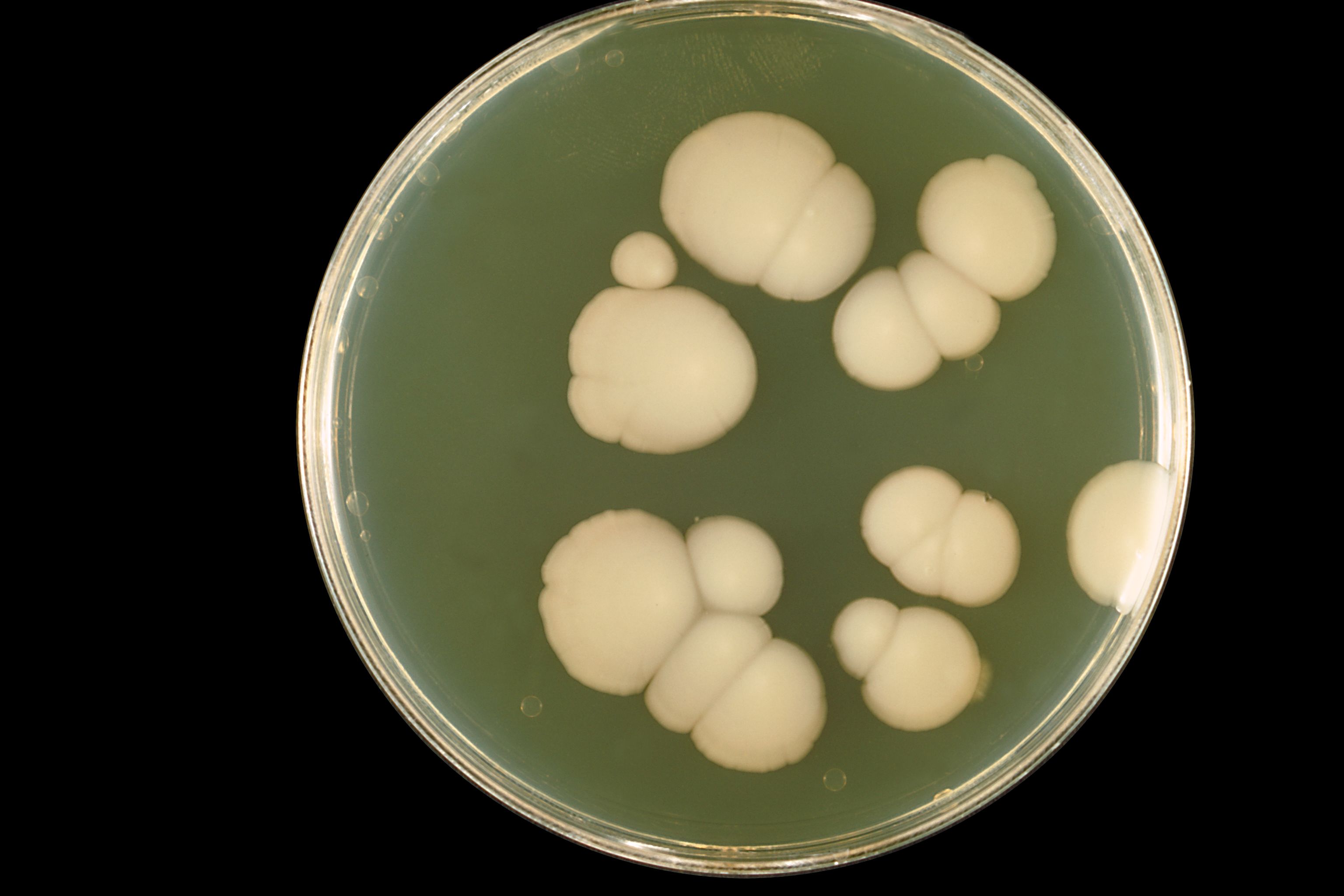
The most common fungal member, a type of yeast called Candida (with Candida albicans being the most frequently studied species), perfectly embodies this dual nature. In a healthy gut, it’s a benign, often beneficial presence. It participates in the intricate “housekeeping” of our intestines and, crucially, plays an unsung but vital role in training our immune system. Think of it as a sparring partner: the constant, low-level presence of these fungal antigens hones the body’s defenses, ensuring they are primed to recognize and repel actual threats. This interaction is not a clash, but a complex, cooperative dance that dictates how our body learns to tolerate friends while fighting enemies.
Source: Wikimedia Commons, Public Domain
III. The Barometer of Modern Life: Diet, Antibiotics, and Disruption
The health of this fungal landscape is a barometer, sensitive to the winds of our modern lifestyle. It is shaped from the moment we are born, influenced by everything from the mode of delivery to the earliest feeding choices. As we age, it continues to react dramatically to external factors. Diet, for instance, acts as a primary fertilizer, with certain foods favoring the growth of specific fungal species.
But perhaps the most impactful disturbance comes from the use of antibiotics. These medications, while indispensable for bacterial infections, are like a biological bulldozer: they wipe out vast numbers of the bacteria that naturally keep fungal populations in check. When the bacterial police are gone, the fungi, particularly opportunistic types like Candida, can proliferate, potentially shifting from harmless neighbors to agents of dysbiosis—an imbalance linked to inflammation and various diseases.

Source: Wikimedia Commons, CC BY-SA 4.0
IV. The Human Cost: Mycobiome Links to Gut and Brain
Recent research has begun to draw sharp lines between a disturbed mycobiome and major human health conditions. For individuals with Inflammatory Bowel Disease (IBD), such as Crohn’s disease, studies frequently reveal a distinct fungal fingerprint—specifically, an overgrowth of Candida. It’s a chicken-or-egg question: does the fungal overgrowth cause the inflammation, or does the inflamed gut create a better environment for the fungi? The most sensible interpretation, based on accumulating evidence, is a feedback loop. When a specific type of gut fungi becomes too dominant, it can produce toxins that irritate the delicate gut lining and ramp up the inflammatory activity of immune cells. It’s like a minor, localized street protest escalating into a full-blown riot, simply because the peacekeepers were absent.
Yet, the fungi’s sphere of influence isn’t limited to the digestive tract. We possess mycobiomes on our skin, in the oral cavity, and even—in low numbers—in the lungs. Some speculative but thought-provoking studies hint at a fungal role in the gut–brain axis, the critical two-way communication channel between the digestive system and the central nervous system. Early-stage research in animal models, for instance, has demonstrated that the presence of fungal cells in the brain, even at minute levels, might be linked to subtle yet measurable impairments in memory function.
V. The Path Forward: Humility and the Scientific Challenge
The challenge in studying this kingdom is profound. Fungi are notoriously difficult to culture and identify, a task made even harder by their scarcity compared to bacteria. We are, as a scientific community, still assembling the basic atlas of this inner fungal world. The technology that unlocked the secrets of the bacteriome—genomic sequencing—is now being refined to profile the mycobiome with greater accuracy, allowing us to see not just the most abundant species, but the diverse, complex web of interactions between fungi, bacteria, and the human host.
Ultimately, the revelation of the mycobiome is a call for intellectual humility and a broader lens in medicine. Health is not the simple elimination of all microbes, but the preservation of a balanced, diverse community. We must move beyond viewing fungi as mere opportunistic pathogens and begin to appreciate them as indispensable elements of our internal landscape. To restore health, we may not need to conquer this kingdom, but simply learn how to listen to its quiet, powerful voice—a voice that speaks of balance, immunity, and the profound, beautiful complexity of life within life.
References
According to THE CONVERSATION