According to THE GUARDIAN
Beneath the Forest Floor: A Hidden Infrastructure
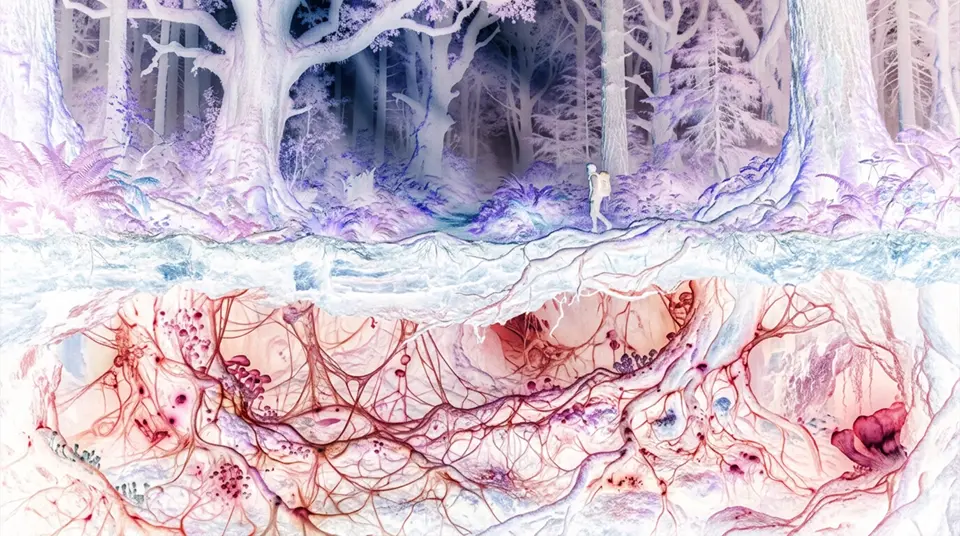
If you walk through Ballachuan hazelwood in Scotland, the last thing you might imagine is that the forest’s lifeblood runs beneath your feet. The landscape—quiet, moss-draped, and seemingly eternal—hides a subterranean circulatory system woven by fungi. These are the mycorrhizal fungi: microscopic threads that entangle themselves with roots, creating an underground superhighway for nutrients, water, and communication.
For centuries, conservation focused on what we could see: towering trees, charismatic animals, birdsong, and canopy cover. But now, as global rewilding efforts gather pace, scientists argue we’ve missed half the picture. Without fungi, restoration risks becoming a façade—a forest without the foundations it needs to thrive.
The Society for the Protection of Underground Networks (SPUN) has embarked on a mission to map these fungal systems. In the words of SPUN director Toby Kiers, “We’ve mapped oceans, mountains, forests, and even galaxies. But the fungal networks beneath our feet—the very structures that sustain land life—have remained invisible.”

Source: Wikimedia Commons, CC BY-SA 2.0
That invisibility may soon end.
The SPUN Initiative: Making the Invisible Visible
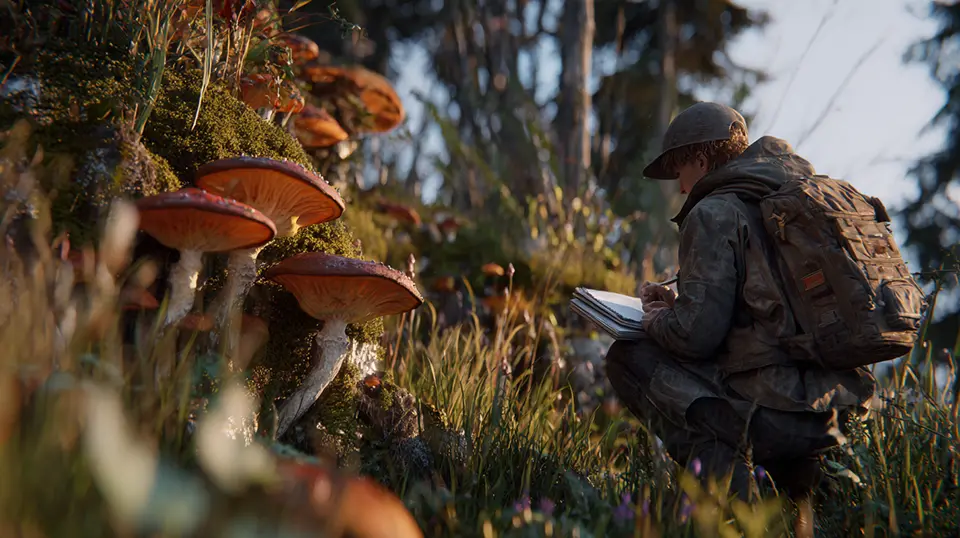
SPUN’s project combines cutting-edge DNA sequencing, machine learning, and ecological surveys to chart fungal diversity worldwide. In Scotland’s ancient hazelwood groves, researchers collect soil samples to decode the mycorrhizal networks that tether tree roots together. Each sample reveals fragments of fungal DNA, which scientists then assemble into maps of biodiversity.
This work is part of a larger global project that includes sites in Colombia’s rainforests and Palmyra Atoll in the Pacific. By building a “global atlas” of fungi, SPUN aims to identify where fungal diversity is thriving—and where it is dangerously unprotected.
The findings so far are sobering: less than 10% of the world’s underground biodiversity hotspots lie within protected areas. That means agriculture, development, and climate change threaten the fungal lifelines of our ecosystems.

Source: Wikimedia Commons, CC BY-SA 4.0
Why Mycorrhizal Fungi Matter
To understand why mapping matters, one must first understand the fungi themselves. Mycorrhizal fungi form symbiotic relationships with over 80% of plant species. Through this partnership:
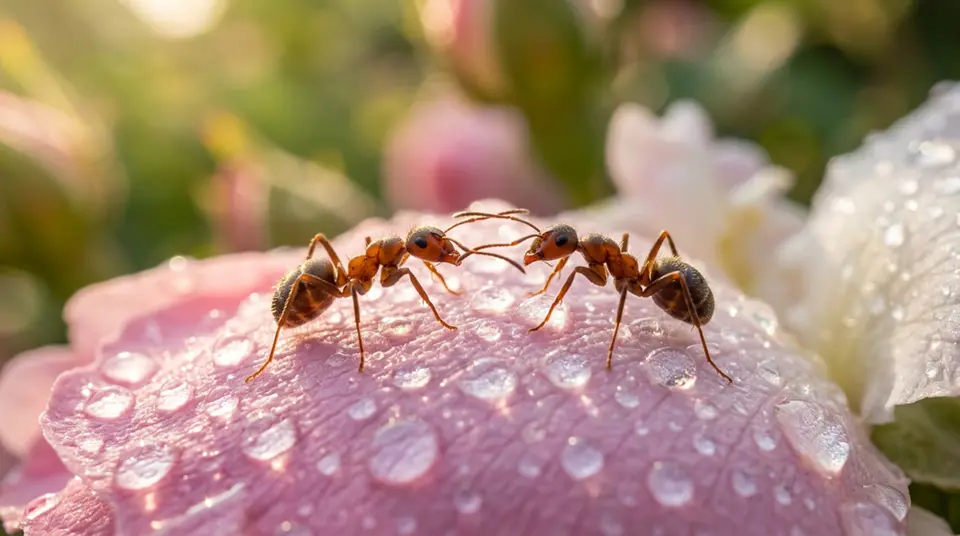
- Nutrients flow both ways: Plants trade carbon (sugars) with fungi, who in return supply phosphorus, nitrogen, and other vital nutrients.
- Water security: Fungi extend root systems, acting like underground pipelines that draw water from distant soil.
- Disease defense: Fungi can signal threats and bolster plant immune systems.
- Carbon storage: These networks help sequester billions of tons of carbon in soils each year, stabilizing global climate.
Without these fungal systems, forest restoration often fails. A sapling planted without its fungal partner is like a heart without arteries—it might survive, but it cannot flourish.

Source: Wikimedia Commons, CC BY-SA 3.0
Lessons from Britain’s Temperate Rainforests
The UK once hosted lush temperate rainforests, now reduced to fragments. Restoration groups are replanting native trees, but early efforts overlooked fungi. Seedlings introduced without local fungal inoculation frequently died or grew poorly.
Recent pilot projects changed strategy: introducing native mycorrhizal spores alongside saplings. The results? Dramatically higher survival rates, stronger growth, and more resilient ecosystems. These examples underscore SPUN’s warning: above-ground conservation is incomplete without underground restoration.
Global Implications: From Tropics to Tundra
SPUN’s maps highlight two dominant fungal groups with distinct global patterns:
- Arbuscular mycorrhizal fungi thrive in equatorial regions, mirroring biodiversity patterns of tropical plants and animals.
- Ectomycorrhizal fungi peak in northern latitudes, especially boreal forests, and parts of Australia and South America.
Together, they form the backbone of the “wood wide web,” enabling plant communities to share resources across landscapes.
In the Amazon, fungal networks sustain rainforest resilience. In boreal forests, they help store carbon in permafrost soils. Yet both are at risk as climate change accelerates.

Source: Wikimedia Commons, CC BY-SA 4.0
Climate Change and Fungal Vulnerability
Fungal maps also illuminate a grim reality: climate change is unraveling underground biodiversity. Ghana’s coastal regions host extraordinary fungal diversity, but rising seas and erosion are erasing these ecosystems. Deforestation in Brazil’s Cerrado and logging in Tasmania likewise threaten hotspots.
The irony is sharp: these fungi help buffer ecosystems against climate change, yet climate change itself endangers them. Without urgent action, we risk a cascading feedback loop—fungal loss weakens forests, weakened forests absorb less carbon, and global warming accelerates.

Source: Wikimedia Commons, CC BY-SA 3.0
Conservation Beyond the Canopy
For too long, conservation has focused on visible life—charismatic megafauna and majestic landscapes. SPUN argues for a paradigm shift: fungi must be included in restoration targets and biodiversity strategies.
Michael Van Nuland, SPUN’s lead data scientist, puts it bluntly: “Food security, water cycles, and climate resilience all depend on safeguarding these underground ecosystems.”
That means:
- Designing restoration projects that include fungal inoculation.
- Protecting soil from heavy tilling, pesticides, and deforestation.
- Mapping fungal hotspots as conservation priorities alongside forests and coral reefs.

Source: Wikimedia Commons, CC BY-SA 4.0
Ethical and Practical Challenges
Restoring fungal communities is not simple. Introducing foreign fungi can disrupt native systems, creating ecological imbalances. Ethical restoration emphasizes working with local fungi, cultivated from nearby soils.
Moreover, fungal diversity often exists only as DNA fragments—species we cannot yet name or culture. This raises challenges in conservation: how do you protect what you cannot fully see?
A Blueprint for the Future
Despite challenges, fungal mapping is already transforming restoration practices. From Britain’s hazelwoods to African savannas, fungal data provides concrete restoration blueprints.
Rebecca Shaw of WWF summarizes: “Mycorrhizal fungi need to be recognized as a priority in the library of solutions to biodiversity loss, climate change, and food insecurity.”
By turning the invisible into maps, SPUN gives policymakers, conservationists, and communities the tools to reimagine restoration—not as tree-planting alone, but as rebuilding entire symbiotic systems.
Conclusion: Rising to the Challenge
Humanity’s survival is tied to forests, and forests’ survival is tied to fungi. Mycorrhizal networks are not just biological curiosities—they are the infrastructure of life itself.
For centuries, we overlooked them. Now, with maps in hand and urgency at our backs, we have the chance to correct that blindness. Forest restoration can no longer be just about what we see above ground. It must embrace the invisible threads that bind ecosystems together.
If the 20th century was the age of mapping human frontier—oceans, space, genomes—the 21st may be the age of mapping fungal frontiers. Only then can we rebuild forests that are truly alive, rooted in both soil and symbiosis.

Source: Wikimedia Commons, CC BY-SA 4.0
References
SPUN. Society for the Protection of Underground Networks.
According to THE GUARDIAN