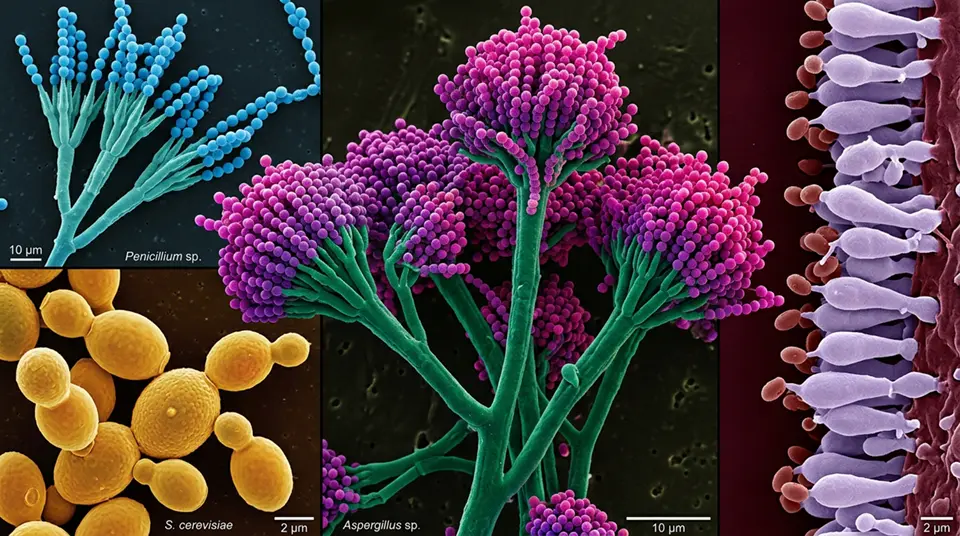
An Overlooked Threat in Modern Medicine
According to NPR
While global attention has long focused on antibiotic resistance and evolving viral threats, scientists are increasingly warning about another, less visible danger: drug-resistant fungi. Unlike bacterial and viral resistance—which are widely discussed and heavily researched—fungal resistance remains underrecognized despite its growing impact on human health.
According to leading clinical mycologists, this issue is developing quietly, often escaping public awareness and policy priority. The term “silent surge” has been used to describe the gradual but significant increase in antifungal resistance, raising concerns about preparedness in healthcare systems worldwide.
Drug Resistance Expands Beyond Bacteria and Viruses
The medical community has already been grappling with declining effectiveness of antibiotics and antivirals. However, fungi present a distinct and complex challenge. Unlike bacteria, fungal cells share structural similarities with human cells, making it more difficult to develop drugs that target fungi without harming the host.
Over the past 75 years, only a limited number of antifungal drug classes have been developed. Among these, azoles are the most widely used. As resistance to these drugs increases, treatment options become increasingly constrained, leaving clinicians with fewer effective alternatives.
Candida auris and the Challenge of Detection
One of the most concerning examples of drug-resistant fungi is Candida auris, a yeast capable of causing severe, often life-threatening infections. It is particularly problematic in healthcare settings, where strict infection control measures are required to prevent its spread.
In lower- and middle-income countries, the challenge is even greater. Limited access to diagnostic tools and infection control infrastructure means that fungal infections may go undetected or misdiagnosed. In some cases, patients may die without a confirmed diagnosis, masking the true scale of the problem.
The Agricultural Connection
An unexpected contributor to antifungal resistance lies in agriculture. Fungicides are widely used to protect crops such as wheat, maize, and fruits from fungal diseases. These chemicals are often structurally similar to medical antifungal drugs.
As fungi in agricultural environments are exposed to these substances, they can develop resistance. This resistance may then reduce the effectiveness of similar drugs used in human medicine. Although the fungi affecting crops are not the same as those infecting humans, the overlap in chemical exposure creates unintended consequences.
Airborne Spread Across Continents
Fungal spores, particularly from molds, are easily dispersed through the air. These microscopic particles can travel vast distances, potentially reaching high-altitude atmospheric currents and moving across continents.
Humans inhale fungal spores regularly as part of everyday life. While most exposures are harmless, resistant strains present a growing concern, especially for individuals with weakened immune systems. The ability of spores to travel widely complicates efforts to contain and monitor the spread of resistance.
The Dual Nature of Fungal Infections
Fungal infections generally fall into two categories. Severe infections, such as bloodstream infections or lung infections, primarily affect hospitalized patients or those with compromised immune systems. These cases can be life-threatening and require immediate medical intervention.
In contrast, superficial infections—affecting skin, hair, and nails—are typically less severe but can be persistent and difficult to treat. Increasing resistance has been observed in both categories, complicating treatment even for non-life-threatening conditions.
Recent observations indicate that resistance can significantly impact outcomes. In some cases, mortality rates may increase by approximately 20% when infections are resistant to standard antifungal treatments, highlighting the seriousness of the issue.
Emerging Resistant Skin Infections
A notable example of emerging resistance is seen in certain dermatological infections caused by fungi that are no longer responsive to conventional treatments. Patients may require prolonged therapy, sometimes lasting several years, without complete resolution.
These cases illustrate how antifungal resistance affects not only critical care settings but also everyday health conditions, extending the burden of disease across different populations.
Scientific and Clinical Challenges
Developing new antifungal drugs remains a significant scientific challenge. Because fungal cells are structurally similar to human cells, identifying targets that can be safely disrupted is difficult. This limits the speed and scope of pharmaceutical innovation in this field.
Furthermore, existing antifungal drugs may not effectively reach all parts of the body. For example, infections in the brain are particularly challenging due to limited drug penetration, further complicating treatment strategies.
Toward a Global Response
Recognizing the urgency of the issue, scientists worldwide are calling for coordinated action. Key recommendations include monitoring fungicide use in agriculture, assessing the potential for cross-resistance, and improving diagnostic capabilities in healthcare settings.
There is also a growing emphasis on global collaboration. Researchers, clinicians, and policymakers are beginning to acknowledge that antifungal resistance is not confined to specific regions but represents a global health challenge.
Signs of Progress and Remaining Gaps
Recent initiatives suggest that awareness is increasing. The inclusion of fungal pathogens in international health discussions marks a shift in priorities. However, significant gaps remain in surveillance, laboratory infrastructure, and funding for research.
Basic systems—such as diagnostic networks and data collection frameworks—are still underdeveloped in many regions. Without these foundational tools, tracking and responding to fungal resistance becomes significantly more difficult.
A Global Issue Moving Into Focus
The rise of drug-resistant fungi reflects broader changes in how humans interact with the environment, agriculture, and healthcare systems. It highlights the interconnected nature of these domains and the unintended consequences that can arise from their overlap.
What was once considered a niche concern is now emerging as a critical area of study. The challenge lies not only in addressing current cases but also in anticipating future developments.
Looking Ahead
Although the situation presents clear risks, experts remain cautiously optimistic. Increased awareness, improved research efforts, and international cooperation offer pathways toward better management and control.
The growing recognition of fungi as a significant health factor marks an important step forward. As attention continues to expand, the hope is that this “silent surge” will no longer remain unnoticed, allowing for timely and effective responses.
References
Brown, G. D. et al. (2012). Hidden killers: human fungal infections. Science Translational Medicine.
Fisher, M. C. et al. (2012). Emerging fungal threats to health and biodiversity. Nature.
According to NPR