According to PRIME PROGRESS
I. The Hidden Danger Within Our Walls
While public health discussions often focus on outdoor air pollution, industrial emissions, or viral outbreaks, a significant and insidious threat to respiratory health is flourishing inside the very places meant to be safe havens: our homes.
A recent analysis highlights the profound dangers posed by damp living environments, framing persistent household moisture as a critical public health hazard driving a range of severe respiratory ailments.
The core message of the report is clear: living in a damp home is a direct pathway to compromised lung function and chronic illness. The presence of excess moisture creates an ideal microclimate for biological agents that actively degrade indoor air quality.

Source: Wikimedia Commons, CC BY-SA 4.0
II. The Biological Trigger: A Breeding Ground for Pathogens
The primary mechanism through which damp homes harm health is by serving as a fertile breeding ground for harmful microorganisms and pests.
Mold and Fungal Proliferation
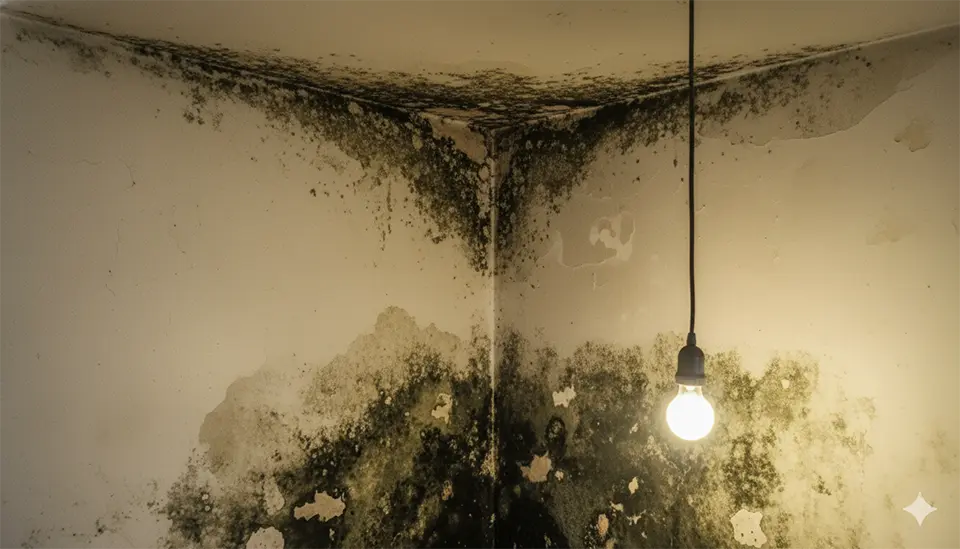
The most visible consequence of dampness is mold growth.
Fungi require moisture to thrive, and once established on drywall, wood, or fabrics, they release:
- microspores
- volatile organic compounds (VOCs)
These airborne particles enter deep into the lungs.
Dust Mite Explosion
House dust mites thrive in humid environments. Their droppings are potent allergens and increase indoor allergen load.
Bacterial Growth
Damp materials support growth of various bacteria that produce musty odors and release endotoxins harmful to the respiratory tract.

Source: Wikimedia Commons, CC BY-SA 4.0
III. The Respiratory Assault: Consequence of Exposure
The report details the extensive impact of inhaling these biological contaminants over time.
Asthma Exacerbation and Development
Strong evidence links dampness and mold to asthma.
For existing asthmatics: more frequent and severe attacks.
For healthy individuals: long-term exposure increases risk of developing asthma.
Allergic Rhinitis and Inflammation
Mold spores and dust mites trigger allergic rhinitis — congestion, sneezing, runny nose, itchy eyes.
Respiratory Infections
Damp homes weaken the respiratory tract’s defenses, increasing risk of:
- bronchitis
- prolonged colds
- recurrent infections
General Symptoms
Even without diagnosis, residents report:
- coughing
- wheezing
- chest tightness
- shortness of breath
IV. Vulnerable Populations at Highest Risk
Certain groups bear the greatest burden from damp housing:
Children
Because their immune and respiratory systems are still developing and they breathe more air relative to body size, children face the highest risk of:
- lifelong asthma
- reduced lung growth
- permanent respiratory damage
The Elderly
Older adults with weakened immunity or chronic lung conditions (e.g., COPD) face heightened risk of infections and disease flare-ups.
Immunocompromised Individuals
For cancer patients, transplant recipients, or people with advanced HIV, inhaling spores from molds such as Aspergillus can lead to invasive fungal infections, which can be fatal.

Source: Wikimedia Commons, CC BY-SA 4.0
V. Viewpoint: Housing Quality as a Determinant of Health
Housing quality is a primary determinant of public health.
Treating respiratory disease with medication while returning patients to damp, mold-infested homes is ineffective and unsustainable.
Damp housing is often tied to:
- poor building standards
- neglected rental housing
- fuel poverty (unable to afford adequate heating)
Addressing respiratory health requires structural prevention, not only clinical treatment.
Ensuring dry, well-ventilated, thermally efficient homes is a preventive health measure, not merely a building concern.
VI. The Path Forward: Mitigation and Prevention
The ultimate solution lies in moisture control:
Adequate Ventilation
Proper airflow in kitchens and bathrooms to prevent condensation buildup.
Structural Repair
Fixing leaks in roofs, pipes, walls, and windows immediately.
Proper Heating
Keeping indoor temperatures stable to prevent cold-surface condensation.
Moisture Management
Avoiding indoor clothes drying without ventilation; reducing humidity sources.
A dry home is a prerequisite for a healthy respiratory system.
References
- World Health Organization (WHO). Dampness and Mold & Health.
- Centers for Disease Control and Prevention (CDC). Mold and Indoor Air Quality.
According to PRIME PROGRESS