According to HORIZON
From Forest Floor to Skyline
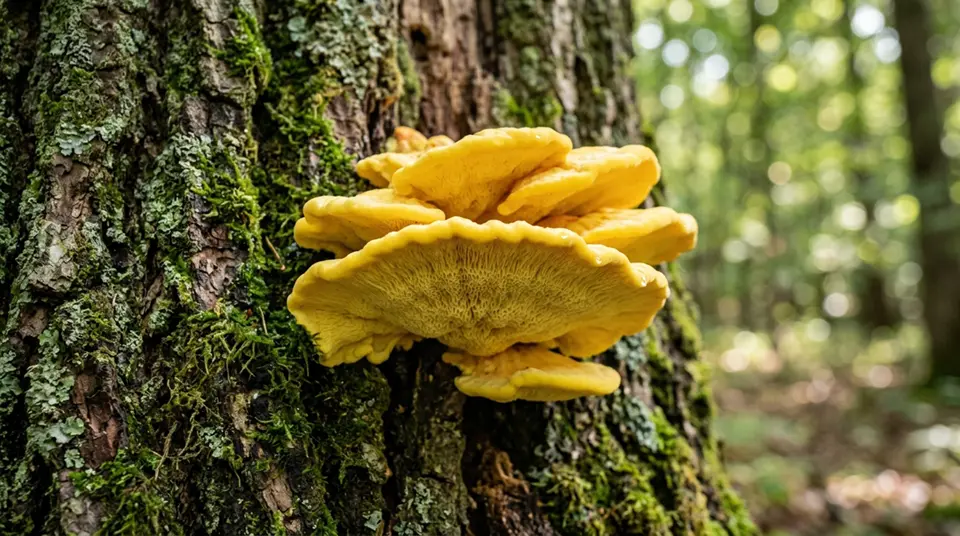
In the quiet decay of forest logs and under layers of damp soil, fungi have long played their part in the Earth’s cycles — decomposers, recyclers, silent architects of rebirth. But what if these humble organisms could be harnessed to build the cities of the future?
That’s the bold question behind a growing wave of European research projects exploring the use of mushrooms — specifically mycelium — as a building material. No longer just a culinary or ecological curiosity, fungi are now stepping into the spotlight as a living, biodegradable, and self-healing alternative to concrete, plastic, and foam.
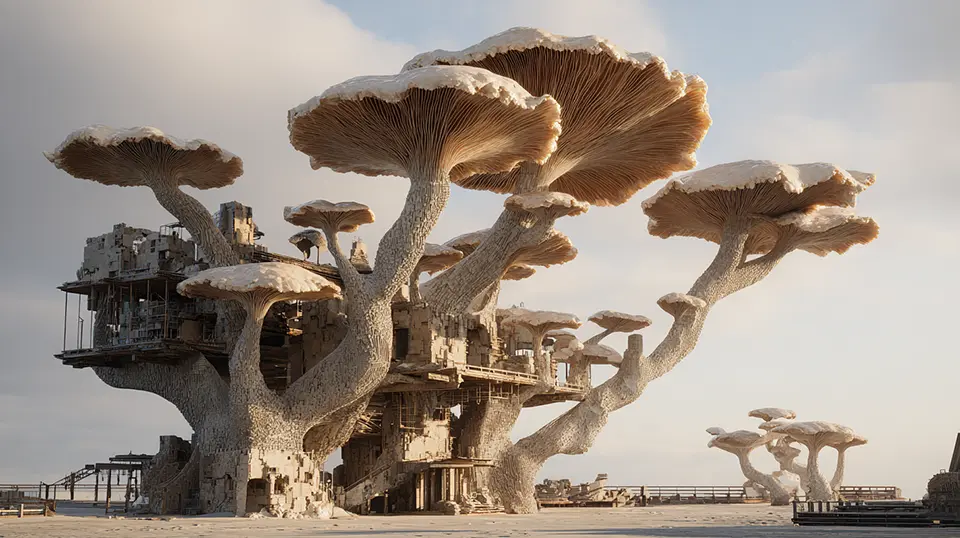
Welcome to the world of living architecture, where biology, engineering, and environmental science meet in the service of sustainable design — and mushrooms are at the foundation, quite literally.

Source: Wikimedia Commons, CC BY-SA 4.0
What Is Mycelium?
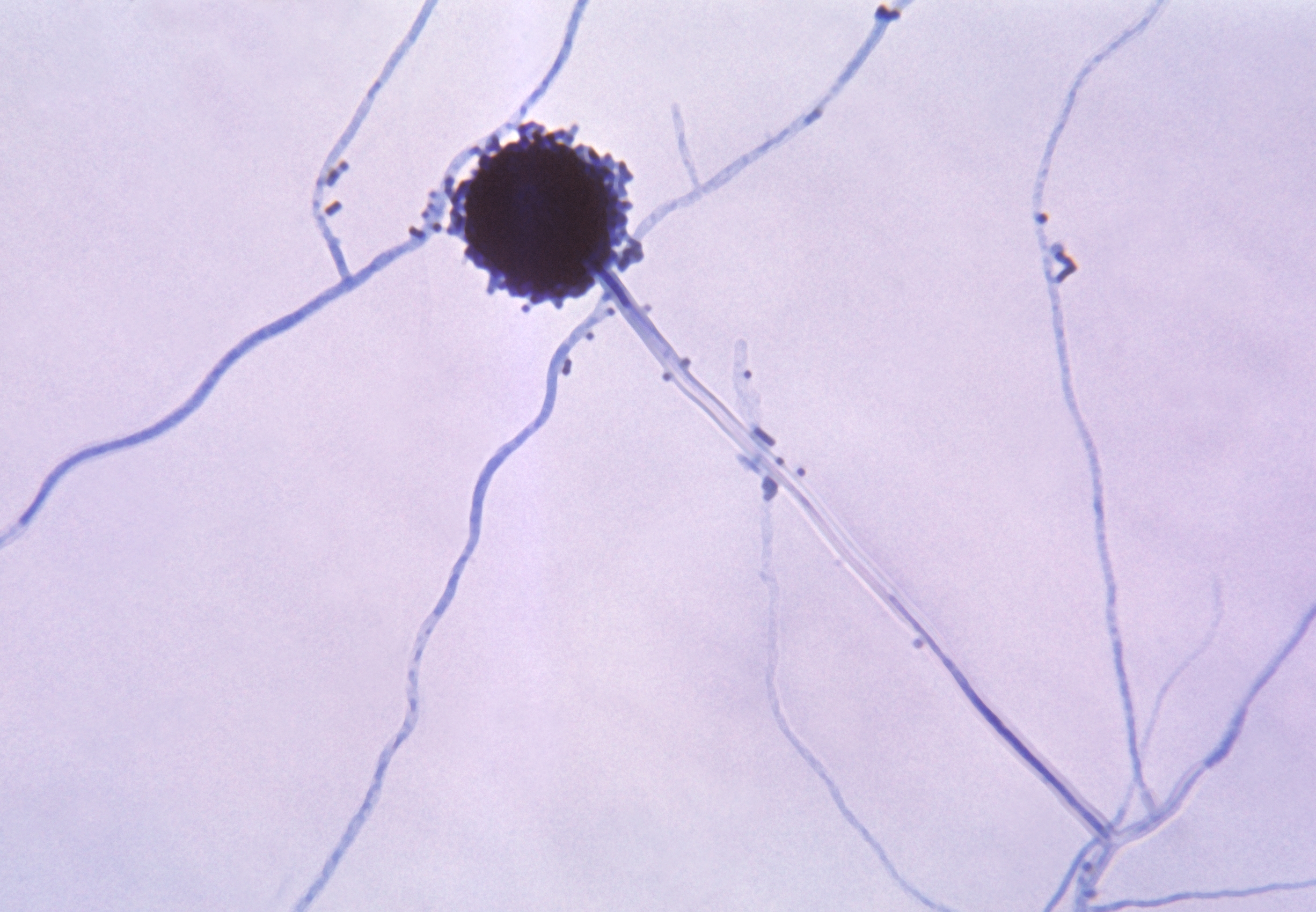
At the heart of this innovation lies mycelium, the root-like network of threadlike cells (called hyphae) that make up the vast majority of a fungus’s mass. It grows underground or within its substrate, digesting organic matter and binding particles together as it grows.
Mycelium behaves like natural glue, fusing substrates such as straw, wood chips, or agricultural waste into lightweight, durable composites. Once grown, these materials can be dried to halt further growth, shaped into bricks, panels, or insulation — or even kept alive to enable self-repair when damaged.
Species commonly used in construction research include:
Each species has different structural and biochemical properties that make them suitable for different architectural applications — from load-bearing components to soundproof insulation.
Source: Wikimedia Commons, CC BY-SA 3.0
The MycoArchitecture Movement
A number of projects across Europe — many funded by the European Union’s Horizon research programme — are now turning fungal possibilities into engineered realities.
One such initiative is exploring how mycelium-based materials could create buildings that not only biodegrade but regenerate — adapting to their environment, sealing cracks, and absorbing CO₂ from the air.
It’s not science fiction. Early-stage prototypes have already demonstrated:
- Mycelium insulation panels with superior acoustic and thermal properties
- Load-bearing bricks made from fungal composites
- Living wall systems that respond to humidity and self-repair surface damage
- Fire-retardant coatings derived from fungal biomass
While some of these applications are still in development, others have already made their way into architectural exhibitions and even small-scale construction.
Why Fungal Architecture Matters
The building and construction sector is responsible for nearly 39% of global CO₂ emissions (UN Environment), when accounting for both operational energy and embodied carbon in materials like steel and concrete.
Traditional materials come at a high environmental cost:
- Concrete emits around 0.9 kg of CO₂ per kilogram produced
- Steel requires vast energy inputs
- Plastic insulation contributes to microplastic pollution and resists biodegradation
Mycelium, by contrast:
- Grows from waste biomass
- Requires minimal energy input
- Is biodegradable and compostable
- Can be grown locally, reducing transportation emissions
- Acts as a carbon sink, locking carbon into its biomass
And if kept alive in controlled systems, mycelium can sense damage, redirect growth, and even repair structural weaknesses — an idea that may redefine how we think of maintenance and longevity in architecture.
Challenges and Hurdles
Still, this future faces significant challenges:
- Regulatory frameworks: Most building codes don’t account for organic, living materials. Approval processes remain slow.
- Structural limits: While strong for their weight, mycelium composites aren’t yet ready to replace steel or concrete for high-rise construction.
- Durability and weatherproofing: Fungal materials need protection from water and UV radiation in exterior applications.
- Scalability: Mass-producing living materials requires new supply chains, bioreactors, and trained labor.
- Public perception: Will people feel safe and comfortable living in mushroom-based homes?
Researchers and architects are addressing these barriers with hybrid designs, new coating technologies, and modular systems that allow fungi to thrive in protected environments.
Design Inspirations and Case Studies
Already, fungal architecture is capturing the imagination of designers around the world:
- The Hy-Fi Pavilion in New York was one of the first large-scale demonstrations of mycelium bricks.
- Grown.bio, a Dutch company, creates custom mushroom panels for interior design and packaging.
- European universities are experimenting with fungal composite domes, shelters, and mobile structures.
In each case, the aesthetic is as revolutionary as the science: curved, earthy, organic forms that defy industrial geometry and return us to the shapes of nature.
The Future: Buildings That Breathe and Grow
What if your house could grow around you? What if walls healed like skin, roofs digested pollutants, and rooms adapted to weather conditions like leaves?
This is the dream behind living architecture — not only a solution to climate change, but a philosophical evolution in how we relate to the built world.
Mycelium might be the bridge between biology and construction, between decay and creation, between sustainability and renewal.
And just like in the forest, fungi may be working quietly beneath the surface — preparing to change everything.
References
Dezeen. Fungal architecture projects.
ArchDaily. Mycelium in architecture.
According to HORIZON