According to CBC
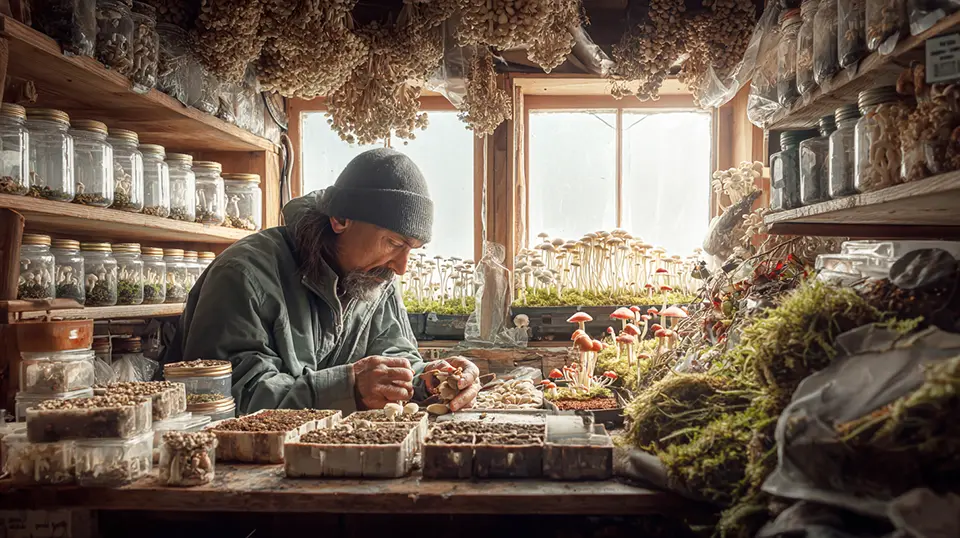
In the golden hours after his shift ends at the auto shop, Christian Douan trades his mechanic gloves for a small shovel and a forager’s eye. The 28-year-old quietly combs through forest edges and grassy stretches around Saskatchewan, eyes trained not on machines, but on mushrooms — delicate, powerful, and, to him, endlessly fascinating.
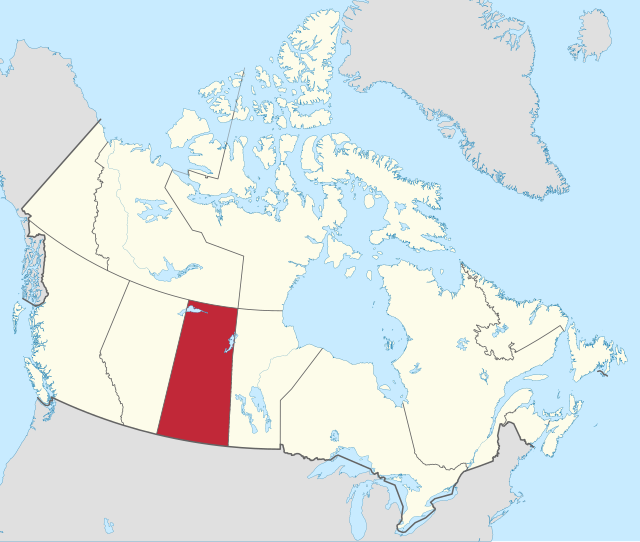
Source: Wikimedia Commons, CC BY-SA 4.0
“I’m just completely hooked,” Douan says, smiling. “They’re not only beautiful — they’re useful. They’re food, they’re medicine, and in a way, they’re a little bit magic.”
By day, he tunes engines. By night, he tunes into the rhythms of nature, cultivating gourmet mushroom varieties at home and selling his yields, along with DIY grow kits, at local farmers’ markets through his business Saskuatch Farms. The name might raise eyebrows, but his mission is serious: to turn his side hustle into a full-time life rooted in fungi.
A Blooming Passion
Douan is hardly alone in his mycophilic devotion. Saskatchewan’s interest in mushrooms has mushroomed — pun intended — into a full-blown movement. The Saskatchewan Mushroom Picking Facebook group, founded by mushroom expert Donovan Theisson, has grown to nearly 11,000 members. Originally intended as a space for appreciation, it has evolved into a community-driven network of knowledge-sharing, curiosity, and sometimes even spirited debate.

Source: Wikimedia Commons, CC BY-SA 3.0
“I think they’re beautiful,” Theisson says simply, describing mushrooms with the same reverence one might reserve for wildflowers or works of art.
He’s not alone in this sentiment. Nicole Sanderson, a longtime group member, recalls how her own fascination started with a serendipitous find: a cluster of oyster mushrooms.
“They were meaty, savoury — like something between chicken and something else I couldn’t describe,” she recalls. “It wasn’t like eating a vegetable. It was like nature just gave you this perfect bite of something rich and grounding.”
Mushrooms as More Than Food
Beyond their culinary potential, mushrooms are being celebrated for their health benefits. Douan points out that many of his customers aren’t just foodies or foragers — they’re health-conscious individuals seeking natural ways to boost their well-being.
“There’s good research out there,” he says. “Some of these mushrooms — lion’s mane, reishi, chaga — they have compounds that support the brain, the immune system, inflammation. People are waking up to it.”
Source: Wikimedia Commons, CC BY-SA 3.0
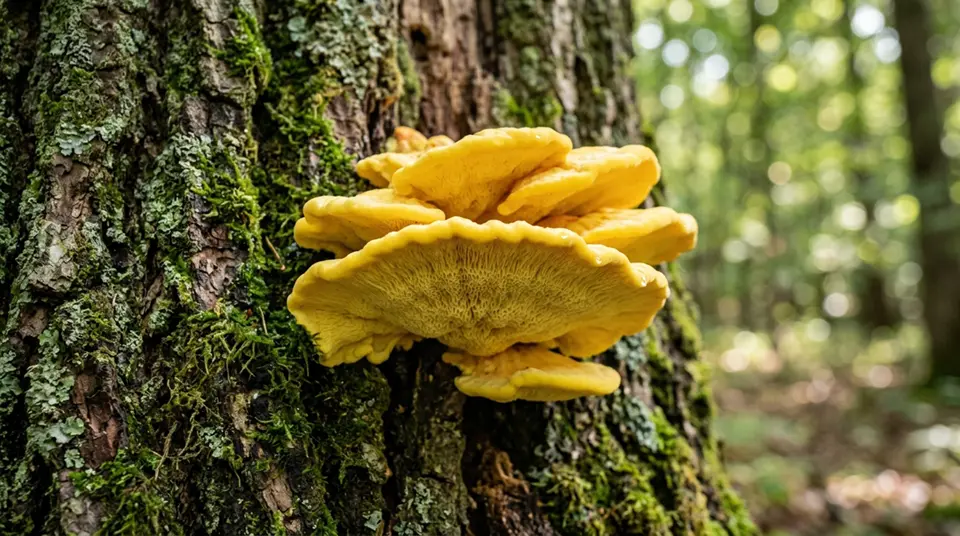
He’s not wrong. Studies have found that Hericium erinaceus (lion’s mane) may promote nerve regeneration, while Ganoderma lucidum (reishi) is often studied for its immune-modulating effects. Inonotus obliquus, better known as chaga, is a powerful antioxidant, though its use must come with care — both ecologically and culturally.
Sanderson is quick to point this out. While she shares the excitement of finding wild chaga growing on birch trees, she also urges foragers to pause.
“If you harvest it wrong, you can actually harm or kill the tree,” she warns. “It’s not just about taking — it’s about learning how to live with the ecosystem.”
She adds another layer: chaga is a sacred medicine to many Indigenous peoples. “It’s always exciting to find it in the wild, but we have to remember we’re not the only ones who value it. Some people use this for ceremony, for healing. We have to respect that.”
Backyard Bounty
What surprises many newcomers to the mushroom world is just how close to home these treasures can be. While some species require deep woods or old growth forests, others — like Marasmius oreades (fairy ring mushrooms) and Coprinus comatus (shaggy mane) — pop up in lawns, back alleys, and playgrounds.

Source: Wikimedia Commons, CC BY-SA 4.0
Come fall, Theisson says, cities across Saskatchewan will see shaggy manes “blanketing” the ground, tall and ghostly white, like delicate sentinels of a changing season.
But with abundance comes responsibility. For all their joy, mushroom experts are quick to caution: identification is not optional. Mistaking an edible mushroom for a toxic mushroom can be deadly.
“This isn’t something you guess,” Sanderson says. “It’s something you learn — slowly, carefully, with respect.”
It’s why the online group has become such a vital resource. Members frequently post photos for identification help, and conversations often shift from excitement to education.
A Fungus Among Science
Mushrooms may be ancient, but in Saskatchewan, their scientific story is still unfolding.
Theisson is currently involved with Sask Mycology, a science-based group working on a DNA sequencing project to catalog local species.
“The thing is, we don’t actually have a complete species list for mushrooms in this province,” he says. “So we’re collecting samples, sending them out, getting the DNA read. It’s fascinating — and overdue.”

Source: Wikimedia Commons, CC BY 4.0
The project isn’t just for fun. Understanding what fungi grow where, and in what conditions, could have implications for biodiversity conservation, sustainable harvesting, and even medicine.
Mushrooms as Metaphor
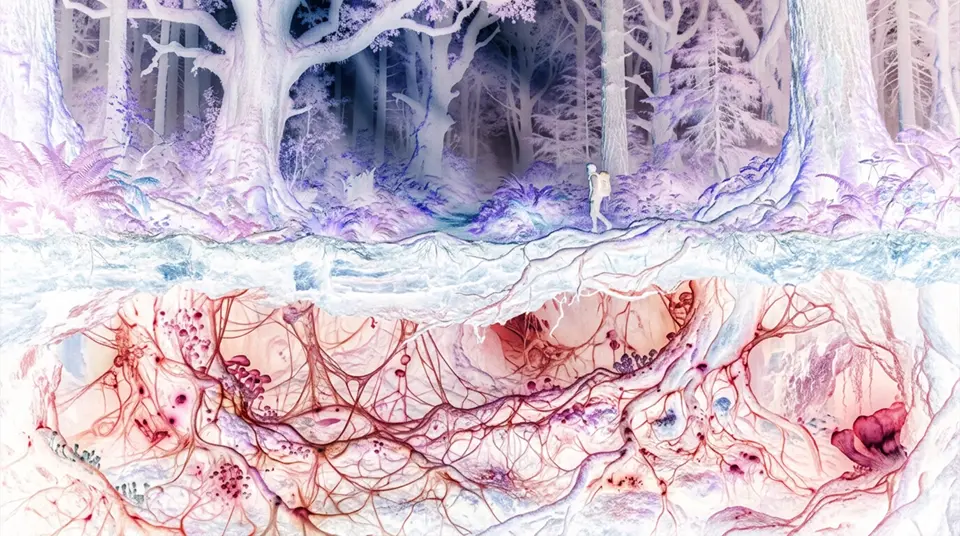
It’s hard not to see a larger metaphor in the movement: something humble, hidden, and often misunderstood is suddenly drawing new light. Fungi grow underground, thrive in decay, connect entire ecosystems in silent, invisible ways.
So too does this community. It’s not loud or flashy. It doesn’t seek fame. But quietly — through shared meals, farmers’ market booths, and gentle lessons in the wild — it’s building something meaningful.
Perhaps, in a world often obsessed with speed and spectacle, mushrooms offer an invitation to slow down, observe, and appreciate what’s beneath the surface.
Final Thoughts
Christian Douan still sees himself as a mechanic. But in truth, he’s also something else — a teacher, a grower, a bridge between what we overlook and what might just heal us.
“It’s not always easy,” he says. “But when someone tells me they grew their first mushroom or cooked something they’ve never tried before — that makes it worth it.”
As Saskatchewan’s forests ready themselves for fall, a quiet army of mushroom lovers will head out — baskets in hand, questions in mind, hearts open to wonder.
And in the rustle of leaves, under the birch and the grass, a bloom of miracles will return once again.
References
CBD – Convention on Biological Diversity
According to CBC