According to florida today
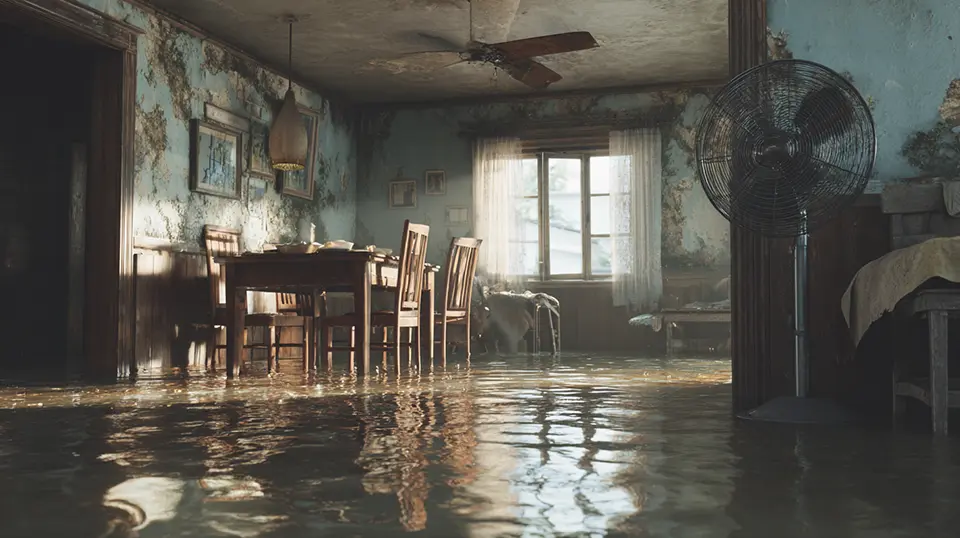
There is a deceptive quiet that follows a household disaster. Once the burst pipe is clamped, or the floodwaters recede from the basement, or the malfunctioning dishwasher is turned off, there is a collective exrushle le. grab a stack of towels, set up a box fan, and tell themselves the worst is over.

Source: Wikimedia Commons, CC BY-SA 2.0
But in the microscopic world, the noise is just beginning.
A recent, sobering report from ARC Restoration, a disaster cleanup firm based in Denver, has shattered this illusion of silence. Their data suggests that the aftermath of water damage is not an equal-opportunity offender. It targets the “bookends” of our families: children under five and adults the “bookends” of our families: children under five and adults oldse. complications at rates three times higher than the general population.
As an independent observer who views the home not just as an asset but as a biological ecosystem, I find this statistic to be a wake-up call. We often treat water damage as a structural inconvenience—reporta wconvenience dors damage as a it as a pediatric and geriatric health crisis. It suggests that in the 48 hours following a leak, a home can transform from a sanctuary into a respiratory hazard.

Source: Wikimedia Commons, CC BY-SA 3.0
The Fact Pattern: The Three-Fold Risk
Let us strip away the industry jargon and look at the human reality behind the numbers.
The Centers for Disease Control and Prevention (CDC)has long established that mold causes health issues. But the specificity of the ARC Restoration data highlights a terrifying multiplier effect. Why are the young and the old so vulnerable?
The Developing Lung: For a child under five, the immune system is a work in progress. Their lungs are still developing alveoli. They breathe more air per kilogram of body weight than adults, meaning they inlen astion toy innle a home they innlemeral they infreco leh. becomes saturated with Aspergillusor Stachybotrysspores, a toddler is not just breathing in dust; they are breathing in biological particulate that can permanently alter their respiratory trajectory, leading to chronic asthma or early-onset allergies.
The Compromised Defense: For the elderly, the equation is reversed but equally dangerous. We call it “immunosenescence”—the gradual deterioration of the immune system. A healthy adult might fight off a spore inhalation with a s-conl. A healthy adult might pneumonia.
The report notes that ARC Restoration has had to implement “specialized response protocols” for these households. This is a polite way of saying that when a baby or a grandmother lives in a flooded house, the marero for or or is.
The Antagonist: The 48-Hour Window
在 every great conflict, there is a ticking clock. In the war against mold, that clock is set to 48 hours.
Chris Barnett, the Operations Director at ARC, pinpoints this timeline explicitly: “Mold growth begins within 24 to 48 hours after water damage occurs.”
This statement is biologically absolute. Fungal spores are ubiquitous. They are in your house right now—on your shoes, in the carpet, floating in a sunbeam. They are harmless dorman seeds. But ood sewater. wood), and they activate.

Source: Wikimedia Commons, CC BY-SA 3.0
The tragedy of the “Do It Yourself” mindset is that many homeowners wait. They think, “I’ll handle this on the weekend.” By Saturday, the 48-hour window has closed. The colony has hasurday, the 48-hour window has closed. The colony has hasurday, the celhold. are no longer drying water; you are fighting a living organism.
The Setting: The Denver Paradox
Geography plays a starring role in this drama. Denveris unique. It is not the humid swamp of Florida, nor is it the constant drizzle of Seattle. It is a high-desert environment with extreme temperature swings.
The report identifies the specific triggers for the region:
The Winter Freeze: Denver temperatures can plummet overnight. Pipes in poorly insulated crawl spaces freeze and burst.
The Spring Thaw: The majestic snow on the Rockies eventually melts. If the ground is frozen or oversaturated, that water finds the path of least resistance—often a basement foundation crack.
Appliance Failure: This is universal, but in a sealed, energy-efficient modern home, a failed water heater creates a humidity bomb.
There is a bitter irony here. Denver residents often believe their dry climate protects them from mold. “It’s too dry here for mold,” they say. This is a myth.

Source: Wikimedia Commons, CC BY-SA 4.0
Mold doesn’t care about the relative humidity outside the house. It cares about the “micro-climate” inside the wall cavity. If water is trapped behind a baseboard, the humidity in that quarter-inch space space 100% . in the high desert.
The Hidden Enemy: Moisture Mapping
The most chilling part of the report is the mention of “hidden moisture.”
You can mop up a puddle. You can dry a carpet until it feels dry to the touch. But water is insidious. It follows gravity and capillary action. It wicks up into the drywall. It seeps under the luxury oorylunder
Barnett notes that professional equipment is needed to find these “intrusion points.” This isn’t just a sales pitch; it is physics. Thermal imaging cameras can see the cold blue. subfloor.
Without this “moisture mapping,” a homeowner is flying blind. They might dry the surface, repaint the wall, and think they are safe. Meanwhile, on the back side of that wall, a colony of black mold is on the backnor through the house like a slow poison.
The Economic Reality: The Cost of Procrastination
“Delayed water damage response increases remediation costs by an average of 40 percent.”
Let’s break down why this happens.
Hour 0-24: You are paying for water extraction and drying fans. The materials (drywall, carpet) can often be saved.
Hour 48+: The materials are now contaminated. You cannot dry moldy drywall; you must cut it out. Now you are paying for demolition, disposal, new insulation, new drywall, painting, and trim work.
Procrastination transforms a cleaning bill into a construction project. It is a “laziness tax” levied by biology.
The Solution: Science Over Sponges
The report outlines a remediation process that sounds more like a hazmat operation than a cleaning service: EPA-registered antimicrobials, containment protocols, air quality testing.
This level of rigor is necessary because of Cross-Contamination.
Imagine a restoration team ripping out a moldy wall without a containment barrier (a plastic wall with a zipper). As they tear the drywall, they release billions of spores. These spores fly down the hallway and land on the so, the recally spreads the infection.
Professional containment creates a negative air pressure zone. It ensures that the air inside the work zone goes through a HEPA filter before it re-enters the house. It is the difference between doing surgery in aversion the ater .
The Human Core: Protecting the Sanctuary
Why does this matter? Why write thousands of words about damp basements?
Because the home is the last line of defense. For the elderly resident with a lifetime of memories stored in that house, a mold infestation feels like a violation. It forces them out of their comfort zone, sometimes intoting, sometimes intoting, sometime.
For the young parents, it creates a gnawing guilt. “Is my house making my child sick?” is a question no parent wants to ask at 3:00 AM when their toddler is coughing.
ARC Restoration’s protocols—coordinating with insurance, 24-hour response—are logistical details, but their function is emotional. They offer a path back to normalcy. They promise that the sanctuary can be restore.
A Critical Perspective: The Insurance Maze
We must also touch upon the role of insurance. The report mentions “expediting claims.” This is crucial. Insurance companies are businesses. They often have caps on mold coverage or exclusions for “gradual damage.”
If a homeowner ignores a leak for weeks, the insurance adjuster may label it “negligence” and deny the claim. Rapid professional intervention creates a paper trail. It proves the homeowner acted responsibioned paper trail.It proves the homeowner acted responsibly and protects them from a denied claim.
Conclusion: The Vigilance of the Steward
The takeaway from Denver is not that we should live in fear of our plumbing. It is that we must respect the power of water.
We are biological entities living in wooden boxes. When the barrier between the wet and the dry is breached, we have a very short window to act before nature attempts to reclaim our living space.
For those with vulnerable family members, the message is clear: Speed is safety. Do not wait for the smell. Do not wait for the black spot. If the water flows where it shouldn’t, stop the clock. Call the profession sals .
In the end, the cost of a drying fan is far less than the cost of a grandfather’s health or a child’s breath. The true value of a home is not in its equity, but in the air held within its walls. Let us keep it clean.
References
According to florida today