According to JOHNS HOPKINS BLOOMBERG SCHOOL OF PUBLIC HEALTH
I. The Unseen Heat Island: Fungi Adapt to Urban Life
Cities are not just concrete jungles; they are ecological hot zones, experiencing a phenomenon known as the Urban Heat Island (UHI) effect. Buildings, roads, and reduced greenery trap heat, making urban microclimates significantly warmer than surrounding rural areas.
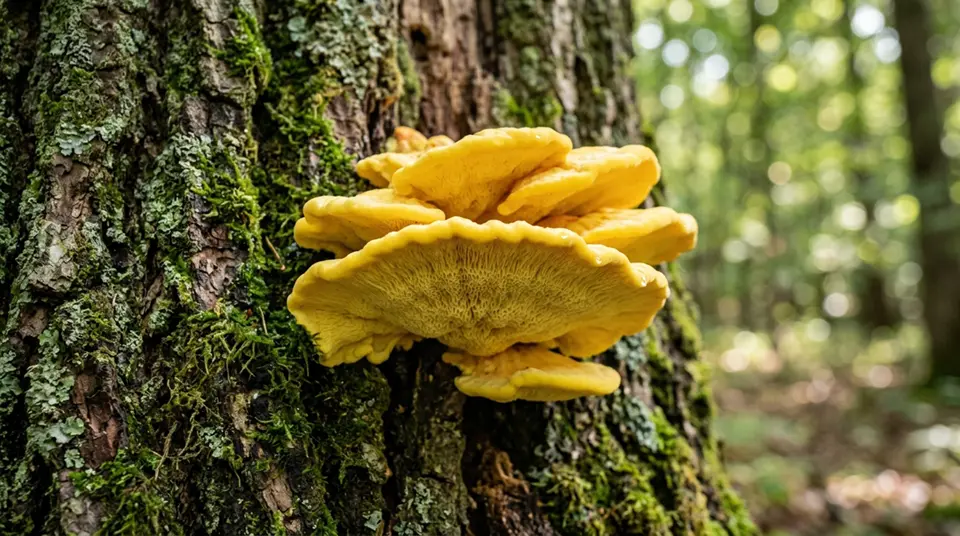
While we often track the adaptation of visible wildlife, new research from Johns Hopkins University (JHU) reveals a critical, hidden development: urban fungi are thermally adapting to these hotter conditions.
This study underscores a compelling, yet concerning, biological reality: the constant, elevated temperatures in city environments are acting as a powerful evolutionary force, selecting for fungal strains that are more heat-tolerant. Since fungi are ubiquitous and some species are human pathogens, this adaptation is not merely an academic curiosity—it represents a potential new threat to public health.

Source: Wikimedia Commons — CC BY-SA 4.0
II. The Selection Process: Survival of the Hottest Fungi
The JHU researchers studied various fungal species collected from different urban and rural environments. Their primary finding was clear: fungi isolated from urban settings consistently displayed a higher thermal tolerance compared to their rural counterparts.
The Urban Filter: The constant high temperature in cities acts as a selective filter. Fungal strains that cannot withstand the chronic warmth die out, while strains possessing natural or acquired resistance to heat thrive and reproduce. Over time, this process leads to a fungal population with a significantly higher maximum growth temperature.
Elevated Growth Temperature: The research demonstrated that urban strains maintained robust growth at temperatures that would significantly inhibit or even kill rural strains of the same species.
This adaptation is a direct consequence of the UHI effect and highlights how human-altered environments are inadvertently shaping the fundamental biology of microbes.
III. The Direct Implications for Human Health
The most pressing concern arising from this thermal adaptation relates directly to human vulnerability. The normal human body temperature (37 °C or 98.6 °F) is often the body’s primary defense against many fungal invaders.
Breaking the Thermal Barrier: Fungi typically struggle to grow optimally at 37 °C—this is a natural thermal barrier that limits their ability to establish a successful infection in the human host.
Evolving Pathogenicity: By adapting to the higher, sustained temperatures found in urban environments, these fungal strains are effectively lowering the thermal barrier they must overcome to survive inside the human body.
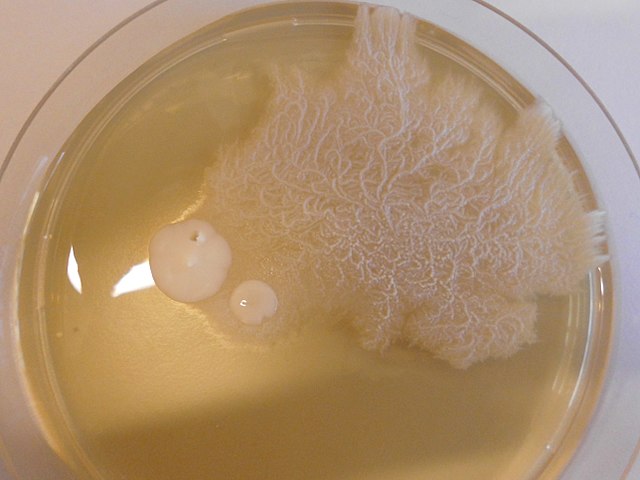
Increased Infection Risk: A fungus already comfortable growing at 35 °C or 36 °C is far more likely to proliferate and cause disease in a human host than a rural strain whose optimal growth temperature is much lower. This increases the potential for both systemic infections and the development of new fungal pathogens.
Source: Wikimedia Commons — CC BY-SA 3.0
IV. The Call for Monitoring and Intervention
The JHU findings reveal a hidden consequence of climate change and urbanization that must be integrated into public health planning. While the study did not focus on identifying specific new human-infecting species, it provides a crucial framework for understanding future microbial evolution.
Need for Surveillance: The research underscores the urgent need for a dedicated surveillance system to monitor the thermal tolerance of fungi, particularly those species known to cause infections (like Candida and Aspergillus). Urban environments, being the epicenter of this thermal adaptation, should be prioritized for microbial monitoring.
Rethinking Urban Design: The findings add significant weight to arguments for mitigating the UHI effect through urban planning—specifically by increasing green spaces, promoting reflective materials, and designing better ventilation systems. Reducing urban temperatures may slow the evolutionary selection process that is strengthening fungal pathogens.
The core viewpoint is that we are unwittingly strengthening potential adversaries. This thermal adaptation is a clear signal that the future of infectious disease surveillance must not only include viruses and bacteria but also the quietly evolving fungal kingdom.

Source: Wikimedia Commons — CC BY-SA 4.0
References
IPCC. (2023). Climate Change 2023: Impacts, Adaptation and Vulnerability.
According to JOHNS HOPKINS BLOOMBERG SCHOOL OF PUBLIC HEALTH