According to
According to Eos
The dream of colonizing the Moon has long been dominated by images of gleaming metal, pressurized domes, and nuclear propulsion. We tend to view space exploration as a triumph of engineering—a realm of physics, trajectory calculations, and rocket fuel. However, a groundbreaking new study highlights a truth that biologists have whispered for decades but engineers are only just accepting: if we want to survive on other worlds, we cannot go alone. We must bring the “filth” of Earth with us.

According to a recent report from Eos, covering research led by Jessica Atkin and colleagues at Texas A&M University, the key to sustainable agriculture on the Moon is not advanced hydroponics or synthetic nutrients. It is a biological trinity that sounds decidedly unglamorous: fungi, vermicompost (worm manure), and the careful management of organic waste.
As we stand on the precipice of the Artemis program era, where humanity plans to return to the Moon to stay, this research serves as a critical reality check. It shifts the narrative from “conquering” space to “cultivating” it.
The Hostile Canvas: Understanding Lunar Regolith
To understand why this research is revolutionary, we must first understand the enemy: Lunar Regolith.
To the naked eye, the Moon appears covered in dust, much like a desert on Earth. But calling it “soil” is a geological insult. Earth soil is a living matrix, teeming with microbes, organic matter, decaying roots, and water. It is a sponge for life.
Lunar regolith, by contrast, is the corpse of a geological past. It is comprised of crushed volcanic rock, glass shards created by meteorite impacts, and aggressive dust particles.
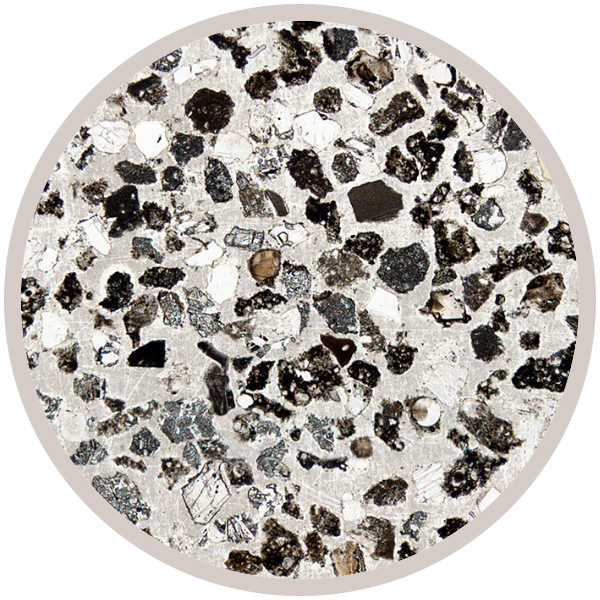
Source: NASA / Wikimedia Commons, Public Domain
Physical Hostility: Unlike river stones smoothed by water or wind, lunar dust particles are jagged and sharp at a microscopic level. They shred root systems like broken glass.
Chemical Void: Regolith contains plenty of minerals, but it is chemically unavailable to plants. It lacks carbon and nitrogen—the building blocks of life.
Hydrophobia: It does not hold water well, leading to issues where water either pools uselessly or evaporates instantly in a vacuum (though in a pressurized greenhouse, it simply drains away or clumps).
Toxicity: It can contain heavy metals and perchlorates that are toxic to biological life.
Previous experiments, including those from the Apollo era, showed that while plants can sprout in regolith, they quickly become stressed, stunted, and malnourished. They are essentially starving in a bowl of razor blades.
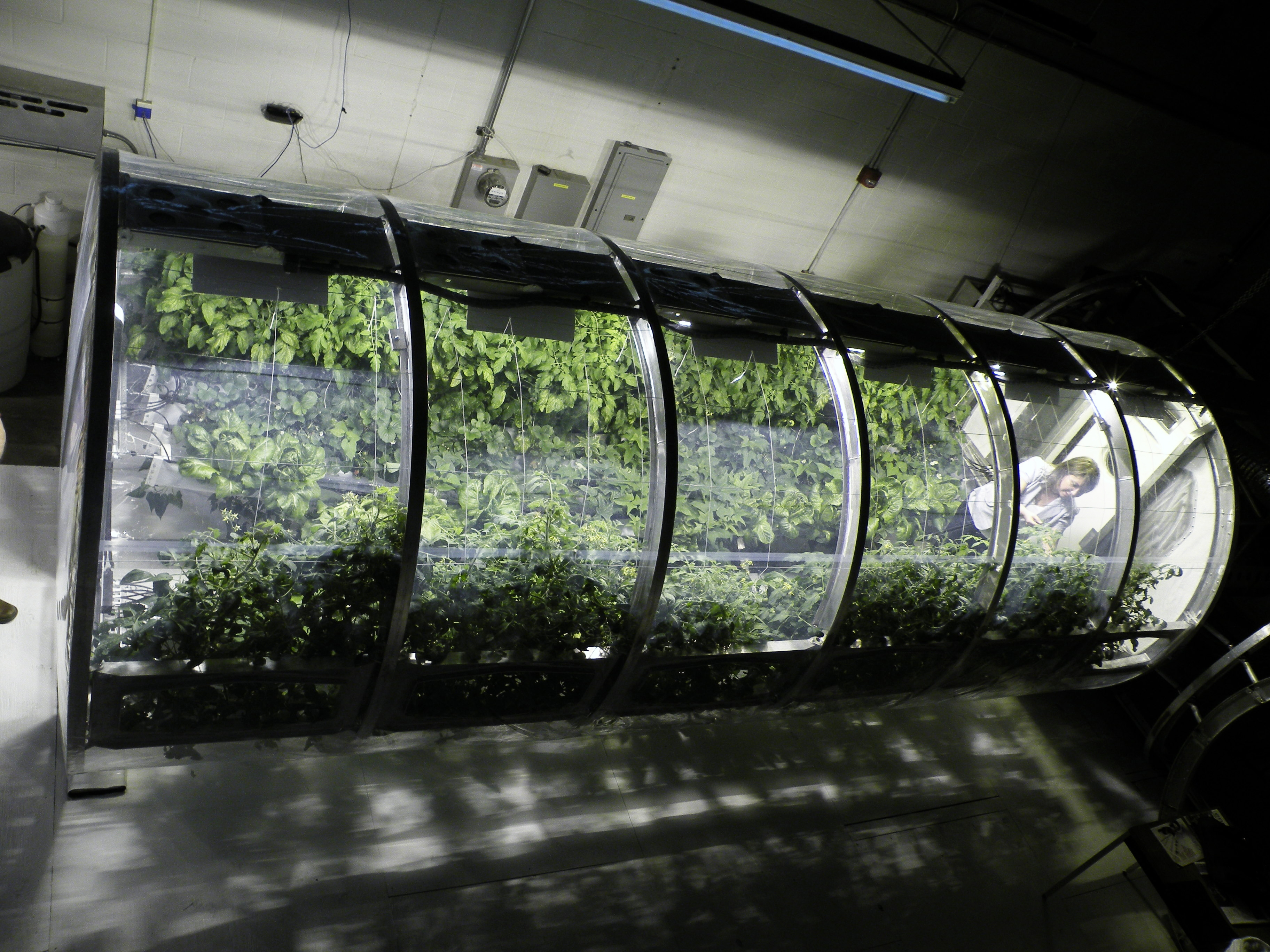
Source: NASA, Public Domain
The Study: A Biological recipe for Terraforming
The research team at Texas A&M University sought to transform this hostile gray powder into a living substrate. They didn’t use real moon dust (which is too rare and precious), but rather a high-fidelity lunar simulant—a manufactured powder that mimics the chemical and physical properties of the Moon’s surface.
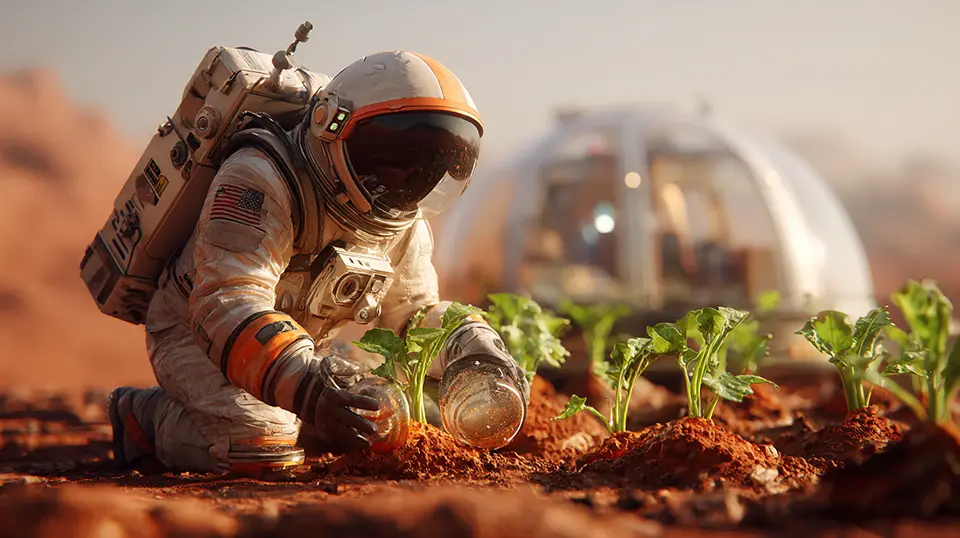
Their test subject was the chickpea (Cicer arietinum). Why the chickpea? It is a legume, meaning it is hardy, protein-rich, and capable of forming symbiotic relationships with bacteria to fix nitrogen—a crucial trait for nutrient-poor environments.
But the chickpea cannot do it alone. The researchers introduced two critical amendments:
Vermicompost: This is the polite term for worm manure. It provides the organic matter, the structure, and the microbiome that regolith lacks.
Arbuscular Mycorrhizal Fungi (AMF): This is the secret weapon. These ancient fungi penetrate the roots of plants and extend their hyphae far into the soil, acting as a secondary root system.

Source: Wikimedia Commons, CC BY-SA 3.0
The Fungal Architect: Why Mold Matters
From the perspective of Mold News, the introduction of Arbuscular Mycorrhizal Fungi (AMF) is the most fascinating aspect of this experiment.
In the sterile vacuum of space theory, engineers often try to sterilize everything to prevent contamination. This study proves that sterility is death. To make plants grow, we need to infect them—beneficially.
AMF act as the “internet” of the soil. When introduced to the chickpea plants in the lunar simulant, the fungi did what they have done on Earth for 400 million years:
Nutrient Mining: The fungal hyphae are finer than plant roots. They can navigate the jagged, compacted regolith to hunt for phosphorus and other trace minerals that the plant cannot reach.
Chemical Barter: In exchange for sugars produced by the plant’s photosynthesis, the fungi deliver these mined nutrients back to the host.
Structure Building: The fungi produce a sticky protein called glomalin. This protein acts like glue, binding the loose, dusty regolith into stable aggregates (clumps). This transforms the dust into “soil,” improving water retention and aeration.
The Results: Resilience Over Speed
The results of the experiment were telling. The chickpeas grown in the lunar simulant with both vermicompost and fungi didn’t just survive; they reached maturity and produced seeds.

Source: Wikimedia Commons, CC BY-SA 4.0
Crucially, the plants took longer to flower compared to those grown in perfect Earth potting soil. They showed signs of stress. However, from a survivalist perspective, this is a victory. The goal of lunar agriculture is not to win a county fair ribbon for the biggest pumpkin; it is to create a calorie source that doesn’t die when the supply ship from Earth is late.
The fungi provided a buffer. They effectively “sequestered” the toxic elements of the regolith and managed the plant’s water intake, allowing the chickpea to endure the harsh conditions of the simulated moon dirt.
The “Yuck” Factor: Closing the Loop
This research forces us to confront the “unsanitary” reality of deep space survival. The vermicompost used in the study is a stand-in for what will eventually be the primary resource on a lunar base: human waste.
On Earth, we flush waste away and forget about it. On the Moon, there is no “away.” Every gram of carbon and nitrogen that enters an astronaut’s body must be recaptured. This concept is known as a Closed Ecological Life Support System (CELSS).
The study suggests that we cannot simply chemically process our waste into sterile fertilizer pellets. We need the biology. We need the worms to break it down; we need the bacteria to process it; and we need the fungi to connect it to the plants.
This means a future Moon base will not smell like ozone and antiseptic. It will smell like a garden—which is to say, it will smell of dirt, rot, and life.
Analysis: The Shift from Physics to Biology
As we analyze this development, we see a paradigm shift in space exploration strategy.
Phase 1: The Camping Trip (Apollo Era)
In the 1960s, we packed everything we needed. We brought the oxygen, the water, and the freeze-dried food. We stayed for a few days and left. This is efficient for short trips but economically impossible for long-term habitation. The cost of launching water and soil to the Moon is astronomical (literally thousands of dollars per kilogram).
Phase 2: In-Situ Resource Utilization (The Current Goal)
The new strategy relies on In-Situ Resource Utilization (ISRU)—”living off the land.” We know there is water ice at the lunar poles. We know there is oxygen trapped in the rocks. Now, thanks to studies like this, we know we can use the dirt itself.
However, this transition requires a humility that is often lacking in the “move fast and break things” tech sector. You cannot hack a plant’s biology. You cannot force a chickpea to grow in broken glass without help. We are learning that our technology is insufficient without the partnership of ancient biological systems.
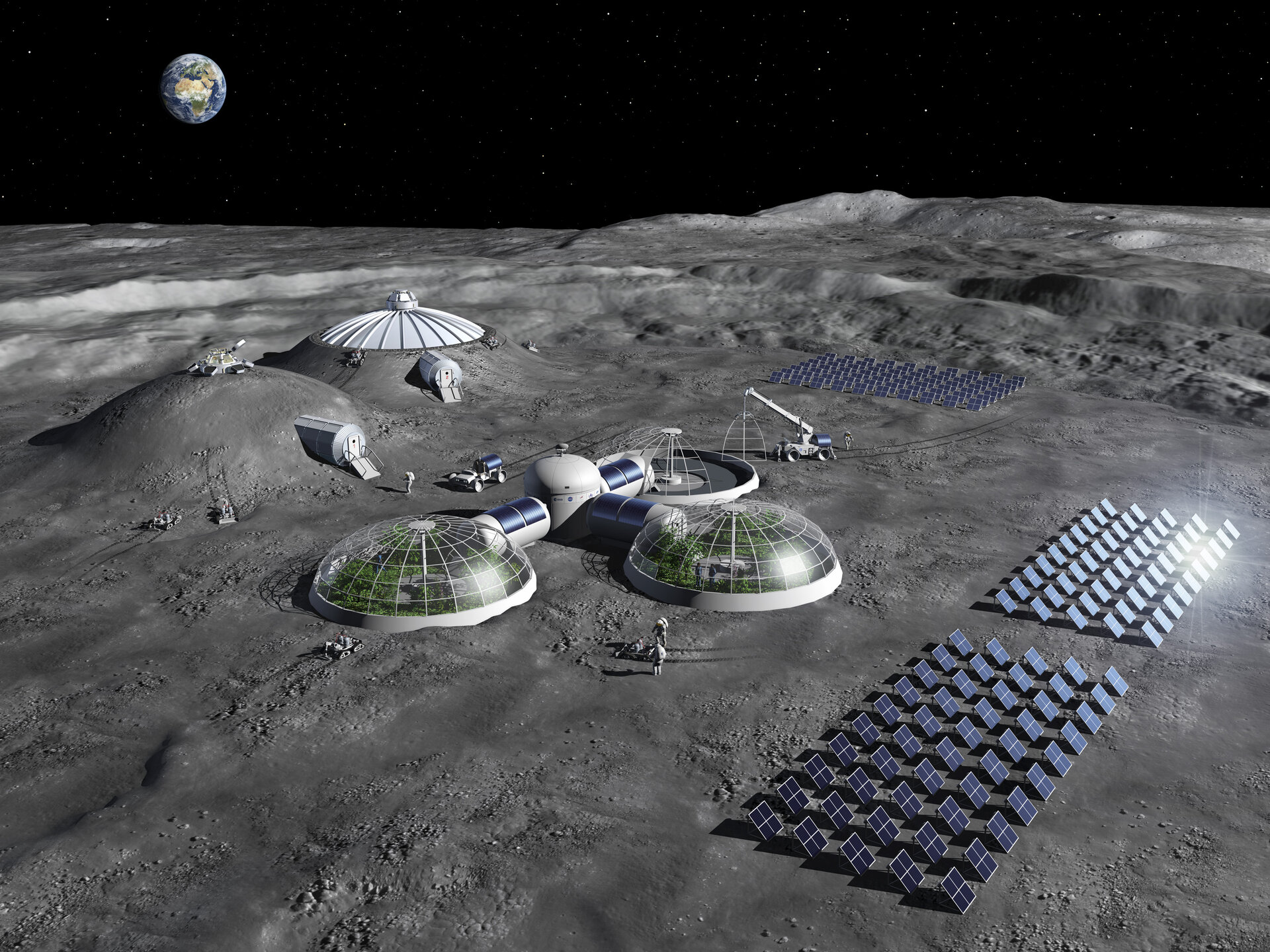
Source: NASA, Public Domain
The Psychological Component: The Biophilia Hypothesis
There is a secondary, often overlooked benefit to this fungal-agricultural approach: the mental health of the astronauts.
Living in a tin can surrounded by the deadly vacuum of space is psychologically corrosive. The concept of Biophilia suggests that humans have an innate need to connect with nature.
A hydroponic lab with plants growing in plastic tubes is functional, but a garden with soil—soil that you can smell, soil that contains worms and fungi—offers a grounding connection to Earth. The act of composting, of managing a fungal colony, of turning “dead” regolith into “living” soil, gives astronauts a role as custodians of life, rather than just passengers in a machine.
The Challenges Ahead
While the Eos report is optimistic, we must remain rational about the hurdles.
Radiation: This study was conducted on Earth (or in a lab). On the Moon, these plants and fungi will be bombarded by cosmic radiation. We do not yet know if the delicate mycorrhizal networks will degrade or mutate under such bombardment.
Gravity: The Moon has 1/6th of Earth’s gravity. Fluid dynamics change in low gravity. Will the fungi be able to transport nutrients effectively when water doesn’t drain the same way?
Contamination: If we introduce aggressive Earth fungi to the Moon, and they escape the habitat, do we risk compromising future scientific search for indigenous life (however unlikely on the Moon, but highly relevant for Mars)?
Conclusion: The Holobiont Traveler
In conclusion, this news is a profound reminder of what a human being actually is. We like to think of ourselves as individuals, but we are “Holobionts”—assemblages of a host and millions of symbiotic microbes.
We cannot leave Earth without taking Earth with us. Not just the blue marble in the rearview mirror, but the biological complexity of the soil beneath our feet.
The Texas A&M study proves that the path to the stars is paved with fungi. If we are to walk on the Moon again, we will not be walking alone. We will be walking with the worms, the bacteria, and the silent, invisible webs of mycorrhizal molds that have sustained life on this planet for eons.
The first footprint on the lunar base might be a boot, but the second footprint will be a root, wrapped in a fungal embrace.
References
Ferl, R.J. & Paul, A.-L. (2016). Plant biology in space. npj Microgravity.
According to Eos