According to BBC
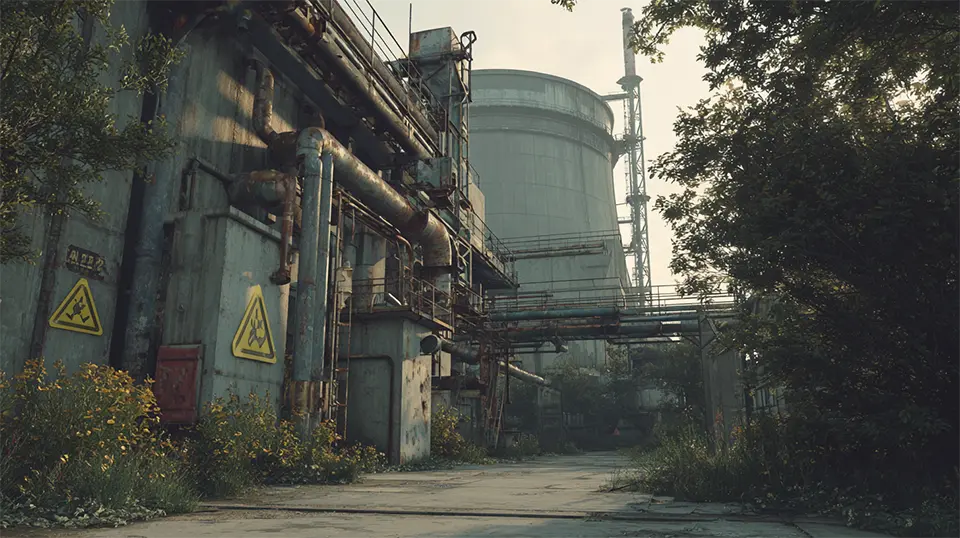
There are places on this planet where humanity has effectively resigned its commission. The Chernobyl Exclusion Zone is the most famous of these—a scarred landscape of rusting Ferris wheels and empty apartment blocks, frozen in the amber of 1986. We tend to think of this place as a tomb. We imagine the Unit 4 reactor, encased in its sarcophagus of concrete and steel, as a sterile coffin where nothing but ghosts can survive.
But nature abhors a vacuum, and it apparently has a very high tolerance for our mistakes.
In 1991, five years after the disaster, scientists sent remote-controlled robots into the dark, highly radioactive heart of the reactor. They expected to see only dust and debris. Instead, the cameras beamed back images of something growing. A pitch-black slime was creeping up the walls of the reactor core. It wasn’t just surviving the lethal radiation; it was thriving on it. It was growing towards the source of the radiation, like a sunflower turning its face to the sun.
This discovery has since cascaded into a field of study that challenges our understanding of biology and energy. It turns out that while we were busy fearing the invisible fire of gamma rays, a humble fungus was learning how to eat it.
As an independent observer who usually chronicles the nuisances of household mold, this story forces a shift in perspective. We often view fungi as decomposers, the things that break down the dead. But the “Black Fungus” of Chernobyl is a creator. It is an alchemist. And its existence suggests that in the ruins of our greatest technological failures, the blueprint for our future survival might be hiding in the dark.

The Fact Pattern: The Discovery of the Impossible
Let us strip away the sci-fi allure for a moment and look at the biological data.
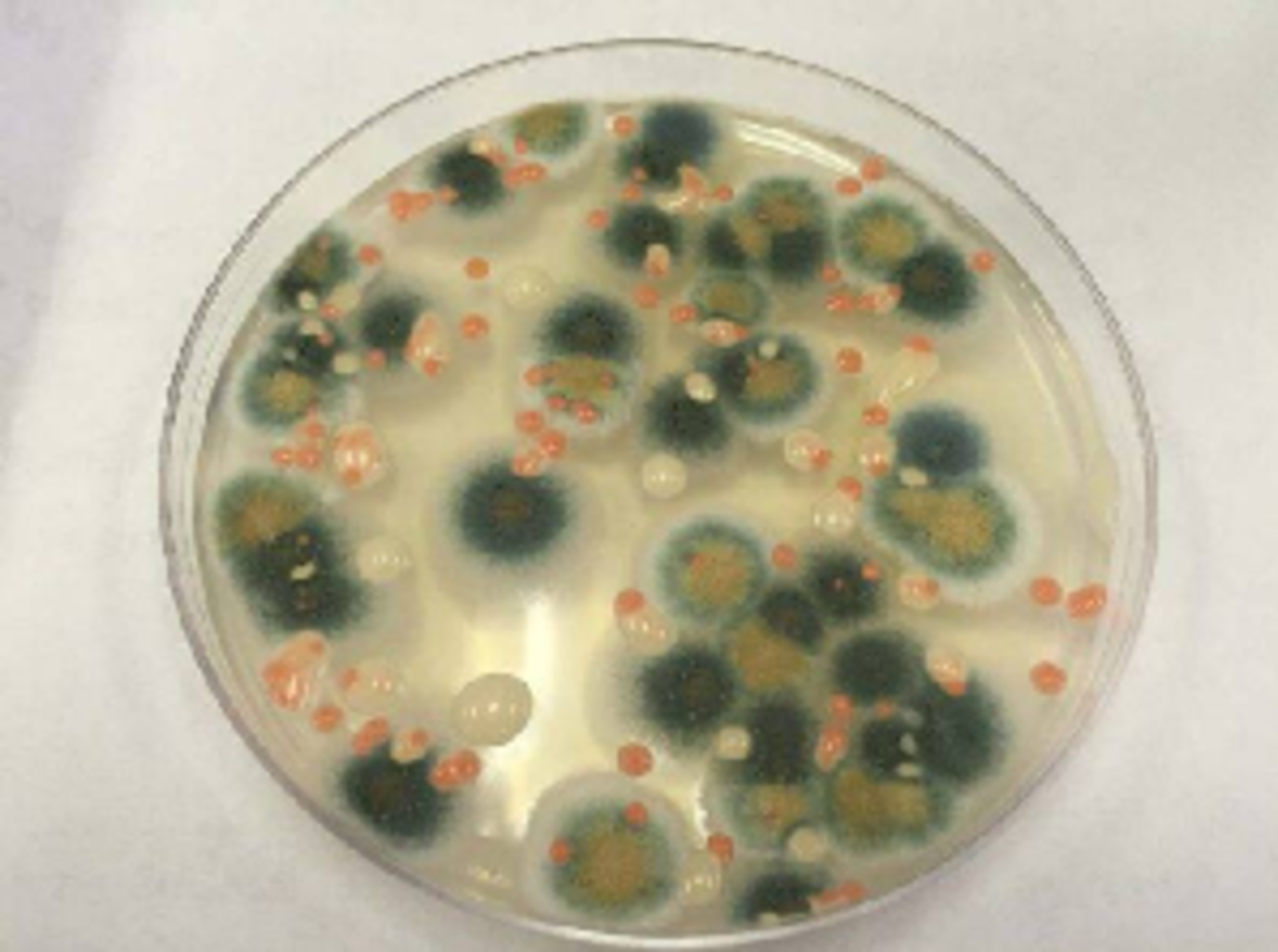
The fungi found in Chernobyl are not alien species. They are familiar faces to any microbiologist:
You might find cousins of these growing on a damp shower curtain or in pigeon droppings.
However, the strains inside the reactor are different. They are jet black.
The investigation revealed that these fungi possess massive amounts of melanin—the same pigment that gives human skin its color and protects us from UV radiation.
For decades, we thought melanin in fungi was just a protective shield, a biological lead vest. But in the early 2000s, researchers like Dr. Ekaterina Dadachova proposed a radical hypothesis:
What if the melanin isn’t just blocking the radiation?
What if it is harvesting it?
The data confirmed it.
These fungi practice radiosynthesis.
Just as plants use chlorophyll to convert visible light into chemical energy (photosynthesis), these fungi use melanin to capture high-energy photons of ionizing radiation and convert them into metabolic energy.
The implications are staggering.
It means life has found a way to tap into a new energy source on the electromagnetic spectrum.
It changes the definition of “habitable environment.”
The Antagonist: The Hostile Environment
To appreciate the resilience of this organism, we must understand the antagonist: Ionizing radiation.

It tears through cells, shattering DNA strands.
For a human, standing near the infamous Elephant’s Foot would be fatal within minutes.
Yet these fungi are not simply enduring the bombardment—they are hungry for it.
Experiments showed that when Cladosporium sphaerospermum was exposed to radiation levels 500× background, its growth rate increased.
It is a humbling realization.
We built a machine to generate energy.
We failed to contain it.
And in our absence, nature evolved a microscopic janitor to utilize the wasted energy we left behind.
The Experiment: From the Dead Zone to the Red Planet
If a fungus can eat radiation, can it protect us from it?
This question carried the Chernobyl fungus from the ruins of Ukraine to the International Space Station (ISS).
Space is a radioactive ocean—cosmic rays, solar storms, ionizing radiation.
Shielding is heavy and expensive to launch.
Scientists sent Cladosporium sphaerospermum samples to the ISS to see:
- how it grows in microgravity
- how well it blocks radiation
The results were astonishing:
A layer of this fungus 21 cm thick could offset the radiation dose on the surface of Mars.
Imagine Martian habitats with living fungal walls—structures that eat radiation and grow stronger under sunlight.
This is biotechnology at its purest:
Partner with nature, not fight it.
The Human Core: The Duality of Fungi
We have a complicated relationship with fungi.
We eat yeast, fear black mold, rely on penicillin, and dread Candida infections.
The Chernobyl fungus perfectly embodies this duality.
The Hero
- Potential radiation shield
- A tool for mycoremediation
- A pathway for safer space travel
The Villain
Some species, like Cryptococcus neoformans, are opportunistic pathogens capable of lethal meningitis in immunocompromised people.
Nature is not “good” or “bad.”
It is opportunistic.
If we are to coat our spaceships with this fungus, we must fully understand and control it.
- Eating melanin-rich fungus will NOT make humans radiation-proof.
- Radiosynthesis occurs at the fungal cellular level, not in humans.
- Medical uses of melanin nanoparticles are experimental.
This is a biotechnological breakthrough, not a dietary one.
The Paradox of Resilience
There is dark humor in Chernobyl.
Humans fled.
The wolves returned.
The boars thrived.
And the mold… ate the radiation.
To us, radiation is death.
To Cladosporium, it is a buffet.
Life on Earth is astonishingly stubborn.
If humanity vanished tomorrow, the next dominant civilization might not be cockroaches—but a melanin-rich fungal network thriving in our glowing ruins.
Conclusion: The Silent Partner
The “Black Fungus” of Chernobyl is now studied by major space agencies and universities. It represents a new way of solving problems:
20th century:
Build thicker walls.
Use heavier lead plates.
21st century:
Find the organism that loves the hazard—
and work with it.
As we clean up nuclear disasters and plan for interplanetary travel, these microscopic allies will be essential.
Next time you see mold on your bathroom ceiling, pause.
Respect it.
Its cousin is currently eating gamma rays in a nuclear reactor
—
and may one day carry your grandchildren to the stars.
References
According to BBC