According to DEVON LIVE
Bathrooms present unique environmental conditions within the home. High humidity, fluctuating temperatures, and often limited natural light can make plant selection challenging. However, certain houseplants not only tolerate these conditions but thrive in them. A recent feature highlights expert-recommended plants suited for bathrooms, offering both decorative appeal and potential air-quality benefits.
Why Bathrooms Can Suit Certain Plants
Bathrooms typically experience elevated humidity levels due to showers and baths. While excess moisture can create problems such as condensation and mould growth, it also mimics the tropical environments in which many houseplants naturally grow.
Plants that originate from rainforest understories or humid climates often prefer indirect light and moist air. For these species, the bathroom environment can provide consistent humidity without requiring frequent misting.
However, experts caution that plant placement should still consider ventilation and light availability. A window, even if frosted, significantly improves plant health.

Source: Wikimedia Commons, CC BY-SA 4.0
Top Plant Choices for Bathrooms
Experts recommend several varieties known for tolerating low light and high humidity:
Boston Fern (Nephrolepis exaltata)
Boston ferns are well-suited to humid conditions. They thrive in indirect light and benefit from consistent moisture in the air. Their feathery fronds add texture and greenery to compact spaces.

Source: Wikimedia Commons, CC BY-SA 4.0
Spider Plant (Chlorophytum comosum)
Spider plants are resilient and adaptable. They tolerate varying light levels and are forgiving if watering schedules fluctuate. Their arching leaves and small offshoots make them visually appealing in hanging baskets.

Source: Wikimedia Commons, CC BY-SA 4.0
Peace Lily (Spathiphyllum wallisii)
Peace lilies perform well in low to medium light and appreciate moist air. They are often chosen for their white blooms and tolerance of occasional overwatering.

Source: Wikimedia Commons, CC BY-SA 4.0
Aloe Vera (Aloe barbadensis miller)
Although aloe prefers bright light, it can adapt to bathrooms with sufficient natural illumination. It requires less frequent watering compared to tropical species.

Source: Wikimedia Commons, CC BY-SA 4.0
Orchids (Phalaenopsis species)
Orchids naturally grow in humid climates and benefit from bathroom moisture, provided they receive adequate light. Their flowers add visual elegance to bathroom interiors.

Source: Wikimedia Commons, CC BY-SA 4.0
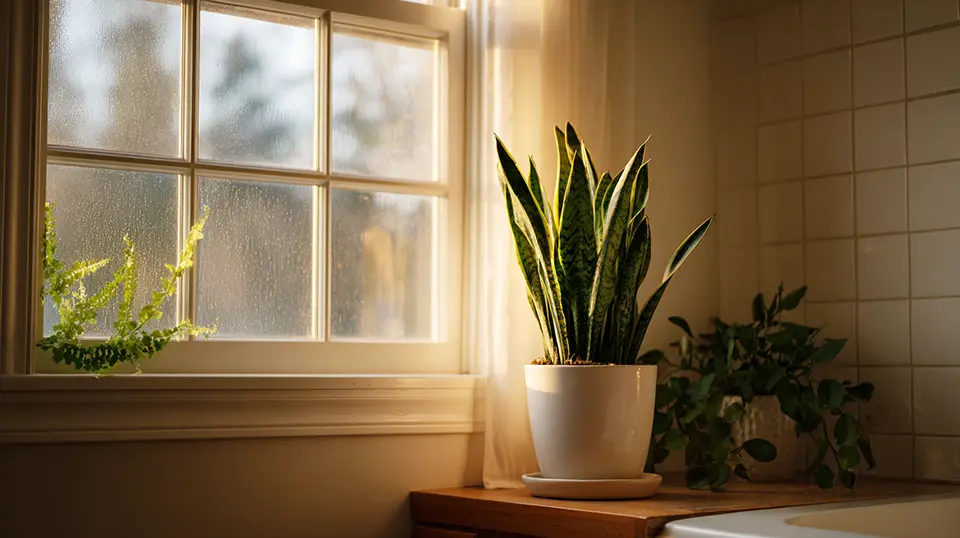
Snake Plant (Dracaena trifasciata)
Also known as mother-in-law’s tongue, snake plants tolerate a wide range of conditions. While they do not require high humidity, they adapt well to bathroom environments and need minimal maintenance.

Source: Wikimedia Commons, CC BY-SA 4.0
Light Considerations
One of the most important factors for bathroom plants is light. While humidity is abundant, some bathrooms lack sufficient natural illumination. Experts suggest selecting shade-tolerant plants if the room has no windows.
In completely windowless bathrooms, artificial grow lights may be necessary to sustain plant health. Rotating plants between brighter rooms and the bathroom can also help maintain vitality.
Managing Humidity and Preventing Mould
Although humidity benefits certain plants, excessive dampness can lead to mould growth on walls, ceilings, or soil surfaces. Proper ventilation remains essential. Running extractor fans after showers and ensuring airflow reduces the risk of moisture buildup.
Plant pots should have adequate drainage to prevent waterlogging. Standing water in saucers can encourage fungal growth, which may affect plant roots and indoor air quality.
Experts emphasize that houseplants do not eliminate mould risk. While they may contribute marginally to air quality, moisture control through ventilation and temperature regulation remains critical.
Aesthetic and Psychological Benefits
In addition to environmental considerations, bathroom plants enhance aesthetics and wellbeing. Greenery can soften hard surfaces such as tiles and mirrors, creating a calming atmosphere.
Research in environmental psychology suggests that indoor plants may contribute to stress reduction and improved mood.
Maintenance Tips
Proper plant care is essential to ensure longevity:
Avoid overwatering, especially in already humid environments.
Wipe leaves occasionally to remove dust and prevent fungal spores from settling.
Monitor for pests that thrive in moist conditions.
Choose pots with drainage holes.
Humidity may reduce watering frequency compared to drier rooms, but soil moisture should still be checked regularly.
Selecting the Right Plant for Your Space
When choosing plants for a bathroom, homeowners should consider:
Light availability
Ventilation quality
Room size
Temperature fluctuations
Tropical plants generally perform best in steamy environments, while succulents require brighter conditions.
Matching plant needs to environmental conditions increases success rates and reduces maintenance challenges.
Balancing Moisture and Plant Health
While bathrooms provide beneficial humidity for certain species, prolonged dampness without airflow can cause fungal issues such as root rot. Balanced environmental management is essential.
Experts recommend maintaining moderate humidity levels and preventing condensation accumulation on walls and windows to minimize indoor mould risk.
Conclusion
Bathrooms can be ideal spaces for moisture-loving houseplants, provided lighting and ventilation are adequate. Species such as Boston ferns, peace lilies, spider plants, and orchids are particularly suited to humid environments.
However, while plants may enhance aesthetics and contribute modestly to air quality, they do not replace the need for effective moisture control. Proper ventilation, drainage, and light management remain key to both plant health and overall indoor hygiene.
References
Centers for Disease Control and Prevention (CDC) – Mold
Royal Horticultural Society (RHS) – Indoor Plant Care
According to DEVON LIVE