According to Taiwannews
Taiwan has recorded its first domestic case of valley fever (coccidioidomycosis), a rare fungal infection usually confined to arid regions in the Americas, officials confirmed this week. The case marks a significant moment in public-health surveillance and raises questions about how environmental fungal pathogens may spread beyond their traditional endemic zones.
The patient, a man in his 50s from northern Taiwan, developed persistent respiratory symptoms—including shortness of breath and cough—beginning in early August. When these symptoms did not improve with initial treatment, he sought further medical care. Blood tests ultimately confirmed a diagnosis of valley fever, according to Taiwan’s Centers for Disease Control (CDC).
Valley fever is caused by inhaling spores of soil-dwelling fungi in the genus Coccidioides. Infected individuals may experience a range of symptoms, from mild, flu-like illness to severe respiratory disease. In rare cases, the infection can disseminate beyond the lungs and become life-threatening.
While Taiwan has recorded approximately 20 cases of coccidioidomycosis in the past, those were all linked to travel abroad, particularly to known endemic regions such as the southwestern United States. What distinguishes this new case is that the patient reportedly did not leave Taiwan during the disease’s incubation period, leading health authorities to classify it as a domestic case.
Source: Wikimedia Commons, CC BY-SA 3.0
What Is Valley Fever and Why It Matters
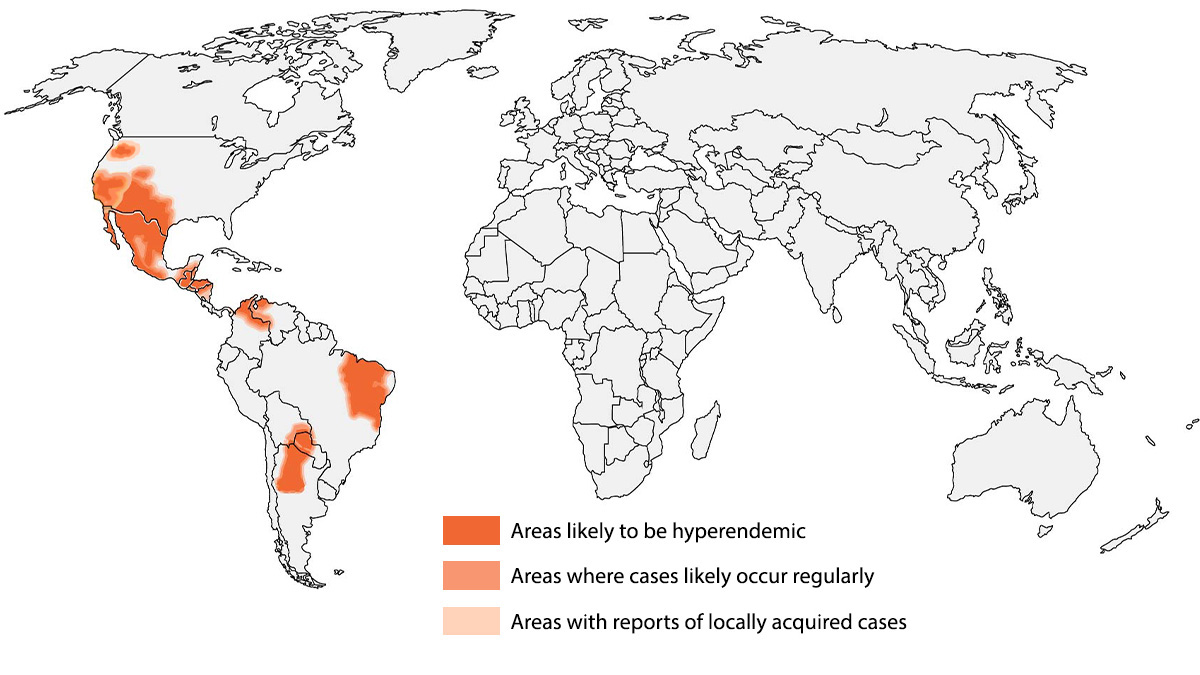
Valley fever, or coccidioidomycosis, is caused by two related fungal species: Coccidioides immitis and Coccidioides posadasii. These moulds thrive in dry, desert-like soils, especially in parts of the southwestern United States—Arizona and California’s Central Valley—the northern parts of Mexico, and regions of Central America and South America. Neither species is normally considered endemic to East Asia.
The lifecycle of Coccidioides involves a saprophytic phase in soil and an infectious phase in humans and animals. When dry soil is disturbed by wind, construction, agriculture, or human activity, microscopic fungal spores (arthroconidia) become airborne. Once inhaled, they convert to a yeast-like form that can elicit inflammatory responses in the lungs.

Source: Wikimedia Commons, CC BY-SA 4.0
Clinically, valley fever commonly presents with non-specific symptoms:
- Persistent cough
- Fever and chills
- Night sweats
- Joint and muscle pain
- Headaches
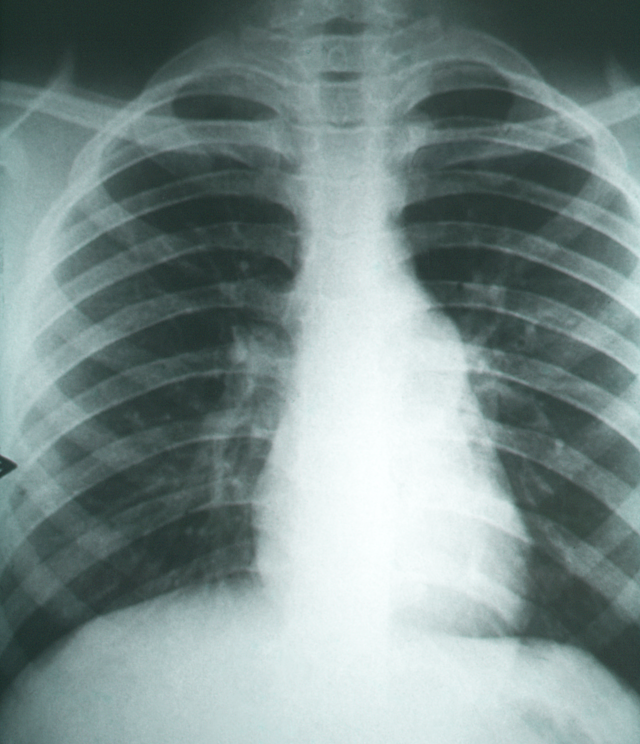
In some patients, a characteristic rash called erythema nodosum may develop. More severe disease can involve chest pain, shortness of breath, chronic pneumonia, or dissemination to skin, bone, and central nervous system—although such progression remains relatively rare.
Most infected individuals either remain asymptomatic or experience only mild illness that resolves without specific antifungal therapy. Severe disease and complications tend to occur in people with weakened immune systems, older adults, individuals with chronic conditions such as diabetes, and pregnant women.
Source: Wikimedia Commons, CC BY-SA 4.0
The Taiwan Case: Domestic Transmission or Environmental Exposure?
The domestic classification of this case is unusual because Coccidioides fungi are not known to be endemic in Taiwan. In temperate regions far from desert ecology, factors like soil type, humidity, and temperature are generally not conducive to the fungus’s environmental lifecycle.
However, health authorities speculate that the exposure may have occurred during the handling of shipping containers or other imported materials that carried dust from regions where these fungi are endemic. This mechanism—of environmental spores hitchhiking on cargo—is plausible and has been documented in other diseases where pathogens travel in soil particles attached to goods.
Because the infection is not transmitted from person to person, CDC officials emphasize that there is no evidence of community spread at this time. Instead, the focus remains on identifying environmental sources and mitigating similar exposures.
The CDC has also noted that although valley fever can be severe, the overall fatality rate remains below 1 percent, with most people recovering without notable complications.
Public-Health Implications and Surveillance
The occurrence of a domestic valley fever case in Taiwan invites reflection on broader public-health challenges relating to fungal diseases. For decades, mycotic infections have been under-recognized relative to viral and bacterial pathogens, even though environmental fungi contribute substantially to global morbidity.
In endemic areas, valley fever represents a persistent health burden, accounting for thousands of hospitalizations annually and significant healthcare costs.
This case highlights three important considerations for Taiwan and other regions beyond traditional endemic zones:
Environmental Monitoring: Fungal spores can travel long distances in dust or on imported materials, suggesting a need for environmental surveillance at ports and transport hubs.
Clinical Awareness: Healthcare providers must consider fungal diseases like coccidioidomycosis in differential diagnoses for persistent respiratory illness—even when patients have not traveled abroad.
Cross-Sector Coordination: Addressing fungal disease risk involves agricultural, environmental, transportation, and public-health sectors working together to manage soil disturbance, dust control, and pathogen monitoring.
In recent years, climate change, land use shifts, and global transport have blurred the geographic boundaries of many infectious diseases.

GISTEMP surface temperature anomaly, 2017. Surface temperature anomaly, measured in degrees Celsius. The temperature anomaly is relative to the 1951-1980. global average temperature. Data is based on the GISTEMP analysis from the NASA Goddard Institute for Space Studies.
Source: Wikimedia Commons, CC BY-SA 3.0
Comparative Context: Imported Cases vs. Domestic Emergence
Taiwan’s report of approximately 20 valley fever cases prior to this instance were all linked to travel in endemic regions. By contrast, this case lacked any travel history abroad, suggesting local exposure.
Internationally, similar patterns have been observed when fungal diseases cross geographic boundaries due to climate shifts, human activity, or accidental transport. On a global scale, the move toward increased fungal disease recognition has prompted renewed scientific attention to how organisms like Cryptococcus, Histoplasma, and Coccidioides respond to changing ecological conditions.

Source: Wikimedia Commons, CC BY-SA 4.0
My Perspective: A Reminder of Evolving Fungal Threats
From a public-health reporting standpoint, this rare domestic valley fever case in Taiwan serves as a reminder of how fungal pathogens, long relegated to specialized medical discussions, can emerge unexpectedly. Reports of fungal disease are rising worldwide—not only in classic endemic areas but also in regions previously considered safe from such threats.
Coccidioidomycosis remains relatively rare outside its traditional endemic range, but the Taiwan case illustrates that fungal diseases can and do leap geographical boundaries, especially when human activities create opportunities for spore dispersal.
References
According to Taiwannews