According to abc30
A Weather Event with Agricultural Consequences
In California’s Central Valley, a region long defined by its agricultural productivity, recent episodes of strong winds have raised renewed concerns among both cotton growers and residents sensitive to airborne particles. What might appear, at first glance, as a routine weather event has revealed a more complex interaction between climate, farming systems, and public health.
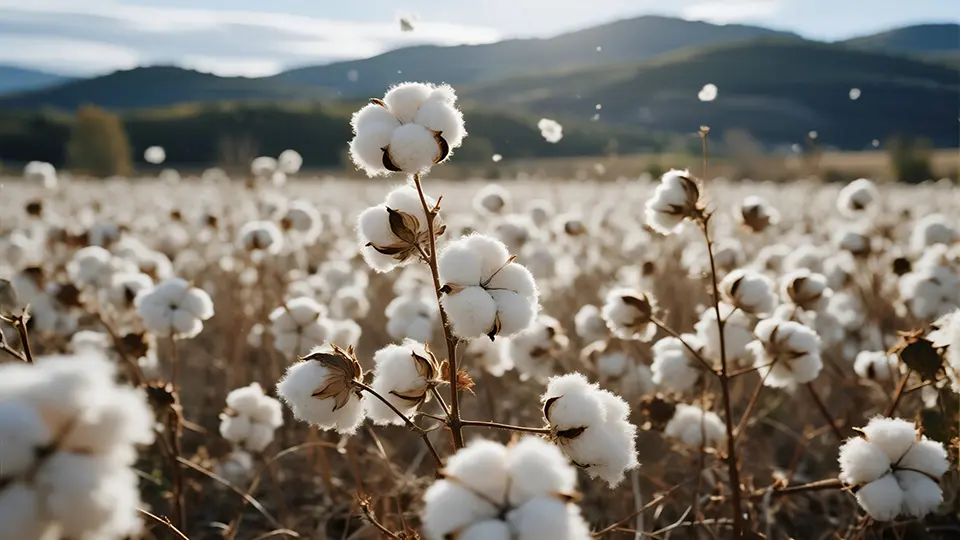
Farmers across the Valley report that powerful gusts have begun to interfere with cotton production at a critical stage. Cotton crops, particularly vulnerable during periods of maturation, can suffer when winds dislodge fibers or carry debris across fields. For growers, the timing is crucial: even short bursts of high wind can translate into measurable losses in yield and quality. In an industry where margins are often narrow, these disruptions carry economic weight that extends beyond individual farms.

Airborne Particles and Rising Health Concerns
Yet the concern does not stop at agriculture. The same winds that sweep across cotton fields also lift vast quantities of dust, pollen, and biological particles into the air. For residents, especially those with respiratory sensitivities, the change is immediate and noticeable. Reports of sneezing, eye irritation, and aggravated asthma symptoms tend to rise in parallel with these wind events, suggesting a direct link between environmental disturbance and human health.
Health experts explain that such conditions create an ideal scenario for the dispersal of microscopic particles. Dust from dry soil combines with plant debris and fungal spores, forming a complex mixture that can travel long distances. While each component alone may pose limited risk, their combined presence in high concentrations can intensify allergic responses.
Sudden Environmental Triggers
For allergy sufferers, the experience can feel abrupt. A calm morning can quickly give way to an afternoon of reduced air quality as winds increase. In this sense, the Valley’s wind patterns act less like a gradual seasonal shift and more like a switch—suddenly activating environmental triggers that had remained relatively dormant.
Agricultural specialists also point out that soil conditions play a significant role. Prolonged dry periods leave the ground more susceptible to erosion, making it easier for winds to lift fine particles into the air. In regions where irrigation is tightly managed, even small variations in moisture levels can influence how much dust becomes airborne during a wind event.

The Role of Organic Matter and Fungal Spores
At the same time, the presence of organic material—crop residue, decaying plant matter, and microbial growth—adds another layer of complexity. These materials can harbor fungi that release spores when disturbed. Under windy conditions, spores from common environmental molds become part of the airborne mix, contributing to both ecological processes and human exposure.
Among the fungi potentially involved are species from genera such as Aspergillus, Cladosporium, Alternaria, and Penicillium. These organisms are widely distributed in agricultural environments and are known to produce spores that can trigger allergic reactions. In most cases, exposure remains within manageable levels, but spikes in concentration during wind events may increase the likelihood of symptoms for sensitive individuals.

Scientific Perspective on Wind-Driven Dispersion
From a scientific perspective, the phenomenon is not new. Aerobiologists have long studied how wind acts as a transport mechanism for biological particles, redistributing them across landscapes. What is changing, however, is the intensity and frequency of such events, influenced by broader climatic patterns and land-use practices.
For cotton growers, adaptation becomes essential. Some explore methods to reduce soil exposure, such as cover cropping or adjusted irrigation strategies, in an effort to limit dust generation. Others monitor weather forecasts more closely, timing certain farming activities to avoid periods of strong wind.
Practical Responses from Farmers and Residents
Residents, meanwhile, are advised to take practical precautions during high-wind days. Staying indoors, using air filtration systems, and limiting outdoor exposure during peak wind hours are among the commonly recommended measures. While these steps may seem simple, they reflect a growing awareness of how environmental conditions directly affect daily life.
A Broader Environmental Reflection
What emerges from this situation is a layered narrative—one where agriculture, climate, and health intersect in subtle but significant ways. The winds sweeping through California’s Central Valley do more than move air; they redistribute elements of the landscape itself, from soil particles to microscopic spores.
In that movement lies both challenge and insight. For farmers, it is a reminder of the delicate balance required to sustain crops under shifting environmental conditions. For residents, it is an illustration of how closely human well-being is tied to the invisible dynamics of the natural world.

References
Fröhlich-Nowoisky, J. et al. (2016). Bioaerosols in the Earth system. Atmospheric Research.
World Health Organization (WHO). Asthma Fact Sheet
According to abc30