According to EureKAlert
Spider Webs May Become a Powerful New Tool for Biodiversity Research
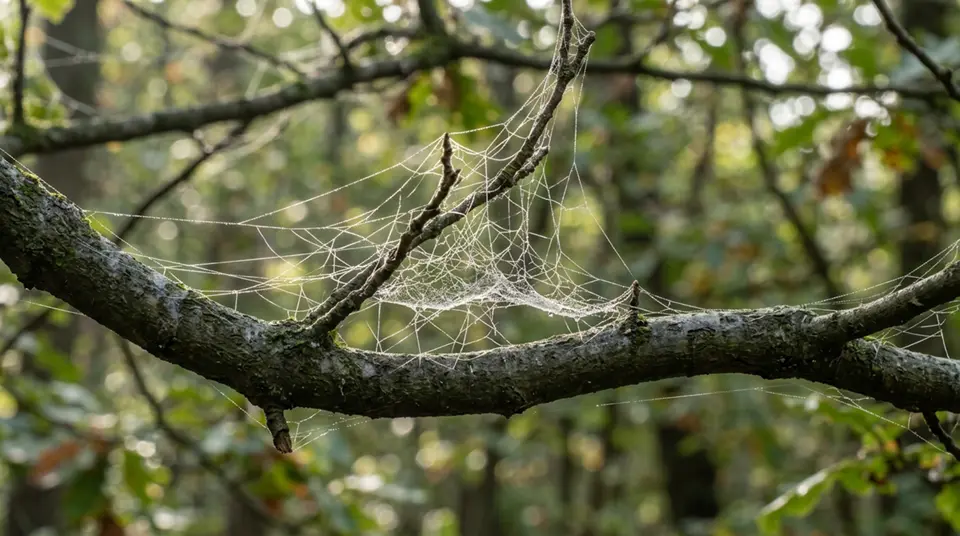
A new study conducted by researchers from Thammasat University and the National Center for Genetic Engineering and Biotechnology (BIOTEC) in Thailand has demonstrated that spider webs can serve as effective natural collectors of fungal biodiversity. The research suggests that these often-overlooked structures may provide scientists with a non-destructive and practical method for discovering living fungi, including potentially undocumented species, within agricultural ecosystems.
Published in the Biodiversity Data Journal, the study highlights how spider silk can function as a biological sampling surface capable of trapping airborne particles, environmental debris, and fungal propagules. Unlike conventional molecular techniques that detect DNA from both living and dead organisms, the spider web approach allows researchers to recover viable fungi that can be cultured and studied further in the laboratory.
The findings offer a new perspective on biodiversity monitoring and suggest that spider webs may become a valuable supplementary tool for exploring microbial communities in natural and agricultural environments.

Investigating Spider Webs in Thailand’s Rice Fields
Researchers focused their investigation on tropical rice-field ecosystems in Thailand. The team studied webs produced by the orb-weaving spider Cyclosa mulmeinensis, a species known for creating distinctive “trashline” decorations within its web. These decorations consist of plant fragments, insect remains, and other environmental debris that accumulate along the center of the web.
Scientists hypothesized that these debris-rich structures could act as natural traps for fungal spores and other microscopic particles moving through the environment.
To test this idea, spider webs were collected from rice-field embankments in Pathum Thani, Nakhon Nayok, and Phetchaburi provinces using sterile sampling techniques. Care was taken to minimize disturbance to both the environment and the spiders themselves. Only small sections of the webs were removed, and the spiders were left unharmed.
Recovering Living Fungi from Spider Silk
Once transported to the laboratory, researchers carefully extracted particles retained on the silk and cultured the collected material to determine whether viable fungi could be recovered.
The results exceeded expectations.
A total of 112 viable fungal isolates were successfully cultured from the sampled spider webs. Further analysis grouped these isolates into 23 distinct taxa representing six fungal genera. These included Alternaria, Aspergillus, Cladosporium, Fusarium, Penicillium, and Talaromyces—genera that are widely distributed throughout natural and agricultural ecosystems.
The ability to recover living fungi rather than simply detecting fungal DNA provides researchers with important opportunities for further study. Cultured isolates can be examined for their biological characteristics, ecological roles, physiological traits, and potential applications in agriculture, biotechnology, and environmental research.
Fungal Genera Recovered from Spider Webs
| Fungal Genus | Ecological Importance |
|---|---|
| Alternaria | Plant-associated fungi |
| Aspergillus | Soil and airborne fungi |
| Cladosporium | Common environmental fungi |
| Fusarium | Plant pathogens and soil fungi |
| Penicillium | Decomposers and biotechnology |
| Talaromyces | Soil and plant-associated fungi |
Generated by AI based on Biodiversity Data Journal study results.

Evidence of Potentially Undocumented Species
Researchers noted that one of the most significant findings involved the discovery of genetic lineages that could not be matched to currently described species in available databases.
Several isolates within the genera Cladosporium and Talaromyces displayed unique genetic signatures, suggesting the presence of previously undocumented fungal diversity. While additional taxonomic work will be required to determine whether these lineages represent entirely new species, the findings indicate that agricultural landscapes may harbor a greater diversity of fungi than currently recognized.
The discovery highlights a persistent challenge in mycology and biodiversity science.
Scientists estimate that only a fraction of the world’s fungal species have been formally identified and described. Millions of fungal species may exist globally, yet many remain undiscovered due to the difficulties associated with sampling and culturing microorganisms from complex environmental systems.
How Spider Webs Compare with Traditional Sampling Methods
Traditional fungal monitoring methods often rely on soil sampling, air sampling, plant surveys, or DNA-based environmental sequencing. While these approaches provide valuable information, they can have limitations. Molecular methods may detect genetic material from organisms that are no longer viable, making it difficult to determine which fungi remain biologically active within a given environment.
The spider web approach offers a complementary alternative.
Because spider silk naturally intercepts airborne particles, fungal spores, dust, plant fragments, and other biological materials, it functions as a passive environmental sampling device. Furthermore, spider webs are continuously maintained and periodically rebuilt by their inhabitants, providing a renewable and naturally occurring collection surface.
Researchers believe this characteristic could make spider webs useful for long-term ecological monitoring programs.
Spider Web Sampling Advantages
| Method | Ability to Recover Living Fungi |
|---|---|
| DNA Sequencing | Limited |
| Air Sampling | Moderate |
| Soil Sampling | Moderate |
| Spider Web Sampling | High |
| Plant Tissue Sampling | Variable |
Generated by AI based on fungal biodiversity monitoring methodologies.
A Sustainable and Non-Invasive Monitoring Tool
The study also demonstrates how common natural structures can provide unexpected scientific value. Spider webs are abundant across a wide range of habitats and are often overlooked during biodiversity assessments. Yet their ability to accumulate environmental material makes them ideal candidates for investigating hidden microbial communities.
Scientists involved in the study emphasize that the approach requires minimal disturbance to ecosystems.
Unlike some sampling techniques that involve removing soil, vegetation, or large quantities of environmental material, collecting small portions of spider webs causes little disruption to surrounding habitats. This aligns with growing efforts to develop sustainable and non-invasive biodiversity monitoring methods.
Agricultural ecosystems may particularly benefit from such approaches.
Rice fields and other cultivated landscapes support diverse microbial communities that influence plant health, nutrient cycling, disease dynamics, and ecosystem productivity. Understanding fungal diversity within these systems is increasingly important as researchers seek to improve agricultural sustainability and resilience.
The ability to detect viable fungi from naturally occurring spider webs could help scientists monitor environmental changes, identify beneficial microorganisms, and detect emerging plant pathogens.
Revealing New Ecological Interactions
The findings also contribute to a broader understanding of ecological interactions.
Spider webs are typically studied in the context of predator-prey relationships, serving as tools for capturing insects. This research reveals an additional ecological function: acting as passive collectors of microbial diversity.
The study demonstrates how interconnected biological systems can generate unexpected opportunities for scientific discovery.
Researchers caution that further studies are needed to determine how widely this method can be applied across different habitats, climates, and spider species. Future investigations may compare fungal communities captured by different web architectures or explore whether spider webs can be used to monitor seasonal changes in microbial populations.
Despite these unanswered questions, the results provide strong evidence that spider webs represent a promising new resource for biodiversity research.
The study ultimately underscores a broader scientific principle: valuable ecological information can often be found in overlooked places. By examining a familiar structure through a new lens, researchers uncovered a hidden layer of fungal diversity that may have remained undetected using conventional methods alone.
As scientists continue searching for innovative ways to document Earth’s biodiversity, spider webs may emerge as an unexpected but powerful tool for exploring the microbial world. Their ability to capture living fungi, including potentially undescribed species, highlights the vast amount of biological diversity that still awaits discovery within agricultural landscapes and natural ecosystems alike.

References
Hawksworth, D.L., & Lücking, R. (2017). Fungal Diversity Revisited. Microbiology Spectrum.
According to EureKAlert