Ancient Fossil Sheds Light on One of Earth’s Oldest Biological Alliances
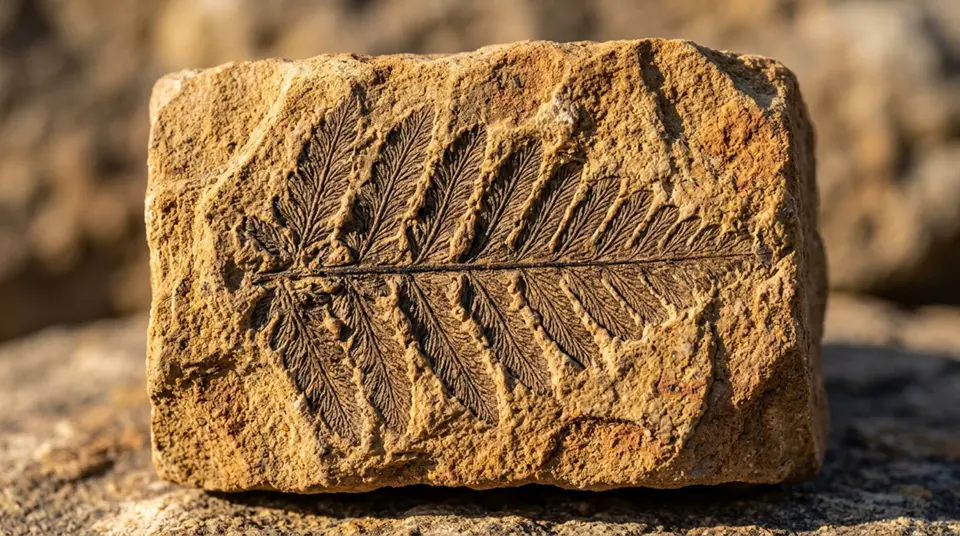
A remarkable fossil discovery is providing new insights into one of the most important evolutionary partnerships in Earth’s history. Researchers studying a 407-million-year-old plant fossil have identified evidence of an ancient fungal associate living within the plant’s tissues, revealing that beneficial plant-fungus relationships were already established during the early stages of terrestrial ecosystem development.
The finding offers a rare glimpse into how some of the first land plants survived and expanded across Earth’s surface during the Devonian Period, a time when terrestrial ecosystems were still in their infancy. Scientists believe that partnerships between plants and fungi played a crucial role in helping vegetation colonize land, transform landscapes, and ultimately create the conditions necessary for complex terrestrial life.

Rare Evidence Preserved Within Ancient Plant Tissues
The fossil examined by researchers belongs to an ancient vascular plant that lived more than 400 million years ago. Through advanced microscopic analysis, scientists discovered fungal structures preserved inside the fossilized plant tissues. These structures closely resemble those found in modern symbiotic relationships between plants and fungi.
The discovery is significant because direct fossil evidence of ancient plant-fungal partnerships is exceptionally rare.
Researchers have long suspected that fungi helped early plants overcome the challenges of terrestrial environments. During the Devonian Period, land surfaces were vastly different from those seen today. Soil systems were poorly developed, nutrient availability was limited, and plants lacked many of the sophisticated root systems found in modern vegetation.
Under these conditions, survival on land would have been extremely difficult without biological assistance.
Fungi Offered a Solution
Fungi offered a solution.
Modern ecosystems demonstrate the importance of mycorrhizal associations, in which fungi form mutually beneficial relationships with plant roots. Fungal networks extend into surrounding soil, increasing the plant’s ability to absorb water and essential nutrients such as phosphorus, nitrogen, and trace minerals. In return, plants provide carbohydrates produced through photosynthesis.
Scientists believe similar relationships may have existed among Earth’s earliest land plants.
The newly identified fossil evidence strengthens this hypothesis. The preserved fungal structures suggest that ancient plants were already benefiting from fungal partnerships hundreds of millions of years ago.
Researchers argue that these associations may have accelerated the spread of vegetation across terrestrial environments by helping plants acquire resources from nutrient-poor substrates.

How Plant-Fungal Partnerships Changed Earth
This would have had profound consequences for Earth’s evolution.
As plants expanded across continents, they altered atmospheric chemistry, stabilized soils, increased organic matter accumulation, and created habitats for emerging terrestrial organisms. The development of extensive plant communities ultimately contributed to major ecological transformations that shaped the modern biosphere.
Fungi may therefore have played an indirect but essential role in the evolution of terrestrial ecosystems.
The fossil discovery also provides evidence that plant-fungal symbiosis is one of the oldest biological partnerships still operating today.
Modern forests, grasslands, wetlands, and agricultural systems continue to depend on fungal associations. Researchers estimate that more than 90 percent of plant species maintain some form of symbiotic relationship with fungi.
The newly discovered fossil suggests that this ecological strategy has persisted for hundreds of millions of years with remarkable evolutionary success.
Plant-Fungal Symbiosis Through Time
| Time Period | Significance |
|---|---|
| 407 Million Years Ago | Fossil evidence of fungal partnership |
| Devonian Period | Expansion of terrestrial plants |
| Carboniferous Period | Forest ecosystems develop |
| Modern Era | Over 90% of plants rely on fungal associations |
Generated by AI based on published paleobotanical and fungal ecology research.
Ancient Fungal Structures Resemble Modern Symbiosis
Scientists were particularly interested in the microscopic architecture of the fungal structures preserved within the fossil. The organization of the fungal tissues resembles patterns observed in contemporary mycorrhizal fungi, suggesting that key features of the partnership evolved very early in plant history.
This finding supports the idea that fungal symbiosis was not a later adaptation but a fundamental component of early terrestrial plant evolution.
The research also contributes to a growing understanding of fungi as ecosystem engineers rather than simply decomposers.
While fungi are widely recognized for breaking down organic material and recycling nutrients, their role in supporting plant growth may be equally important. By extending the reach of plant nutrient acquisition systems, fungi effectively increase ecosystem productivity and resilience.
The ancient fossil demonstrates that these ecological functions may have deep evolutionary roots.
The Devonian Period: A Turning Point in Life on Land
The Devonian Period is often described as a turning point in Earth’s biological history. During this era, plants diversified, soils became more complex, and terrestrial habitats expanded significantly. The emergence of plant-fungal partnerships likely helped drive many of these developments.
Researchers suggest that without fungal assistance, the pace of terrestrial colonization may have been substantially slower.
The discovery further highlights the importance of fossil preservation in understanding evolutionary history.
Fossils typically preserve hard structures such as bones, shells, and woody tissues. Soft biological interactions, including symbiotic relationships, are much less likely to survive over geological timescales. Finding direct evidence of ancient fungi within fossilized plant material is therefore considered exceptionally valuable.
Modern Technology Reveals Ancient Secrets
Advances in imaging technology played a key role in the study.
Modern microscopy techniques allow scientists to examine fossil tissues at extremely high resolution, revealing microscopic structures that would have remained invisible to earlier generations of researchers. These tools are helping paleontologists reconstruct ancient ecosystems with unprecedented detail.
The findings also have implications beyond paleontology.
Understanding how fungi supported the earliest land plants may provide insights into modern ecosystem management, soil restoration, and sustainable agriculture. Many contemporary agricultural systems rely on mycorrhizal fungi to improve nutrient efficiency and reduce dependence on synthetic fertilizers.
Ancient fossil evidence reinforces the long-standing ecological importance of these relationships.
Cooperation Helped Shape Biodiversity
Researchers emphasize that the study represents another example of how interconnected life has been throughout Earth’s history. Evolution is often viewed through the lens of competition, but symbiosis has played an equally important role in shaping biodiversity.
The partnership between plants and fungi illustrates how cooperation between organisms can create opportunities for adaptation, expansion, and ecological innovation.
More than 400 million years after these early plants and fungi lived, their descendants continue to influence ecosystems around the globe. Forests, grasslands, agricultural landscapes, and natural habitats all depend upon interactions between plant roots and fungal networks.
The newly discovered fossil serves as a reminder that some of the most important evolutionary innovations occur not within a single organism, but through partnerships between different forms of life.
By uncovering evidence of an ancient fungal associate preserved within a 407-million-year-old plant fossil, researchers have revealed a hidden chapter in the story of terrestrial evolution. The discovery strengthens the theory that fungi were instrumental in helping plants establish themselves on land, setting the stage for the development of complex ecosystems that continue to shape the planet today.
References
According to earth.com