According to EurekAlert!
Biological Solutions Improve Reclaimed Mining Soils
A long-term field study conducted in China‘s Shanxi Province has revealed that combining biochar with beneficial fungi can significantly improve the restoration of soils damaged by coal mining activities. The research provides new evidence that biological soil amendments may offer an effective and sustainable solution for rehabilitating degraded mining landscapes while supporting agricultural productivity.
Mining Activities Leave Long-Term Soil Damage
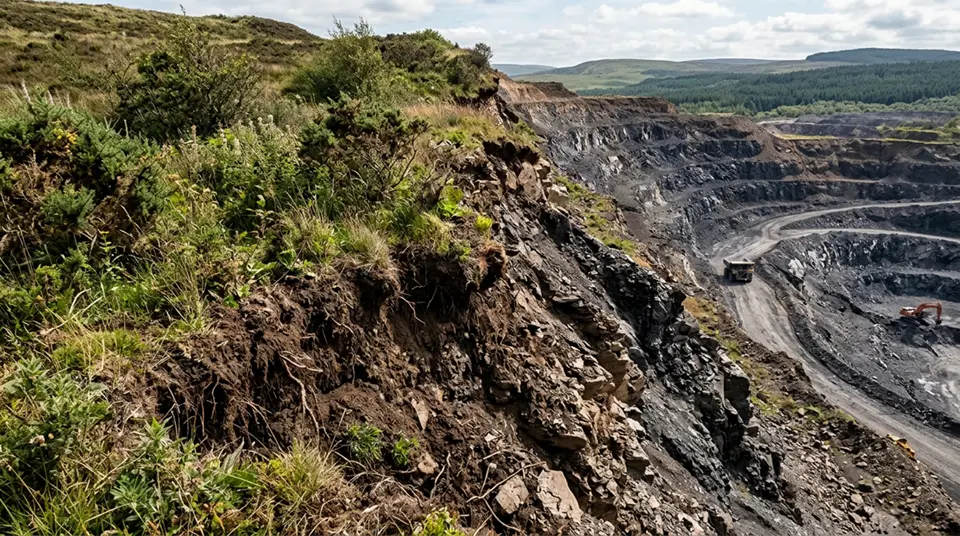
Coal mining remains one of the most economically important industries worldwide, but its environmental impacts are substantial. Mining operations frequently disturb soil structure, remove nutrient-rich topsoil, reduce organic matter, and disrupt the microbial communities that are essential for maintaining healthy ecosystems. Even after land reclamation efforts are completed, many former mining areas continue to suffer from poor soil quality, limited fertility, and reduced crop performance.
To address these challenges, researchers investigated the combined effects of biochar and arbuscular mycorrhizal fungi (AMF) on reclaimed coal mining soils.
Biochar is a carbon-rich material produced through the thermal conversion of biomass under limited oxygen conditions. Due to its porous structure and high surface area, biochar can improve soil water retention, nutrient availability, and microbial habitat.
Arbuscular mycorrhizal fungi, meanwhile, form beneficial symbiotic relationships with plant roots, helping plants absorb nutrients and water more efficiently while enhancing resistance to environmental stress.

Three-Year Study Evaluates Four Restoration Strategies
The study was conducted over a three-year period and compared four treatment strategies: untreated soil, soil inoculated with mycorrhizal fungi, soil amended with biochar, and soil receiving both biochar and fungal inoculation.
Researchers assessed changes in soil physical properties, nutrient availability, microbial diversity, enzyme activity, and crop productivity.
Results demonstrated that the combined biochar and fungal treatment produced the most significant improvements across nearly every measured indicator.
Soil bulk density decreased while soil porosity increased, creating a more favorable environment for root development. Improved pore structure also enhanced water infiltration and retention, helping plants access moisture more effectively during growth.
Experimental Treatments
| Treatment | Description |
|---|---|
| Control | Untreated soil |
| AMF | Mycorrhizal fungi only |
| Biochar | Biochar only |
| Biochar + AMF | Combined treatment |
Generated by AI based on study methodology.
Biochar Supports Fungal Colonization
Researchers observed that biochar created a supportive habitat for fungal colonization.
Plant roots in the combined treatment plots showed higher rates of colonization by arbuscular mycorrhizal fungi compared with other treatments.
This stronger symbiotic relationship enabled plants to access nutrients more efficiently, particularly phosphorus, which is often limited in degraded soils.
The study also documented substantial improvements in soil nutrient dynamics.
Levels of soil organic carbon increased, while the availability of essential nutrients such as phosphorus improved significantly. These changes are critical because nutrient deficiencies are among the primary obstacles preventing successful restoration of reclaimed mining land.

Enhanced Soil Biological Activity
Biological activity within the soil also increased considerably.
Several key enzymes involved in nutrient cycling became more active following treatment.
Enzymes such as sucrase, β-glucosidase, cellulase, and urease play important roles in decomposing organic matter and releasing nutrients that support plant growth.
Increased enzyme activity indicates a more active and functional soil ecosystem capable of sustaining long-term productivity.
Microbial community analysis revealed that both bacterial and fungal diversity increased under the combined treatment.
Healthy soils depend on diverse microbial populations that contribute to nutrient cycling, organic matter decomposition, and disease suppression.
Researchers found that beneficial microbial groups associated with soil fertility became more abundant, suggesting that ecosystem recovery was progressing beyond simple physical restoration.
Soil Multifunctionality Improved Significantly
One of the most significant findings involved soil multifunctionality, a measure used to evaluate how effectively soil performs multiple ecological functions simultaneously.
These functions include nutrient retention, carbon storage, biological activity, structural stability, and support for plant growth.
The combined biochar and fungal treatment generated the highest soil multifunctionality scores among all experimental groups.
Statistical analyses indicated that nutrient availability served as the primary driver of improved soil multifunctionality.
At the same time, enzyme activity emerged as the strongest factor influencing maize productivity.
This relationship highlights the interconnected nature of soil biological processes and agricultural performance.
Key Benefits of Biochar + AMF
| Soil Indicator | Result |
|---|---|
| Soil Porosity | Increased |
| Bulk Density | Reduced |
| Water Retention | Improved |
| Phosphorus Availability | Increased |
| Soil Organic Carbon | Increased |
| Microbial Diversity | Increased |
| Maize Productivity | Increased |
Generated by AI based on published study results.
Implications for Global Land Reclamation
Researchers suggest that the success of the combined treatment stems from complementary interactions between biochar and mycorrhizal fungi.
Biochar improves the physical and chemical environment of the soil while providing protected habitats for microorganisms.
Mycorrhizal fungi expand the effective root system of plants, allowing greater access to nutrients and water.
Together, they create a more resilient soil ecosystem capable of supporting both environmental restoration and crop production.
The findings have important implications for land reclamation projects worldwide.
Large areas of land affected by mining activities require restoration, and traditional engineering approaches alone may not fully restore ecosystem functions.
Biological solutions that rebuild microbial communities and nutrient cycling processes could provide more sustainable and cost-effective outcomes.
As governments and industries increasingly prioritize environmental rehabilitation, the study offers valuable evidence that combining biochar with beneficial fungi can accelerate the recovery of degraded soils.
Beyond coal mining regions, the approach may also have applications in other disturbed environments where soil quality has been compromised by industrial activities, intensive agriculture, or land degradation.

Restoring Biological Networks Is Essential
The research underscores a growing recognition among soil scientists that successful restoration depends not only on rebuilding soil structure but also on restoring the complex biological networks that sustain ecosystem health.
By enhancing microbial diversity, nutrient availability, and plant-fungal partnerships, biochar and mycorrhizal fungi may play a critical role in future strategies aimed at restoring damaged landscapes and promoting sustainable agriculture.
References
According to EurekAlert!