According to FOX13 SEATTLE
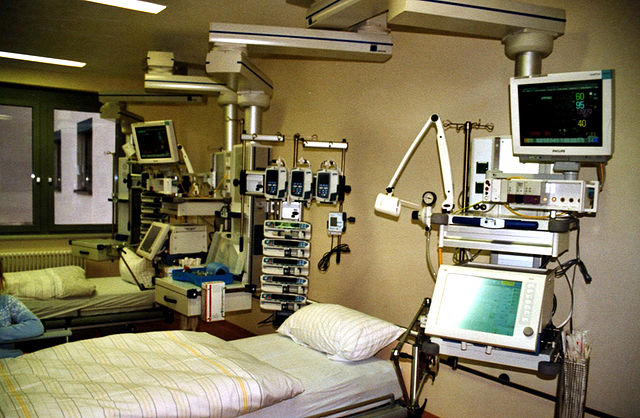
There is a distinct rhythm to a major medical center. It is a cadence of beeping monitors, the squeak of rubber soles on polished linoleum, and the hushed, urgent whispers of families in waiting rooms. Harborview Medical Center in Seattle is no different; as the only Level I trauma center in Washington, Alaska, Montana, and Idaho, it is a place where people go when the worst has happened, trusting that the environment itself is a fortress against further harm.

Source: Wikimedia Commons, CC BY-SA 2.0
However, recent reports have introduced a dissonant note into this rhythm—a silent, microscopic disruption that has shaken the confidence of the community. The news that Harborview is investigating a cluster of Mucormycosis cases is a stark reminder that even in the most sterile environments, nature finds a way to intrude.

Source: Wikimedia Commons, CC BY-SA 3.0
As an independent observer who has spent years looking at the microscopic world, I find this story particularly compelling not just for its medical implications, but for what it says about the fragility of our safety nets. We often view hospitals as hermetically sealed bubbles, separate from the biological chaos of the outside world. But as this outbreak demonstrates, the barrier between “out there” and “in here” is more porous than we like to admit.
The Fact Pattern: What We Know
Let us look at the situation with a cold, rational eye, stripping away the panic to focus on the data provided by reports emerging from Seattle.
Harborview Medical Center has identified six patients who have tested positive for Mucormycosis. This is not a common cold; this is a serious, invasive fungal infection. Of those six patients, three have passed away.
Here, we must pause and apply our “truth is more important than opinion” filter. It is easy to read those numbers and immediately draw a line of causality: The fungus killed them. However, the reality of hospital epidemiology is rarely so linear. The hospital administration has been careful—perhaps rightly so—to note that while these patients had the infection, it is not yet definitively clear if the fungus was the primary cause of death.
This is a crucial distinction. Mucormycosis is an opportunist. It does not typically hunt the strong; it stalks the vulnerable. The patients in a Level I trauma center or an Intensive Care Unit are, by definition, fighting other battles—severe injuries, compromised immune systems, or chronic illnesses. When a patient with multiple comorbidities passes away, determining the exact “tipping point” requires a rigorous autopsy and medical review.
Source: Wikimedia Commons, CC BY-SA 3.0
However, the statistical anomaly remains. Mucormycosis is rare. To have a cluster of six cases in a relatively short window in a single facility is not a coincidence; it is a signal. It suggests a common source or a systemic breach in the environmental defenses.
The Antagonist: Understanding the Mold
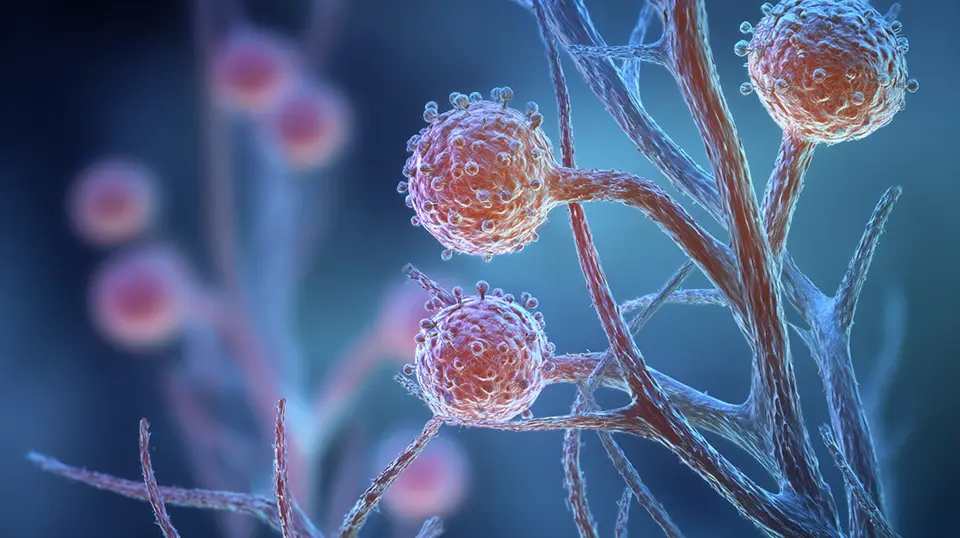
To understand the gravity of this situation, we have to understand the antagonist. If this were a crime novel, the culprit would be a sophisticated, stealthy assassin. In biology, it is the Mucorales order of fungi.
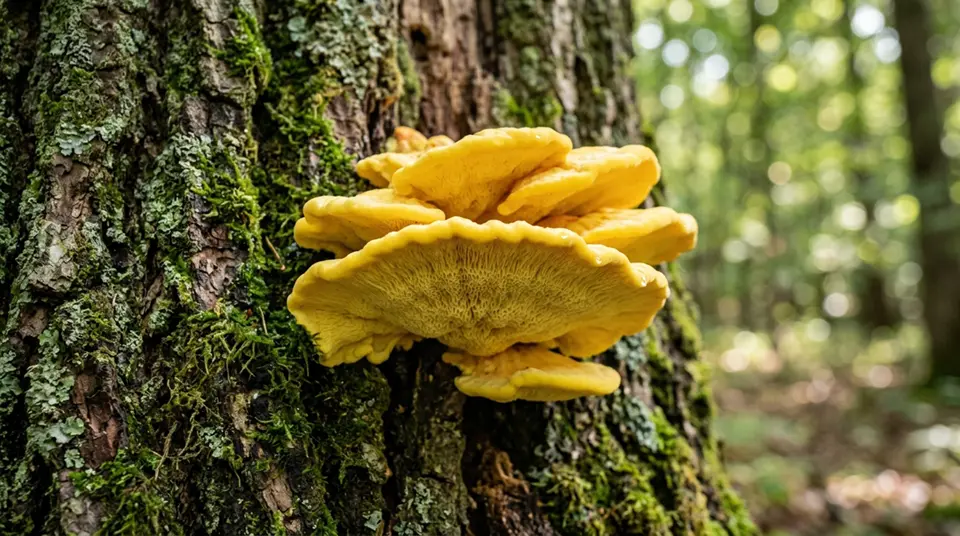
These molds are ubiquitous. They are the janitors of the natural world. Walk into a forest in the Pacific Northwest, kick over a pile of damp autumn leaves, or dig your hands into the soil, and you are surrounded by them. They thrive on decaying organic matter—compost, rotting wood, leaves.

Source: Wikimedia Commons, CC BY-SA 3.0
When Mucormycosis takes hold, it is aggressive. It affects the sinuses, the brain, or the lungs. It invades blood vessels, cutting off blood supply to tissue, causing that tissue to die and turn black—hence the terrifying moniker it sometimes carries, “Black Fungus.”
The spores are airborne. We breathe them in every day. You, reading this right now, have likely inhaled fungal spores within the last hour.

Source: Wikimedia Commons, CC BY-SA 3.0
Harborview has stated they are investigating. This likely involves industrial hygienists swabbing air ducts, testing linen supplies, checking water filtration systems, and analyzing the airflow pressure in patient rooms. They are looking for the “reservoir”—the hiding spot where the mold is growing and releasing its spores.
The Human Cost: Beyond the Statistics
While we analyze the science, we must pivot back to the “human core.” We are talking about six families.
Imagine the scenario: Your loved one is in the hospital. You are worried about their heart surgery or their trauma recovery. You trust the doctors. You trust the clean white sheets. Then, you are told that they have contracted a rare fungal infection.
A Critical Perspective: The YMYL Implications
From a Your Money Your Life perspective, this news is critical. Healthcare decisions are high-stakes. When a major regional hospital reports an outbreak, it affects public behavior.
The Paradox of the “Superbug” Era
We often focus heavily on antibiotic-resistant bacteria such as MRSA. Fungal infections are the silent cousins in this family of threats.
Conclusion: The Path Forward
The immediate next steps for Harborview are clear: isolate the source, sterilize the environment, and transparently communicate with the public.
References
Harborview Medical Center — Wikipedia
According to FOX13 SEATTLE