According to National Geographic
A New Fungal Threat Is Raising Alarm
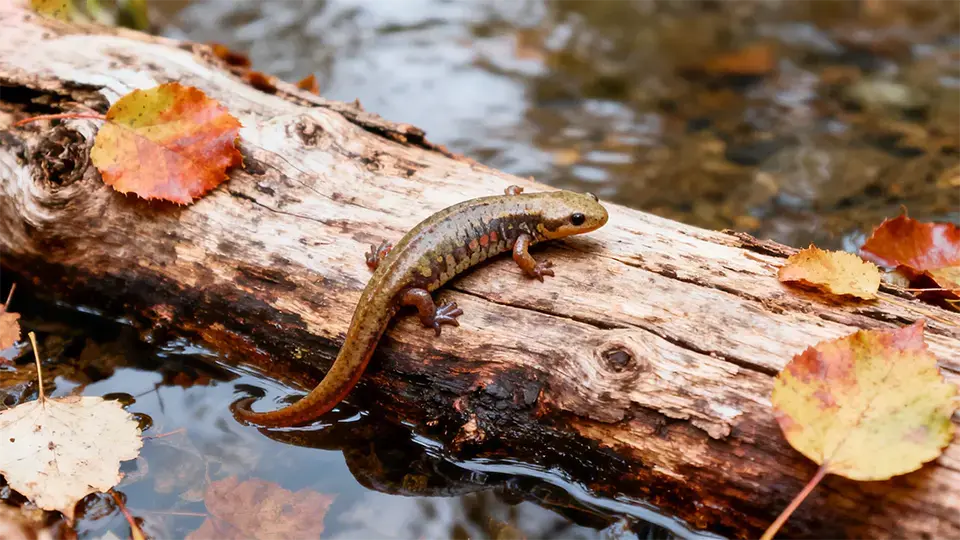
Scientists are intensifying efforts to monitor a deadly amphibian fungus that could severely damage salamander populations in North America. According to the report, researchers fear that Batrachochytrium salamandrivorans (Bsal), commonly shortened to Bsal, may eventually arrive on the continent and trigger ecological damage on a large scale. Although the pathogen has not yet been detected in North America, disease biologists say the threat is serious enough to justify coordinated monitoring, public reporting systems, and preventive action.
The concern is rooted in what has already happened elsewhere. In Europe, Bsal has caused dramatic losses in salamander populations since it was first identified in the Netherlands in 2013. Some infected fire salamander populations in the Netherlands and Germany have declined by more than 90 percent, showing how rapidly the disease can spread and how severe its effects can be once it becomes established.

Source: Wikimedia Commons, CC BY-SA 3.0
North America Holds Exceptional Salamander Diversity
The report emphasizes that North America is especially vulnerable because it contains extraordinary salamander diversity. While tropical regions typically hold the greatest diversity for many amphibians and reptiles, salamanders are different. The eastern United States is described as the global center of salamander biodiversity, with more than 100 species found there. Additional hotspots include the Pacific Northwest and the central highlands of Mexico.
This biodiversity is not just a matter of numbers. Salamanders also occur in remarkably high densities in some North American forests. Researchers note that in some areas their total biomass can exceed that of more familiar vertebrates such as deer, mice, coyotes, or hawks. Their ecological role is therefore substantial. Salamanders act as both predators and prey, and by consuming invertebrates involved in leaf decomposition, they can even affect carbon cycling in forest ecosystems. That ecological importance is one reason scientists view the possible arrival of Bsal not simply as a wildlife disease problem, but as a broader ecosystem threat.

Source: Wikimedia Commons, CC BY-SA 3.0
The Fungus Behind the Disease
The pathogen at the center of the concern is Batrachochytrium salamandrivorans, a chytrid fungus that infects salamanders and newts. It is closely related to Batrachochytrium dendrobatidis (Bd), another notorious amphibian fungus that has already driven hundreds of amphibian species, especially frogs, toward extinction. The existence of Bd gives scientists a grim precedent. They have seen what a chytrid fungus can do when it spreads widely, and they fear Bsal could have a similarly catastrophic effect on salamanders.
What makes Bsal especially alarming is the speed and severity of disease progression. The report notes that otherwise healthy salamanders can die in fewer than two weeks after infection. Characteristic lesions may appear on the skin, but not every infected animal shows obvious symptoms immediately. Some may act as asymptomatic carriers, allowing the pathogen to spread undetected. That hidden transmission risk complicates both monitoring and disease control.

Source: Wikimedia Commons, CC BY-SA 3.0
A Released Pet Revealed the Scale of the Risk
The article begins with a real-world case that illustrates how easily the threat could emerge. A Massachusetts resident found an unusual salamander at a pond and posted images online. It was later identified by a U.S. Geological Survey amphibian disease biologist as an Iberian ribbed newt (Pleurodeles waltl), a species native to Spain and Portugal and often kept in captivity. Scientists suspected it may have been a released pet. The concern was immediate: if the animal had been infected with Bsal, it could have introduced the pathogen into a wild North American environment.
Fortunately, follow-up testing did not detect Bsal in the local native salamander population. Researchers found eastern newts (Notophthalmus viridescens) at the site, a species highly susceptible to the disease, but the population tested negative. Scientists described the event as a false alarm, but also as a valuable test of their rapid response system. It showed both how vulnerable native amphibian communities could be and how important quick reporting can be when unusual amphibians are found.

Source: Wikimedia Commons, CC BY-SA 4.0
The Pet Trade Is Considered a Likely Entry Pathway
One of the article’s central findings is that the pet trade remains a major pathway through which Bsal could enter North America. In response to disease concerns, the U.S. federal government banned the import of 201 salamander species susceptible to Bsal in 2016, and added another 164 species to that ban in early 2025. The Iberian ribbed newt is among the restricted species. These import controls are designed to reduce risk, but researchers quoted in the report do not see them as a permanent guarantee. Some experts say the question is not whether Bsal will arrive, but when.
The continuing scale of amphibian trade is part of the concern. The report says the United States still imports around four million amphibians every year, whether as pets or for food markets. Many of these animals are wild-caught, and there is no mandatory disease monitoring system for amphibian imports. That absence of routine screening leaves open the possibility that infected animals could enter trade channels and expose native species.
Scientists Are Trying to Build a Disease-Free Trade System
To address that gap, some researchers are working with breeders and disease specialists to create a pathogen-free certification program for salamanders bred in the United States. The goal is to reduce the risk of asymptomatic carriers entering private collections, breeding systems, or informal trade networks. According to the report, early research suggests consumers may be willing to pay more for disease-free amphibians, which could make the system commercially viable as well as biologically useful.
This approach reflects a wider recognition that disease control cannot rely solely on bans and surveillance. It also needs cooperation from breeders, sellers, hobbyists, and veterinarians. A disease-free certification framework would aim to create better habits inside the amphibian trade rather than treating the trade as a black box. That matters because wildlife pathogens often move through ordinary commercial channels long before the public becomes aware of them.
Monitoring Before the Outbreak Is the Main Strategy
Because Bsal has not yet been found in North America, the strategy at present is preparation rather than containment. Researchers formed the Bsal Taskforce, an international collaboration focused on studying the disease and planning for its potential arrival. Scientists involved in the effort describe this as a rare opportunity: unlike with Bd, where researchers were often reacting after the fact, they now have a chance to prepare in advance.
Field monitoring is a major part of that effort. One researcher quoted in the article says his team has sampled 10,000 individual salamanders across the northeastern United States and has not detected Bsal in any of them. That is encouraging, but it does not eliminate concern. Disease surveillance capacity is limited, and the continent’s amphibian diversity and habitat range are enormous. Researchers acknowledge that if a real outbreak occurs, a member of the public may be the first person to notice unusual deaths or sick animals.
Public Reporting Could Be Crucial
The article places unusual emphasis on the role of ordinary people. Scientists urge the public to report dead or sick amphibians to Partners in Amphibian and Reptile Conservation (PARC), which can alert a broader network of amphibian biologists. This reflects a practical reality: professional monitoring teams cannot be everywhere, and rare events are often first noticed by hikers, pet owners, anglers, local residents, or amateur naturalists.
In the Massachusetts incident, the chain of communication began not in a laboratory but on social media. A public sighting led to scientific follow-up, field investigation, and diagnostic testing. That case became a model for how rapid response could work if Bsal were ever truly introduced. The lesson is that biodiversity surveillance is no longer confined to specialists. In an age of digital communication, public observation can become an early-warning tool.
Why the Ecological Stakes Are So High
The report makes clear that salamanders are not simply obscure amphibians at the edges of ecosystems. They are deeply woven into ecological function, especially in forest environments. By preying on invertebrates that break down leaf litter, salamanders help shape decomposition dynamics and carbon release. One California salamander species is even cited as helping prevent an estimated 72 metric tons of carbon from entering the atmosphere each year.
That means a large-scale salamander disease outbreak could have secondary effects beyond biodiversity loss. Changes in salamander abundance could alter food webs, nutrient cycling, decomposition rates, and forest ecosystem processes. When scientists warn of a biodiversity crisis, they are not speaking only about species counts. They are describing the possibility that a hidden fungal pathogen could ripple outward through entire ecological systems.

Source: Wikimedia Commons, CC BY-SA 3.0
A Preventable Biodiversity Crisis May Still Be Possible
The tone of the article is cautious but not fatalistic. Researchers are worried, but they also stress that preparation can make a difference. Import restrictions, pathogen-free trade programs, field surveillance, laboratory trials, and public awareness are all presented as components of a preventive strategy. The existence of those tools distinguishes the present situation from earlier wildlife disease crises that escalated before coordinated action was possible.
Even so, the report does not present prevention as easy. Bsal spreads efficiently, some carriers may show no symptoms, and amphibian trade remains extensive. North America’s salamander richness, which makes the continent ecologically extraordinary, also makes it biologically exposed. The fungus has not arrived, but the vulnerability is already there.
A Warning Before the Disaster Arrives
At its core, the story is about acting before a crisis rather than after one. Scientists have seen what chytrid fungi can do to amphibians elsewhere, and they are trying to prevent history from repeating itself among North America’s salamanders. The warning is not abstract. It is tied to real trade pathways, documented laboratory susceptibility, ecological dependence, and a growing scientific network trying to stay ahead of an invasion.
The most striking aspect of the report is that the feared catastrophe has not yet happened. That makes this not just a disease story, but a rare example of science trying to interrupt a future loss before it becomes irreversible. Whether that effort succeeds may depend on how seriously regulators, researchers, breeders, and the public take a fungus that most people have never heard of—but which could reshape one of the richest amphibian regions on Earth.
References
Martel A, et al. 2015. Amphibian chytridiomycosis: a review with focus on fungus-host interactions.
Kelly M, et al. 2024. High phenotypic diversity correlated with genomic variation in Bsal.
According to National Geographic