According to SCITECHDAILY
Scientists have long known that plants and fungi form one of the most important biological partnerships on Earth. This ancient relationship, believed to have begun more than 450 million years ago, helped early plants colonize land and establish the ecosystems that exist today. In a recent breakthrough, researchers have now observed in unprecedented detail how plants and fungi coordinate this symbiotic interaction at the cellular level, providing new insight into one of the oldest and most influential biological alliances in the history of life.
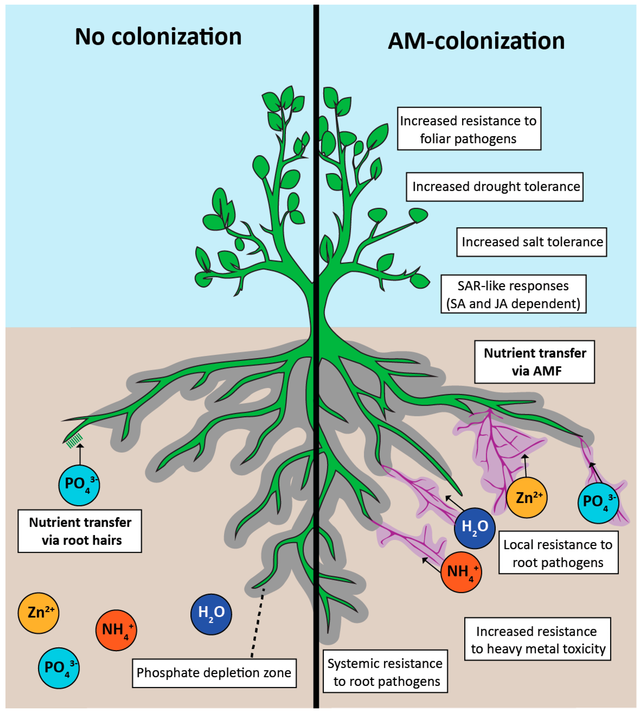
The discovery sheds light on the molecular communication between plants and fungi during the formation of mycorrhizal symbiosis. This cooperative interaction allows both organisms to exchange nutrients in a mutually beneficial arrangement. Plants provide carbon compounds produced through photosynthesis, while fungi supply essential minerals such as phosphorus and nitrogen that they extract from the soil.
A Partnership Older Than Forests
The plant–fungus symbiosis dates back to the earliest stages of terrestrial plant evolution. Fossil evidence indicates that primitive plants relied on fungal partners to survive in nutrient-poor environments when they first began growing on land hundreds of millions of years ago.
Unlike modern plants with complex root systems, early land plants lacked efficient structures for absorbing nutrients from the soil. Fungi, however, possessed extensive networks of filamentous structures known as hyphae that could penetrate soil particles and extract minerals. Through symbiosis, these fungal networks effectively extended the plant’s root system.
Over evolutionary time, this relationship became widespread. Today, scientists estimate that more than 80 percent of terrestrial plant species form symbiotic relationships with fungi through structures known as mycorrhizae.

Source: Wikimedia Commons, CC BY-SA 3.0
Observing Cellular Communication
Despite decades of research, many details about how plants and fungi coordinate their interactions remained unclear. One of the key questions concerned how plant cells allow fungal structures to enter root tissues without triggering immune defenses.
Plants possess sophisticated plant immune systems designed to detect invading microbes. Normally, the presence of fungal structures would activate defensive responses. However, beneficial symbiotic fungi appear able to bypass or modulate these defenses.
In the recent study, researchers used advanced microscopy technologies and molecular biology analysis to observe the interaction between plant roots and fungal partners in real time. These techniques allowed scientists to visualize how plant cells reorganize their internal structures to accommodate fungal entry.
The findings show that plant cells actively coordinate with fungal hyphae during the formation of specialized structures called arbuscules. These highly branched fungal structures develop inside plant root cells and serve as the primary site for nutrient exchange.
Source: Wikimedia Commons, CC BY-SA 4.0
The Role of Arbuscules
Arbuscules function as microscopic exchange platforms where nutrients move between plant and fungus. The fungal partner delivers mineral nutrients gathered from the soil, while the plant provides sugars derived from photosynthesis.
Scientists observed that plant cells create a specialized cell membrane around the fungal structure. This membrane acts as an interface that allows controlled nutrient exchange while maintaining the integrity of the plant cell.
The formation of arbuscules involves complex genetic signaling pathways within the plant. Specific plant genes are activated to reorganize cellular membranes, regulate nutrient transporters, and maintain the symbiotic relationship.
Once established, the arbuscule remains active for several days before eventually collapsing and being replaced by new structures as the symbiosis continues.

Source: Wikimedia Commons, CC BY-SA 3.0
Coordinated Genetic Signaling
The study revealed that plants and fungi communicate through chemical signals that coordinate the development of the symbiotic structures. Fungi release signaling molecules that trigger plant responses, while plants send signals that guide fungal growth toward root tissues.
This communication ensures that the interaction develops in a controlled and beneficial manner rather than becoming a parasitic infection.
Researchers found that certain plant proteins play a critical role in guiding fungal structures inside root cells. These proteins help direct membrane remodeling and control the positioning of the fungal branches within the cell.
Understanding these molecular mechanisms provides new insights into how plants balance cooperation and defense when interacting with microbes.

Source: Wikimedia Commons, CC BY-SA 3.0
Implications for Agriculture
The discovery has significant implications for agriculture and sustainable food production. Mycorrhizal fungi play an essential role in soil ecosystems and contribute to plant nutrition in natural environments.
By enhancing nutrient uptake, these fungal partners can improve plant growth, increase resilience to environmental stress, and reduce dependence on synthetic fertilizers.
Scientists believe that a deeper understanding of plant–fungus coordination could help develop agricultural strategies that encourage beneficial symbiosis. Such approaches may allow crops to access nutrients more efficiently while maintaining healthier soils.
In particular, crops grown in degraded soils or under drought conditions may benefit from optimized interactions with mycorrhizal fungi.
Ecosystem Significance
Beyond agriculture, the plant–fungus partnership has played a fundamental role in shaping global ecosystems. Mycorrhizal networks contribute to nutrient cycling in soils and influence plant community structure in forests, grasslands, and other ecosystems.
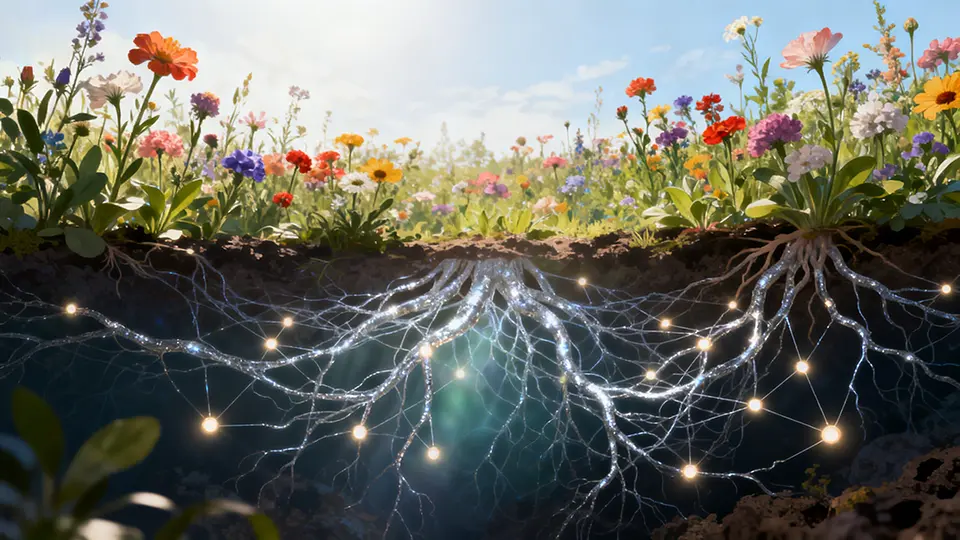
Fungal networks can also connect multiple plants underground, forming extensive systems sometimes described as “wood-wide web”. Through these networks, plants may indirectly exchange nutrients and chemical signals.
The ability of fungi to transport nutrients over long distances within soil environments makes them essential components of terrestrial ecosystems.
Evolutionary Insights
The research also provides new clues about the evolutionary origins of plant symbiosis. The genetic pathways that allow plants to interact with fungi appear to be highly conserved across many plant species.
This suggests that the ability to form mycorrhizal partnerships evolved early in plant history and was maintained throughout plant evolution.
Understanding how this ancient relationship developed helps scientists reconstruct the early stages of terrestrial life and the emergence of modern ecosystems.
Future Research Directions
While the new findings provide unprecedented insight into plant–fungus coordination, many questions remain. Scientists are continuing to investigate how environmental conditions influence symbiosis and how different fungal species interact with various plant hosts.
Future studies may explore how climate change, soil degradation, and agricultural practices affect mycorrhizal relationships.
Advances in genomics and imaging technologies are expected to further reveal the complex communication systems that sustain this ancient biological partnership.
A Partnership That Shaped Life on Land
The collaboration between plants and fungi represents one of the most successful and enduring symbiotic relationships in nature. For more than 450 million years, this partnership has supported plant survival, enabled the development of terrestrial ecosystems, and influenced the global cycling of nutrients.
By revealing how plant cells and fungal partners coordinate their interactions at the microscopic level, scientists have taken an important step toward understanding the biological mechanisms that sustain this ancient alliance.
As research continues, the insights gained from this partnership may help address modern challenges in agriculture, environmental conservation, and ecosystem management.
References
According to SCITECHDAILY