According to MIT News
For decades, glioblastoma has remained one of the deadliest forms of brain cancer—aggressive, treatment-resistant, and tragically efficient in its ability to return even after surgery, radiation, and chemotherapy. Among oncologists, it is known not for dramatic recoveries but for the limits it exposes in modern medicine. Yet research from MIT now suggests that a rare fungal compound, long considered impossible to harvest in meaningful quantities, could help rewrite part of that story.
MIT chemists have achieved something elegantly simple yet scientifically profound: they synthesized, from scratch, a complex molecule first found in a fungus known for producing biologically potent natural products. This compound, previously inaccessible in therapeutic amounts, has shown striking ability to shrink glioblastoma tumors in mouse models. The breakthrough is not only chemical—it represents a potential shift in how drug developers approach aggressive cancers that have historically evaded treatment.
As someone who has followed fungal natural-product research for years, I see this achievement as part of a larger narrative: fungi continue to reveal molecules with extraordinary biological activity, but humanity often struggles to obtain or reproduce them. MIT’s work bridges that gap, demonstrating that synthetic chemistry can unlock medical potential hidden in nature’s most intricate molecular designs.

Source: Wikimedia Commons, CC BY-SA 3.0
The Challenge of Glioblastoma: A Cancer in Need of New Ideas
Glioblastoma, the most aggressive malignant brain tumor in adults, is notoriously difficult to treat. Its cells infiltrate brain tissue like threads of a dense network, making clean surgical removal nearly impossible. Traditional chemotherapy agents struggle to cross the blood-brain barrier, and those that do often cause severe systemic toxicity.
For patients and clinicians, the challenge is not only destroying cancer cells but doing so without damaging surrounding neural tissue—an impossible balance for many existing drugs. This explains why glioblastoma survival rates have barely improved in decades. The field urgently needs therapies with:
higher tumor selectivity
improved brain penetration
lower systemic toxicity
fresh biological mechanisms of action
And this is where fungal chemistry enters the picture.

Source: Wikimedia Commons, CC BY-SA 4.0
The Fungal Compound: A Natural Molecule With Unnatural Potential
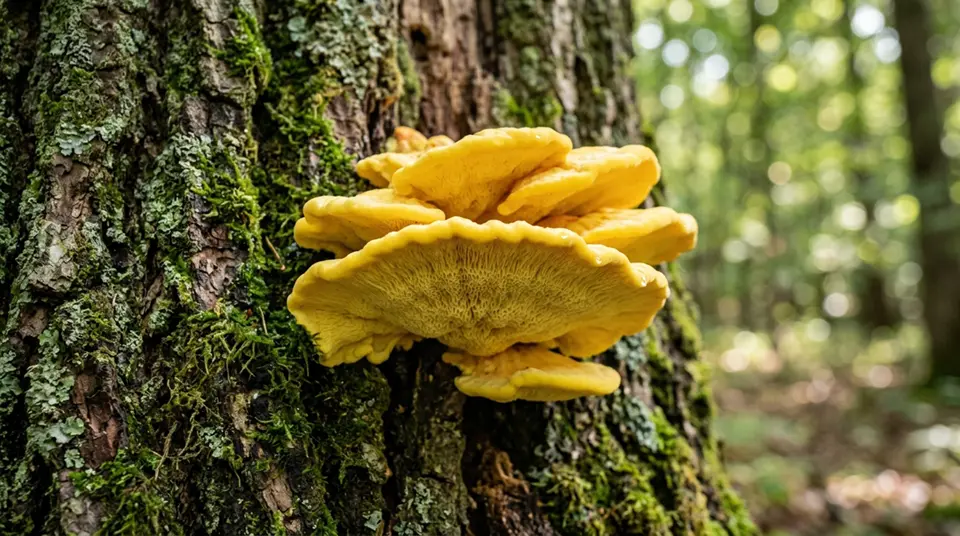
The compound at the center of MIT’s study originates from a fungal species long recognized for producing structurally unusual molecules with strong biological effects. Fungi have evolved as chemical strategists; they generate compounds to defend territory, disrupt competitors, and communicate with their environment. Many of these molecules interact with mammalian biology in ways that can be therapeutically valuable.
The specific compound synthesized by MIT—identified as verticillin A—showed a remarkable ability to shrink glioblastoma tumors in mice—evidence that it affects cancer pathways in a way unlike standard chemotherapies. Yet despite its promise, the natural source produces only microscopic amounts. Isolating enough material for clinical use from fungal cultures would be impractical and environmentally unsustainable.
That is why chemical synthesis became essential. The challenge was not simply creating the molecule—it was achieving this in a way that allows reliable, scalable production for future research and potential medical application.

Source: Wikimedia Commons, CC BY-SA 2.0
MIT’s Breakthrough: Total Synthesis of a Complex Fungal Molecule
The MIT team achieved what chemists call total synthesis, constructing the compound molecule by molecule from basic building blocks. The complexity lies in the architecture: multiple chiral centers, delicate ring formations, and oxidation patterns that fungi produce naturally but humans must engineer step by step.
The team’s success carries major implications:
- Access to a previously unreachable medicine
Researchers can now produce meaningful quantities for testing, refining, and potentially developing into a clinical drug. - Freedom to create analogs
Once a molecule can be synthesized, chemists can alter its structure—strengthening its therapeutic effect, improving stability, or reducing toxicity. - A deeper understanding of mechanism
Synthetic access enables detailed biological assays to determine how the compound attacks glioblastoma cells.
For a cancer that desperately needs new therapeutic directions, this combination of biological promise and synthetic accessibility is rare and hopeful.
Nature and Chemistry: A Complementary Partnership
At its core, this achievement represents an elegant partnership between biology and chemistry. Nature provides the blueprint—a molecule optimized by evolution to interact with living systems. Chemistry then provides the capability to reproduce, enhance, and deliver that molecule at scales impossible for the organism itself.
This relationship echoes a long tradition: many foundational medicines, including penicillin, cyclosporine, and statins, originated in fungi. MIT’s work continues that legacy in an area where innovation is most needed.
The difference today is that advanced synthetic methods allow scientists to explore natural products that once seemed too rare or fragile to pursue. Instead of relying on unpredictable fungal cultures, drug developers can build molecules with precision, consistency, and ethical control.
What We Still Do Not Know: The Road Ahead
While the early tumor-shrinkage results in mice are encouraging, the path to human treatment involves multiple stages of caution and rigorous investigation.
- Pharmacokinetics and brain penetration
Mouse success does not guarantee human success. The compound must reliably cross the blood-brain barrier in sufficient concentration. - Toxicity profile
Natural molecules with strong biological effects can also have unintended targets. - Optimization of molecule stability
Fungal compounds often degrade easily; analogs may need to be designed for clinical use. - Clinical trial viability
Scaling synthesis for trials requires cost-effective and reproducible chemistry. - Mechanistic clarity
Understanding precisely how the compound kills glioblastoma cells is essential for predicting resistance and combining therapies safely.
Yet none of these hurdles diminishes the importance of the breakthrough. Instead, they highlight what is now possible because synthesis removes the bottleneck of scarcity.

Source: Wikimedia Commons, CC BY-SA 3.0
My Perspective: Why This Story Matters Beyond Oncology
To me, the significance of this research lies not only in its cancer implications but in what it reveals about fungal biodiversity. For decades, fungal natural products have been undervalued despite repeatedly yielding life-saving medicines. Many fungal species remain uncharacterized, their genomes harboring molecular blueprints we have yet to decode.
MIT’s work is a reminder that some of the most powerful medical innovations may come not from new machines or computational models but from organisms that spend their lives in soil, leaf litter, or decaying wood. The tragedy is not that fungi are strange—it is that we have explored so little of what they offer.
This synthesis is a signal: if we combine genomic mining, natural-product discovery, and advanced chemical synthesis, the next generation of cancer therapies may emerge from ecological partnerships rather than synthetic-only pipelines.
References
MIT News. MIT chemists synthesize fungal compound that holds promise for treating brain cancer.
StatPearls. Blood-Brain Barrier.
According to MIT News