According to SCIENCEALERT
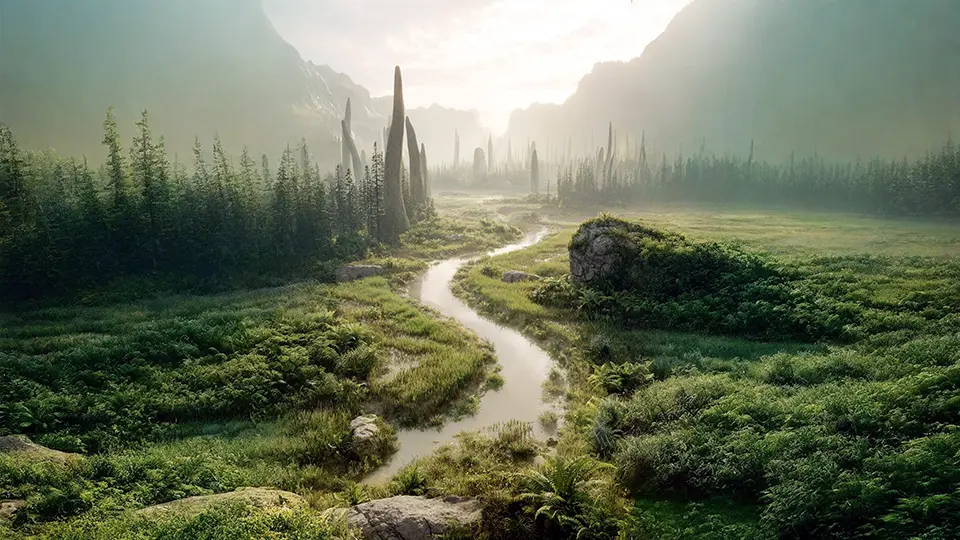
For more than a century, scientists have debated the true nature of towering fossilized structures that once rose several meters above Earth’s surface long before forests existed. Known as Prototaxites, these enigmatic organisms lived roughly 420 to 375 million years ago, during the Silurian and Devonian periods. New analysis has revived a provocative idea: these giants may not fit into any known branch of life and could represent an evolutionary lineage that no longer exists.
The renewed discussion highlights both the limits of fossil evidence and the evolving understanding of early life on land. While Prototaxites has long been described as a giant fungus, growing evidence suggests its biology may not align neatly with fungi, plants, or animals as we know them today.

Source: Wikimedia Commons – Prototaxites reconstruction, CC BY-SA 3.0
What Were the ‘Mysterious Giants’?
Prototaxites fossils are characterized by massive, trunk-like columns that could reach up to eight meters in height and more than one meter in diameter. At a time when the tallest plants were only a few centimeters high, these organisms dominated terrestrial landscapes.
Microscopic analysis shows their internal structure consisted of interwoven tubes, a feature that initially led scientists to propose a fungal identity. The absence of leaves, roots, or clear vascular tissues ruled out traditional plant classification early on. However, over decades of study, Prototaxites has resisted definitive placement within any modern biological group.

Source: Wikimedia Commons – Prototaxites cross section, CC BY-SA 4.0
The Long-Standing Fungal Hypothesis
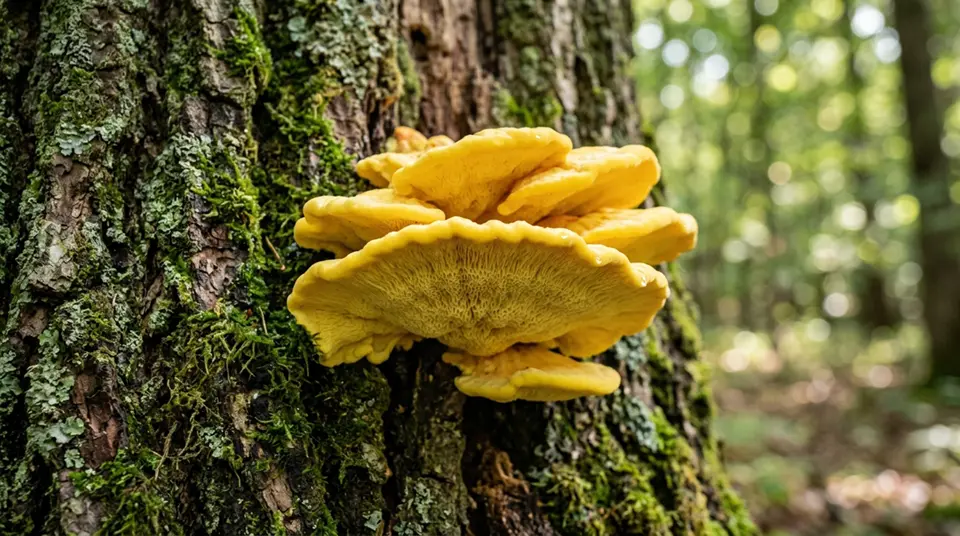
For many researchers, the most plausible explanation has been that Prototaxites was a giant terrestrial fungus. The tubular microstructure resembles fungal hyphae, and isotopic analyses have suggested a heterotrophic lifestyle—meaning it consumed organic material rather than producing its own energy through photosynthesis.
If this interpretation is correct, Prototaxites would represent the largest fungus ever known, far surpassing even today’s extensive fungal networks. This idea reshaped understanding of early ecosystems, suggesting fungi may have been among the first dominant organisms on land, recycling organic matter and shaping soil chemistry.
The fungal hypothesis typically places Prototaxites loosely alongside early members of the fungal kingdom, potentially related to groups that predate modern Ascomycota and Basidiomycota.
Why the Fungal Explanation Is Being Questioned
Despite its popularity, the fungal interpretation faces persistent challenges. Some researchers note that the tube sizes within Prototaxites fossils vary in ways not commonly observed in fungi. Others point out that no known fungus—ancient or modern—builds a rigid, tree-like structure of such scale without clear evidence of reproductive features.
Chemical analyses of fossilized material have also produced conflicting results. Certain molecular signatures do not align cleanly with known fungal biochemistry, raising the possibility that these organisms followed metabolic pathways no longer present in living systems.
These inconsistencies have led some scientists to propose a more radical conclusion: Prototaxites may belong to an entirely extinct lineage, representing a form of multicellular life that evolved early on land but left no modern descendants.
A ‘Failed Experiment’ in Evolution
Under this alternative hypothesis, Prototaxites is viewed as part of a unique evolutionary experiment—one that flourished temporarily before disappearing. Early terrestrial environments were relatively open, with few competitors for vertical space. This may have allowed unconventional life forms to evolve large body plans without facing the constraints imposed by later ecosystems.
As plants diversified and developed vascular systems, leaves, and roots, they may have outcompeted these giants for light and resources. The disappearance of Prototaxites coincides broadly with the rise of early trees, suggesting ecological replacement rather than sudden extinction.
Implications for Understanding Early Life on Land
The debate over Prototaxites is more than a taxonomic puzzle. It highlights how incomplete the fossil record can be and how modern definitions of life are shaped by what survived, not necessarily by everything that once existed.
Early terrestrial ecosystems were likely more experimental than previously assumed, with multiple lineages exploring ways to occupy new environments. Some succeeded and gave rise to modern plants, animals, and fungi. Others, like Prototaxites, may have vanished entirely.
What Scientists Can and Cannot Know
Without preserved DNA, researchers rely on morphology, chemical signatures, and geological context to infer biological identity. Each line of evidence has limitations.
As a result, scientists emphasize caution. While the idea of a “lost kingdom of life” is compelling, it remains hypothetical.
Conclusion
The renewed attention on Prototaxites underscores how scientific understanding evolves. Rather than closing the case, each new analysis reopens fundamental questions about how life diversified on land.
For evolutionary biology, the mystery reinforces the idea that extinction removes not just species, but entire ways of being alive. For paleontology, it demonstrates the importance of revisiting old fossils with new methods and perspectives.
Ultimately, Prototaxites serves as a reminder that Earth’s history includes chapters that may never be fully resolved—but still reshape how scientists think about life itself.
References
Encyclopaedia Britannica – Prototaxites
Geological Society of America – Geologic Time Scale
According to SCIENCEALERT