According to THE SUN UK
Beauty and the Rot: A Seaside Home’s Shocking Duality
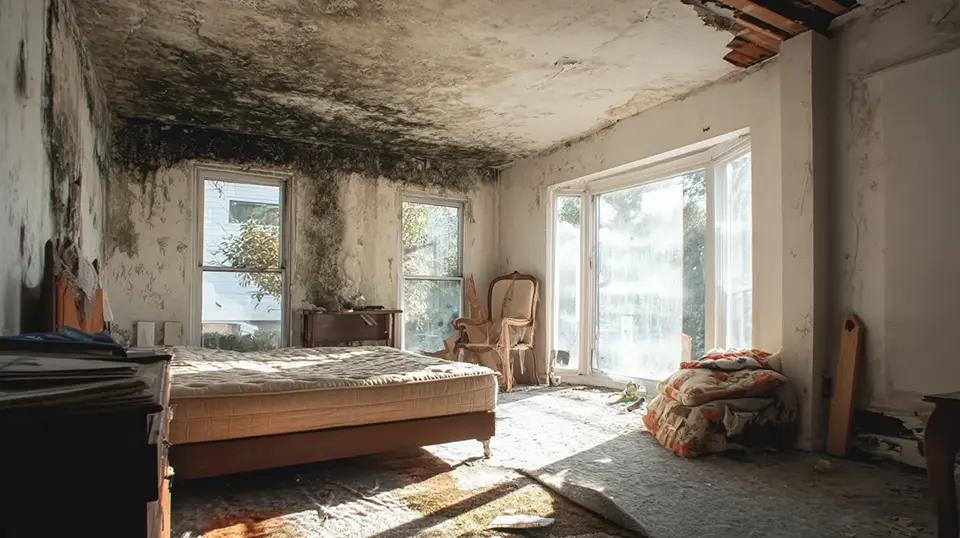
On the surface, the seafront view from this decaying home in Seaton, Devon is priceless—waves crashing against the shore, sunsets over the English Channel, and the promise of tranquillity. But step inside, and the scene transforms into a health hazard: walls blanketed in Stachybotrys chartarum, better known as toxic black mould, cracked ceilings, and the unmistakable stench of long-term neglect.
This two-bedroom terraced house, recently listed for £450,000, has quickly become infamous. Photos show heavy mould growth on ceilings and windows, damp-stained wallpaper, and wood fixtures beyond saving. Yet estate agents tout its “incredible potential” due to its location on the popular Jurassic Coast.

Source: Wikimedia Commons, CC BY-SA 2.0
The property’s listing has shocked social media users and rekindled a long-standing public frustration over the affordability—and habitability—of UK housing.
From Rot to Riches: What Makes a Wreck Worth £450,000?
Despite its current uninhabitable state, the property’s price is buoyed by its premium location. The house is perched just off Seaton’s popular seafront promenade, nestled between traditional seaside cafés, shops, and the shingle beach.
Such location desirability can inflate property prices dramatically, especially in holiday destinations where second-home buyers and investors fuel demand. One estate agent described the property as “an incredible opportunity to renovate” and noted the home had “huge scope for improvement.”
But that optimism contrasts starkly with the reality: stripped floors, ceilings marred by water damage, exposed piping, and an unmistakable fungal growth threatening the home’s structure and safety.
Mould Is Not Just Cosmetic—It’s Dangerous
Black mould (Stachybotrys chartarum) thrives in damp, poorly ventilated environments. While unsightly, it’s far more than an aesthetic problem—it’s a serious health hazard. WHO notes that exposure can cause respiratory issues, especially for children, the elderly, and people with weakened immune systems.
Symptoms range from nasal congestion and skin irritation to more severe reactions like chronic cough, fatigue, and asthma attacks. Long-term exposure in an enclosed home environment has been linked to serious respiratory complications.

Comatricha is a genus of slime mould (Myxomycetes).
Biological Microscope (XSP-00) with 40X objective,
Olympus E-620 with Olympus Zuiko EC-20 2x teleconverter and a microscope tube adapter with no optical element.
Source: Wikimedia Commons, CC BY-SA 4.0
Mould thrives silently, often spreading behind walls and under floorboards before making its presence known on surfaces. Its spores travel easily, making removal both challenging and costly.
What Renovation Really Means for Homes Like This
The term “renovation opportunity” may sound appealing, but buyers considering such properties need to understand the scope of work—and budget—required.
To restore this house to a safe, livable state, specialists estimate:
- Mould remediation: £5,000–£20,000
- Structural repairs (ceilings, floors): £15,000–£40,000
- Plumbing and electrics update: £10,000–£25,000
- Modern kitchen and bathroom fittings: £15,000–£30,000
- Replastering and redecoration: £10,000–£20,000
- Additional unforeseen costs: £5,000–£10,000
Total projected renovation: £60,000 to £145,000+
Source: Generated by AI based on UK building contractor cost ranges
And that’s before considering stamp duty and legal fees.
The price of the view, it seems, is more than monetary—it’s physical labour, long timelines, and considerable risk.
The Bigger Picture: A Housing Market out of Reach
This listing is not an isolated case. Across the UK, homes in extremely poor condition are being priced well above what many first-time buyers or average earners can afford. It highlights a growing divide in the housing market—between those buying homes for lifestyle or investment, and those simply searching for a place to live safely.
Source: Generated by AI based on ONS data
Housing campaigners argue that the listing represents a failure of housing policy. “If a mould-ridden wreck with health risks can be listed at nearly half a million pounds, what does that say about the UK’s housing priorities?” one advocacy group stated.
Health vs. Wealth: When Views Overshadow Viability
The irony of this property is striking: a location that promotes well-being—seaside air, nature, and serenity—contrasted with an interior that could actively endanger your health.
In recent years, increased public awareness of mould’s dangers has led to several lawsuits and policy debates. High-profile cases, including the tragic death of two-year-old Awaab Ishak due to prolonged exposure to mould in social housing, have placed a spotlight on landlords and property conditions.
For private buyers, especially those without renovation experience or deep pockets, mould is not merely a “fixer-upper” issue—it’s a red flag.
Social Media Reactions: Outrage, Satire, and Sadness
The listing went viral not because of its charm, but because of the disbelief it provoked. Users on platforms like X (formerly Twitter) and Instagram shared screenshots with captions ranging from satire (“Perfect for ghosts who appreciate sea views”) to fury (“How is this legal?”).
One user wrote:
“I can’t afford a studio in my hometown, and someone is expected to pay half a million pounds for a swamp disguised as a seaside house?”
Another asked:
“What happens to renters who have to live in conditions like this but don’t get to own the mould?”
Local Market Insights: Devon’s Property Surge
Seaton and the greater Devon region have seen rising property prices in the past decade, driven by:
- Urban dwellers relocating post-pandemic
- Increased demand for second homes
- Limited housing stock in coastal towns
- Tourism growth along the Jurassic Coast
Local estate agents defend the pricing strategy, noting that similar-size properties in liveable condition in the same area fetch £600,000 or more. For investors, £450,000 is a “discount” if they have the capital and patience for renovation.
But locals argue that such market forces are pushing full-time residents out of their own communities.
Policy Response: What Could Be Done?
This case touches on broader systemic issues:
- Lack of regulation on property conditions prior to listing
- No legal mandate requiring sellers to disclose health hazards like mould before sale
- Inadequate enforcement of minimum habitability standards in both the rental and resale markets
- Housing shortage, driving up demand for even substandard homes
Potential policy responses discussed by campaigners include:
- Mandatory pre-sale inspections
- Mould and damp rating systems
- Renovation subsidies for first-time buyers of degraded homes
- Caps on second-home ownership in oversaturated tourist towns
Between Desperation and Dreaming
This seaside property has become a symbol—a visual reminder of a housing market where picturesque views are sometimes built on rotten foundations.
And yet, some buyers will see past the mould, through the broken plaster, and into the future: a sun-filled kitchen, ocean breeze, children playing on the beach. That’s the emotional pull of real estate—hope layered over hard realities.
But hope shouldn’t cost half a million pounds and a trip to A&E from respiratory distress. A home should offer shelter, not sickness.
When homes filled with rot and mould can still command a £450,000 price tag because of their postcode, something is deeply broken in how we define value. Until policy catches up with people’s needs, stories like this will continue to emerge—where seaside dreams are packaged inside crumbling walls.
Let this be more than a viral curiosity. Let it be a prompt—for change, for awareness, and for a housing market that serves people, not just profit.
References
- WHO – Dampness and Mould
- NHS – Asthma
- ONS – UK Housing Data
- Wikimedia Commons – Seaton Beach, Devon, CC BY-SA 2.0
- Wikimedia Commons – Mould spores under microscope, CC BY-SA 4.0
- AI-generated visualizations: Renovation Costs Chart & UK House Prices Chart (Generated by AI based on ONS/UK Gov housing cost data)
According to THE SUN UK