According to THE GUARDIAN
A deadly fungal disease has already driven at least 90 frog species to extinction and now threatens more than 500 others worldwide. As amphibian populations continue to collapse, conservation scientists are increasingly turning to unconventional solutions. Among them is biologist Anthony Waddle, whose work combines behavioral ecology, immunology, and synthetic biology in an effort to halt one of the most severe biodiversity crises of the modern era.
Working in Australia, Waddle is leading a series of experimental approaches aimed at helping frogs survive infection by chytrid fungus, a pathogen widely regarded as the most destructive wildlife disease ever recorded. His methods range from deceptively simple habitat interventions—such as warming shelters for frogs—to advanced genetic techniques that could permanently alter disease susceptibility.
A Childhood Fascination That Became a Conservation Mission
Waddle’s scientific focus on frogs traces back to early childhood experiences spent observing tadpoles and amphibian metamorphosis. That early curiosity eventually developed into a professional commitment to conservation biology, culminating in a doctorate and a research career centered on amphibian survival.
Today, his work addresses a crisis that has intensified over the past three decades. Frogs, salamanders, and other amphibians are disappearing at unprecedented rates, with disease now surpassing habitat loss as the primary driver in many regions.
The Chytrid Fungus Threat
The pathogen responsible for much of this decline is chytrid fungus, which infects the skin of amphibians. Because frogs rely on their skin for respiration and electrolyte balance, infection disrupts vital physiological functions. In many species, the disease progresses rapidly and proves fatal.
The fungus is highly persistent in the environment and can spread through water, soil, and direct contact between animals. Once established in an ecosystem, it is extremely difficult to remove. Cold and moist conditions further favor its growth, making winter periods particularly deadly for infected populations.
Scientists estimate that more than 40% of all amphibian species are now threatened with extinction, with chytrid fungus playing a central role in that decline.

Source: Wikimedia Commons – File:Batrachochytrium_dendrobatidis.jpg, license shown on file page
Why Frogs Matter Beyond Biodiversity
Frogs occupy a critical position in ecosystems. They help control insect populations, including species that transmit diseases to humans. Amphibians also serve as prey for birds, reptiles, and mammals, linking aquatic and terrestrial food webs.
In addition, frog skin contains bioactive compounds that have attracted pharmaceutical interest. Researchers believe these compounds may lead to new painkillers with lower addiction risks, as well as novel antibiotics.
The loss of frogs therefore represents not only an ecological disruption, but also the loss of potential medical and scientific resources.
The Frog Sauna Experiment
One of Waddle’s earliest interventions focused on exploiting a weakness in the fungus itself: temperature sensitivity. Chytrid fungus thrives in cooler conditions and struggles to survive at higher body temperatures.
To test whether warmth could help frogs resist infection, Waddle and colleagues designed small, frog-sized shelters built from stacked masonry bricks and covered with greenhouse material. These structures functioned as “mini saunas,” allowing frogs to raise their body temperature during colder months.
Field experiments showed promising results. Frogs that used the warmed shelters were less likely to become infected and demonstrated increased resistance when re-exposed to the pathogen. While the approach does not eliminate the fungus from the environment, it significantly improves survival for frogs that can access the shelters.

Source: Wikimedia Commons – File:Green_frong_on_the_brick.jpg, license shown on file page
Limits of Habitat-Based Solutions
Despite the success of the sauna experiment, Waddle acknowledges its limitations. Physical shelters can only help species that share specific habitats and behaviors. Many endangered frogs live in environments where such structures are impractical or insufficient to protect entire populations.
Recognizing these constraints, the research expanded toward biological interventions capable of operating at larger scales.
Vaccinating Frogs Against Fungal Disease
One major focus of current work involves raising and vaccinating hundreds of frogs for release into the wild. The aim is to bolster population numbers while increasing disease resistance at the same time.
For species such as the green and golden bell frog, vaccination may offer a way to re-establish populations that have steadily declined due to chytrid infection. Large-scale releases could represent the biggest population reinforcement efforts in years.
However, vaccination is not a universal solution. Some frog species respond poorly or not at all, and others have already declined to the point where wild breeding no longer occurs.
Exploring Gene Replacement as a Last Resort
For species that cannot be vaccinated or no longer reproduce naturally, Waddle’s team is exploring gene replacement techniques. This experimental approach involves introducing genetic material associated with disease resistance into vulnerable frogs.
Recently, researchers conducted the first transgenic frog experiments of this kind in Australia. The goal is to determine whether resistance traits can be safely introduced and expressed across different frog species with varied ecologies.
If successful, gene replacement could offer a scalable method to protect multiple species at once, potentially allowing conservationists to share techniques globally.
Ethical and Scientific Debate
The use of synthetic biology in conservation remains controversial. Supporters argue that human-driven environmental change has created conditions where traditional conservation methods are no longer sufficient. From this perspective, genetic intervention is seen as a necessary tool to prevent irreversible loss.
Critics warn of unintended ecological consequences, genetic homogenization, and ethical risks associated with altering wild organisms. These concerns have fueled debate within the conservation community, particularly following international decisions that opened the door to limited use of synthetic biology in conservation.
Waddle emphasizes caution, arguing that genetic approaches must be carefully tested at the research level before any consideration of field application.
A Broader Shift in Conservation Strategy
The work reflects a broader shift in conservation thinking. As climate change, global trade, and emerging diseases accelerate biodiversity loss, scientists are increasingly combining traditional field ecology with advanced biotechnology.
Innovative approaches are now being viewed not as replacements for habitat protection, but as additional tools in an expanding conservation toolkit.
Other researchers describe these methods as essential to keeping pace with the speed of modern extinction pressures.
Signs of Hope Amid Crisis
While the scale of amphibian decline remains daunting, conservationists point to these experiments as signs of progress. Independent experts describe the work as an important source of hope in a field often dominated by loss.
Although no single strategy will save all species, combining habitat management, disease mitigation, vaccination, and genetic research may improve survival odds for many frogs currently on the brink of extinction.
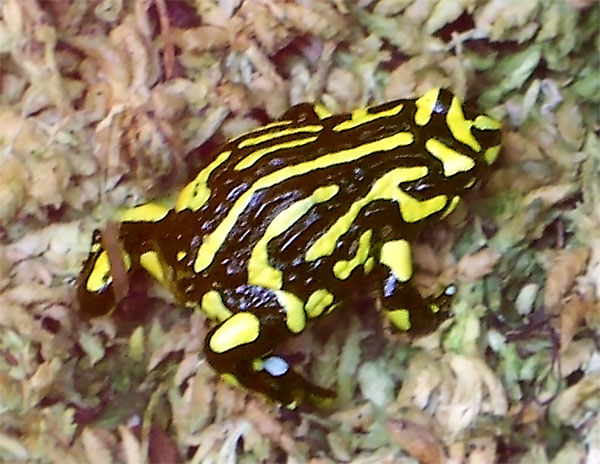
Source: Wikimedia Commons – File:CorroboreeFrog.jpg, license shown on file page
Conclusion
The fight to save frogs from chytrid fungus has become a test case for 21st-century conservation. From warming shelters to gene replacement experiments, biologists are pushing the boundaries of how far science can—and should—go to prevent extinction.
As amphibians continue to disappear worldwide, the work highlights both the urgency of the crisis and the growing willingness of scientists to explore innovative solutions. Whether these methods can be safely and effectively scaled remains uncertain, but they may determine whether hundreds of frog species survive into the future.
References
According to THE GUARDIAN