According to MSN
Snowmelt Creates Conditions for Seasonal Mold Growth
As winter recedes and accumulated snow begins to melt, health experts are warning that the damp conditions left behind can encourage the growth of snow mold, a fungal lawn disease that develops when grass remains covered by snow for extended periods. The concern is not limited to lawn damage. According to the report, the moisture produced by melting snow may also create environmental conditions that increase human exposure to fungal spores, potentially triggering allergy symptoms that resemble the common cold or influenza.
This seasonal transition is especially relevant in areas where repeated winter storms and prolonged freezing temperatures have left snow cover in place for unusually long periods. As temperatures gradually rise, trapped moisture remains close to the ground, allowing fungal growth to develop on lawns and other organic outdoor surfaces. The result is a post-winter environment in which mold can spread quietly while many people assume respiratory symptoms are simply lingering seasonal illness.

Source: Wikimedia Commons, CC BY-SA 3.0
Why Snow Mold Can Be Mistaken for the Flu
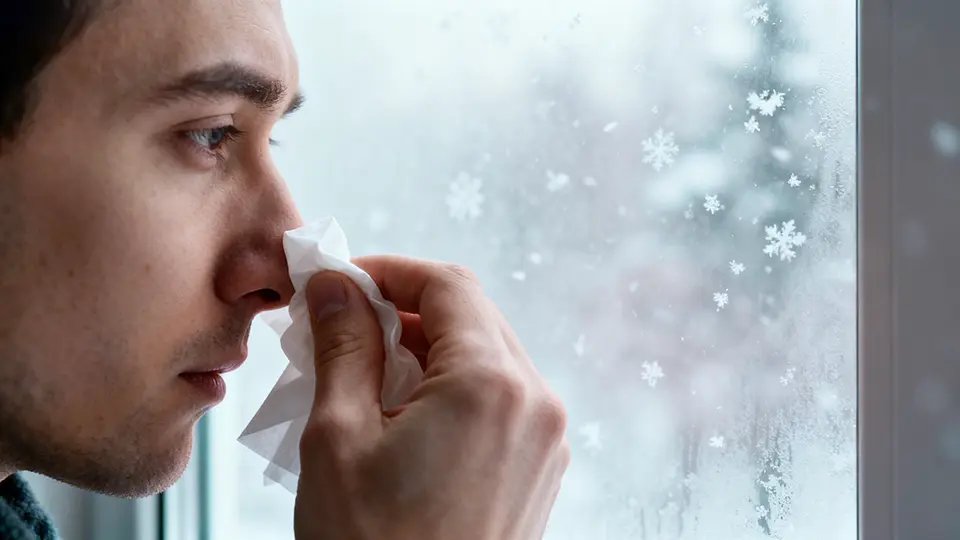
One of the key concerns highlighted in the report is that mold-related symptoms often overlap with those of common viral infections. Individuals exposed to snow mold spores may experience a runny nose, nasal congestion, sneezing, watery or itchy eyes, and coughing. These are symptoms many people associate with cold and flu season, which makes fungal allergy easy to overlook.
Unlike influenza, however, mold allergy typically does not begin with the classic pattern of fever, chills, and severe body aches. Instead, the symptoms tend to resemble allergic rhinitis or environmental irritation. Because the overlap is strong at the level of everyday discomfort, the distinction may be missed, especially during the late winter and early spring period when cold-weather illnesses are still common.
The report presents snow mold exposure as a lesser-known seasonal health factor, particularly for people already sensitive to environmental allergens.

Source: Wikimedia Commons, CC BY-SA 4.0
Mold Allergy May Affect Millions of People
The report notes that mold is not equally harmful to everyone, but sensitivity is far from rare. Estimates cited from the National Institutes of Health suggest that between 3% and 10% of Americans may have mold allergies. That would place the number of potentially affected individuals in the millions.
For these individuals, inhaling mold spores released into the air from damp outdoor environments may lead to an immune response. The body identifies the spores as foreign irritants and reacts by producing inflammatory signals. This process can affect the nose, eyes, throat, and lungs, producing symptoms that are often interpreted as a standard respiratory infection.
The article therefore frames snow mold not as a universal threat, but as a seasonal environmental trigger that can become medically significant in a susceptible portion of the population.

Source: Wikimedia Commons, CC BY-SA 3.0
The Health Risks Extend Beyond Mild Allergy Symptoms
Although many cases of mold exposure may result in mild allergy-like discomfort, the report also highlights the possibility of more serious health outcomes in vulnerable individuals. In severe cases, mold exposure can aggravate asthma and may contribute to more serious respiratory complications, including infections such as pneumonia.
This risk is especially important for people with pre-existing respiratory conditions, weakened immune systems, or high sensitivity to airborne allergens. For these groups, what begins as a seemingly ordinary runny nose or cough may become more significant if exposure continues or if the body reacts strongly to inhaled spores.
The report presents this escalation as a reminder that environmental mold should not always be dismissed as a minor nuisance, particularly during the high-moisture period following winter thaw.
How Snow Mold Develops on Lawns
Snow mold is described as a fungal lawn disease that forms when snow blankets grass during winter, creating a cold, wet, low-ventilation environment. Under these conditions, fungi can continue to grow near the soil and grass surface, protected beneath the snowpack.
As the snow melts, the damaged areas become visible. Lawns may show matted, discolored, or patchy sections where fungal growth has affected grass blades or roots. These visible signs are often the first signal that mold developed during winter, even though spores may have already become airborne as the ground begins to dry.
The article identifies two of the most common snow mold types as pink snow mold and gray snow mold. Both are associated with turfgrass damage and both may contribute to allergic reactions through spore release.
Pink and Gray Snow Mold Are the Main Seasonal Types
The report specifically names two fungal lawn diseases commonly associated with snow-covered grass. The first is Microdochium patch, widely referred to as pink snow mold. The second is Typhula blight, often called gray snow mold.
Gray snow mold generally affects grass blades and may resolve with raking and drying once temperatures rise. Pink snow mold is considered more destructive because it can damage not only the grass surface but also the roots, sometimes requiring reseeding or overseeding to restore the lawn.
From a health perspective, the significance of both fungi lies in their capacity to release spores into the environment. These spores may not cause direct infection in most healthy people, but they can provoke allergic responses and respiratory irritation in susceptible individuals and even in pets.
Pets Can Also Be Affected by Mold Exposure
The report expands the concern beyond human health by noting that dogs exposed to mold may also show allergic or irritative symptoms. These can include frequent scratching, paw licking, skin biting, hair loss, dry or flaky skin, and a persistent musty odor.
Because pets often move directly through wet lawns, snow patches, and damp outdoor surfaces, they can come into close contact with mold-contaminated areas. They may also carry spores indoors on their paws or fur, increasing household exposure.
For that reason, the expert cited in the report recommends cleaning pets’ paws before they enter the home after walking in snowy or damp environments. This is presented as a practical way to reduce the transfer of environmental spores into indoor spaces.

Source: Wikimedia Commons, CC BY-SA 2.0
Melting Snow Can Bring Mold Indoors
A notable point in the report is that snow mold is not only an outdoor issue. As temperatures rise and moisture spreads across lawns, driveways, and walkways, fungal spores can be tracked inside on shoes, clothing, and pets.
Experts therefore recommend changing into clean clothes after spending time outdoors in damp post-snow conditions. This preventive step aims to reduce the chance of bringing spores into enclosed indoor environments, where they may continue to irritate sensitive individuals.
The same logic applies to ventilation. The report advises against opening windows too soon during the period when mold levels may still be elevated outdoors. Since spores can move through the air, open windows may allow them to enter homes more easily before lawn conditions have stabilized.
Concern Over Toxic Mold Requires Careful Framing
The report also mentions black mold and its associated mycotoxins, describing it as the most severe form of mold. It links repeated inhalation of toxic compounds to a wide range of symptoms, including headaches, mood changes, asthma-like reactions, muscle aches, and inflammatory effects throughout the body.
While this portion of the discussion broadens public concern around mold exposure, the central focus of the article remains snow mold and its allergy-related implications. In objective reporting terms, it is important to distinguish between outdoor snow mold exposure and indoor contamination by toxigenic molds, as the health context and exposure patterns may differ substantially.
Still, the article uses this comparison to reinforce a broader message: fungal exposure is not always trivial, and the body’s inflammatory response to airborne spores or toxins can extend beyond the nose and eyes in some circumstances.
The Immune System Response Explains the Symptoms
According to the report, when the body detects mold spores or toxins in the air, the immune system responds by releasing inflammatory chemicals known as cytokines. These signaling molecules function as part of the body’s defense system and can affect multiple organ systems.
This inflammatory reaction helps explain why mold exposure may produce symptoms that seem diffuse or systemic rather than limited to one area. A person may experience nasal symptoms, coughing, fatigue, headaches, or general respiratory discomfort depending on sensitivity, exposure level, and immune response.
The article presents this mechanism as part of the reason mold-related illness can feel more serious than a simple environmental irritation, even when the trigger is invisible to the naked eye.
Outdoor Prevention Measures Are Central to Reducing Exposure
The article offers several practical recommendations aimed at limiting mold exposure during the snowmelt period. People spending time outdoors in damp environments are advised to change clothes after coming inside, especially if they have been walking through wet grass or melting snow.
Pet owners are encouraged to clean their animals’ paws before re-entering the home. The report also recommends keeping windows closed until lawn mold levels appear to subside. One visible clue is the condition of affected grass. If damaged areas are still obvious and have not yet healed, spore levels may still be a concern in the surrounding environment.
These suggestions are framed as simple preventive measures rather than medical treatments, intended to reduce contact with mold during a high-risk seasonal period.
Snow Mold Is a Lawn Problem With Public Health Relevance
At first glance, snow mold may appear to be only a turf management issue, associated mainly with damaged grass after winter. However, the report argues that it also has a public health dimension because the spores released from affected lawns may trigger respiratory symptoms in people and animals.
This broader framing is what makes the story noteworthy. It connects a common post-winter landscape problem with everyday health complaints that might otherwise be dismissed as lingering flu or cold symptoms. In doing so, the article encourages readers to consider environmental exposure as one possible explanation when symptoms persist without the full pattern of viral illness.
Seasonal Awareness Matters as Winter Ends
The report ultimately serves as a reminder that the end of winter does not necessarily mean the end of seasonal respiratory triggers. As snow disappears, another layer of environmental risk may briefly emerge in the form of mold growth nourished by moisture trapped beneath snow cover.
For people with mold sensitivity, asthma, or unexplained allergy-like symptoms in the late winter or early spring period, awareness of snow mold may help explain otherwise confusing health changes. The article does not portray snow mold as a universal threat, but it does present it as an underrecognized one—especially during years with prolonged snow cover and heavy winter storms.
In that sense, the story is less about panic and more about seasonal literacy. The lawn outside the house may be saying something about the air coming inside.
References
According to MSN