According to LIVESCIENCE
A Global Map of Dryness Redrawn
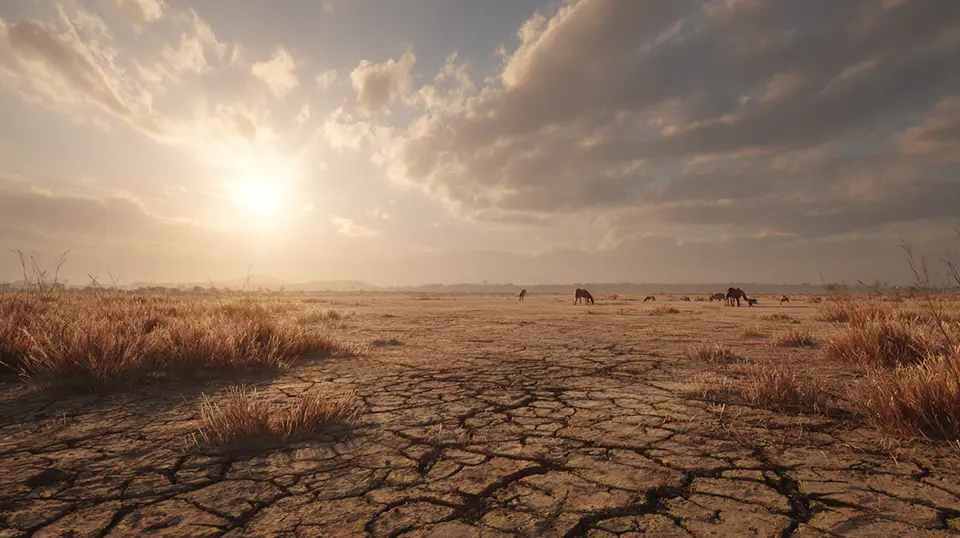
Across continents, a quiet but relentless transformation is underway. Separate patches of drought are no longer isolated incidents—they are joining forces, merging into vast, contiguous belts of arid land that scientists are now calling mega-drying regions.
These are not temporary dry spells. They are long-term shifts in climate patterns, reshaping landscapes in ways that will outlast the people currently living on them. The phenomenon is accelerating faster than many models predicted, driven largely by human-induced climate change, and its ripple effects will be felt across food systems, water supplies, biodiversity, and migration patterns.
A newly published study reveals that arid zones—once scattered across different parts of the globe—are expanding and coalescing. From North America’s southwestern deserts to the fringes of the Sahel in Africa, from Australia’s interior to swathes of Central Asia, the boundaries of dryness are blurring into a near-continuous expanse.
It’s a shift so dramatic that researchers have turned to a haunting metaphor to describe it: like a creeping mold, these dry zones spread slowly, persistently, and with devastating effect on the structures—both ecological and human—that they envelop.

Source: Wikimedia Commons, CC BY-SA 4.0
The Numbers Behind the Dryness
The research team, comprised of climatologists, ecologists, and hydrologists from multiple international institutions, used decades of satellite data, precipitation records, and land-use patterns to map the phenomenon.
Their findings paint a stark picture:
- Global drylands now cover approximately 46% of the planet’s land surface, up from 41% just half a century ago.
- The rate of expansion in some regions has doubled in the last 30 years.
- Areas that were once seasonally dry are transitioning into permanently arid states.
Most strikingly, these drylands are merging. Where one might once have seen distinct drought-prone areas separated by belts of more temperate or humid land, those transitional zones are disappearing.
This means ecosystems that evolved with certain degrees of moisture now find themselves directly adjacent to deserts, without the buffer of semi-arid grasslands or woodlands to soften the change.

Source: Wikimedia Commons, CC BY-SA 4.0
Why the “Creeping Mold” Analogy Resonates
Lead author Dr. Lin Mei, a climate systems scientist, explains why the research team borrowed imagery from the world of biology:
“The way these arid zones spread is similar to how mold colonizes a surface. It starts in small, isolated spots, then gradually joins together until the entire structure is compromised. The creeping mold metaphor captures the inevitability and difficulty of reversing the process once it has begun.”
While the metaphor is visual and relatable, the reality is far more complex. Mold spreads because conditions are favorable—moisture, warmth, and nutrients. Mega-drying regions expand because the climate system, altered by greenhouse gas emissions, is recalibrating rainfall, evaporation, and wind patterns.
In both cases, the changes, once set in motion, are hard to stop.
How Climate Change Fuels the Mega-Drying Effect
At the heart of the expansion is the uneven heating of the Earth. Rising global temperatures increase evaporation rates, drying out soils and vegetation. Warmer air also holds more water vapor, meaning storms—when they do occur—are more intense but less frequent.
Climate models suggest that subtropical regions, already prone to high-pressure systems that suppress rainfall, will become even drier. As the Hadley Cell (a large-scale atmospheric circulation pattern) shifts poleward, the boundaries between wet and dry climates move too.
This shift pushes dryness into areas that historically supported agriculture and dense human populations. What were once reliable breadbaskets are now teetering toward water scarcity.

Source: Wikimedia Commons, CC BY-SA 4.0
Impact on Ecosystems
The ecological consequences of mega-drying are profound:
- Loss of biodiversity: Plants and animals adapted to certain moisture levels cannot migrate fast enough to escape expanding arid zones. Species extinction risks rise, especially for those with narrow habitat ranges.
- Soil degradation: Without vegetation cover, soil is more prone to erosion. Nutrient-rich topsoil blows away, leaving behind barren land that struggles to support life.
- Wildfire risk: Drier conditions mean more frequent and intense wildfires, further destabilizing ecosystems and releasing stored carbon back into the atmosphere.
In some regions, these impacts create feedback loops: reduced vegetation leads to less moisture in the air (from transpiration), which leads to even less rainfall.

Source: Wikimedia Commons, CC BY-SA 4.0
Threats to Human Societies
For humans, the spread of mega-drying regions is not just an environmental concern—it’s an existential one.
- Agriculture is often the first casualty. Crops fail more often in prolonged droughts, forcing farmers to switch to less water-intensive varieties or abandon farming altogether. Irrigation becomes increasingly expensive as groundwater tables drop.
- Water scarcity becomes a daily challenge. Reservoirs shrink, and conflicts over water rights intensify, especially in transboundary river systems where upstream usage can choke off supplies downstream.
- Migration pressures build as rural communities can no longer sustain themselves. Some move to cities, straining urban infrastructure; others cross national borders, creating geopolitical tensions.
The study warns that without coordinated adaptation, these pressures could contribute to “climate refugee” crises in multiple regions by mid-century.

Source: Wikimedia Commons, CC BY-SA 4.0
Regions at the Frontline
The mega-drying phenomenon is not uniform—it plays out differently depending on geography.
- North America: The southwestern United States and northern Mexico are merging into a vast arid corridor. Water levels in the Colorado River Basin are at historic lows, affecting millions.
- Africa: The Sahel is pushing southward, eating into savanna lands. East Africa faces alternating extremes of drought and flooding.
- Asia: Northern China’s grasslands are thinning, while Central Asia’s steppes are drying rapidly.
- Australia: The interior’s arid core is widening, with agricultural zones along its fringes becoming less reliable.
What Can Be Done?
The researchers emphasize that the expansion of mega-drying regions is not inevitable—at least not at the pace currently observed. Immediate actions could slow the spread and buy time for adaptation.
Mitigation measures:
- Cutting greenhouse gas emissions to stabilize climate patterns.
- Protecting and restoring vegetation to improve soil moisture retention.
- Investing in water-efficient agriculture and drought-resistant crops.
Adaptation strategies:
- Redesigning cities to be more water-efficient.
- Diversifying local economies away from water-intensive industries.
- Implementing large-scale water recycling and desalination where feasible.
Dr. Mei notes:
“If we treat this like a creeping mold, then early intervention is key. Once dryness has set in deeply, reversing it is extremely difficult.”
A Global Challenge Requiring Global Action
The merging of drylands into mega-drying regions is a planetary-scale issue. While local adaptation is essential, the underlying driver—climate change—demands global cooperation.
The study’s authors urge international agreements not only to limit warming but also to share water management technologies, fund adaptation in vulnerable regions, and create migration policies that acknowledge climate realities.
The creeping mold analogy, unsettling as it is, serves its purpose: to shake policymakers and the public out of complacency. This is not a distant future scenario—it is unfolding now, and the window for effective action is narrowing.

Source: Wikimedia Commons, CC BY-SA 4.0
References
- IPCC – Climate Change Reports
- EPA – Greenhouse Gas Emissions
- UNEP – Drought and Desertification
- Wikipedia – Sahel
According to LIVESCIENCE