According to BLOGS
Mold is often associated with neglected buildings or household dampness, but within archives, libraries, and museum collections, it represents a far more complex and high-stakes challenge. A recent report from preservation specialists highlights how mold growth threatens valuable cultural materials and outlines the meticulous processes required to detect, manage, and prevent fungal contamination in collection environments.
Cultural heritage institutions—such as libraries, archives, and museums—are responsible for preserving irreplaceable materials, including manuscripts, photographs, textiles, and rare books. These materials are particularly vulnerable to environmental fluctuations, especially moisture. When conditions shift toward elevated humidity, even briefly, dormant fungal spores present in the air can activate and begin colonizing organic surfaces.
Mold as an Invisible but Persistent Risk
Unlike more visible forms of deterioration, mold often develops quietly. It can begin as microscopic growth on paper fibers, adhesives, or textile threads before becoming visible to the human eye. By the time discoloration or odor appears, the contamination may already be well established.
Preservation experts emphasize that mold is not a rare occurrence in collections. Instead, it is an ever-present risk that must be actively managed. Fungal spores exist naturally in both indoor and outdoor air, meaning that complete elimination is not feasible. The focus, therefore, shifts toward environmental control and early detection.
The phrase “it grows in the damp” reflects a fundamental principle in preservation science: moisture is the primary driver of mold growth.

Source: Wikimedia Commons, CC BY-SA 3.0
Environmental Conditions and Mold Development
Humidity and temperature are the two most critical environmental factors influencing mold activity. When relative humidity rises above safe thresholds—generally around 60%—the likelihood of mold growth increases significantly.
Temperature fluctuations can also contribute to condensation, especially in poorly insulated or climate-controlled spaces. Even short-term spikes in humidity, such as those caused by water leaks or HVAC system failures, can create conditions favorable for fungal development.
Organic materials commonly found in collections—such as paper, leather, and textiles—serve as nutrient sources for mold. Combined with moisture, these materials create an ideal environment for colonization.

Water-Damaged Paper Collections
Agents of deterioration
Source: Wikimedia Commons, CC BY-SA 4.0
Early Detection and Monitoring
Effective mold management begins with monitoring environmental conditions and identifying early warning signs. Preservation teams often use data loggers to track humidity and temperature in storage areas, allowing them to detect fluctuations before they lead to mold outbreaks.
Visual inspections are also a key component of preventive care. Staff are trained to recognize subtle indicators, including faint discoloration, powdery residues, or musty odors.
Early detection is critical because it allows for intervention before mold spreads across collections. Once established, mold can move rapidly, especially in environments where airflow facilitates spore distribution.

Source: Wikimedia Commons, CC BY-SA 3.0
Response and Containment Strategies
When mold is detected, immediate action is required to contain and mitigate its spread. Affected materials are typically isolated from the rest of the collection to prevent cross-contamination.
Drying the environment is often the first step in halting mold growth. By reducing humidity levels, preservation teams can stop fungal activity and prevent further colonization.
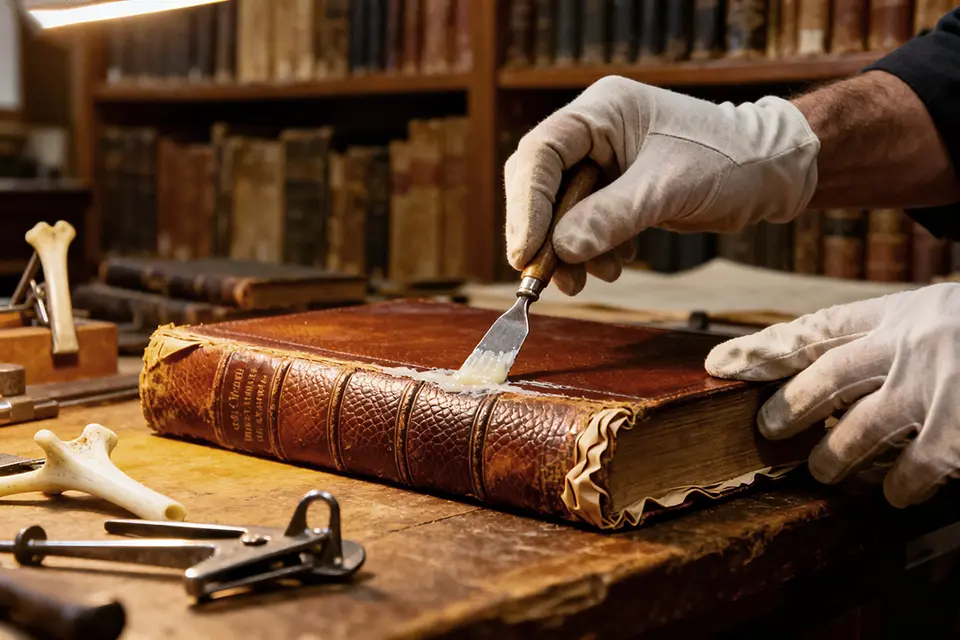
Cleaning mold from collection materials requires specialized techniques. Dry cleaning methods, such as the use of soft brushes or specialized vacuums with filtration systems, are commonly employed. In more severe cases, conservators may need to use chemical treatments or consult advanced conservation methods.
Importantly, these interventions must balance effectiveness with the preservation of the material itself. Aggressive cleaning can damage fragile items, making careful handling essential.
Health and Safety Considerations
Mold in collections is not only a risk to materials but also to human health. Exposure to mold spores can cause respiratory symptoms, allergic reactions, and other health concerns, particularly for individuals with sensitivities.
As a result, institutions implement strict safety protocols when dealing with mold-contaminated materials. These may include the use of personal protective equipment (PPE), controlled work environments, and air filtration systems.
Protecting staff is considered just as important as preserving collections.
Preventive Preservation Practices
Prevention remains the most effective strategy for managing mold in collections. Maintaining stable environmental conditions is central to this approach.
Climate control systems are used to regulate temperature and humidity, while proper building maintenance helps prevent water intrusion. Storage practices also play a role; materials are often housed in archival-quality containers that provide an additional layer of protection.
Good housekeeping practices—such as regular cleaning and minimizing dust—reduce the likelihood of mold spores settling and growing on surfaces.

Source: Wikimedia Commons, CC BY-SA 3.0
The Challenge of Climate Change
Preservation experts note that climate change introduces new challenges for mold management. Increased frequency of extreme weather events, such as floods and storms, can lead to water damage in cultural institutions.
Higher average humidity levels in certain regions may also increase the baseline risk of mold growth. As environmental conditions become less predictable, institutions must adapt their preservation strategies accordingly.
This may involve upgrading infrastructure, improving emergency preparedness, and investing in more advanced monitoring technologies.
A Balancing Act Between Access and Protection
Cultural institutions face the ongoing challenge of balancing public access with preservation needs. Opening collections to researchers and visitors can introduce fluctuations in temperature and humidity, as well as increase the risk of contamination.
At the same time, restricting access limits the educational and cultural value of these materials. Institutions must therefore design systems that allow for both preservation and accessibility.
This often includes controlled reading rooms, restricted handling procedures, and carefully managed exhibition environments.
Long-Term Implications for Cultural Heritage
The presence of mold in collections is more than a maintenance issue—it represents a potential threat to cultural memory. If left unmanaged, fungal damage can result in the permanent loss of historical artifacts and documents.
Preservation efforts are therefore not only about protecting physical objects but also about safeguarding the knowledge and stories they contain.
Experts emphasize that sustained investment in preservation infrastructure, staff training, and environmental monitoring is essential for long-term success.
A Continuous Process of Vigilance
Managing mold in collections is not a one-time task but an ongoing process requiring constant vigilance. From monitoring environmental conditions to responding quickly to emerging risks, preservation teams must remain proactive.
The report underscores that while mold cannot be entirely eliminated, its impact can be controlled through informed practices and careful management.
In this context, preservation becomes both a science and a discipline of attention—where small changes in environment can have significant consequences for the survival of cultural heritage.
References
NPS Museum Handbook (Data Logger)
NPS Museum Handbook (Data Logger)
According to BLOGS