According to columbiamissourian
An Edible Mushroom Becomes an Ecological Concern
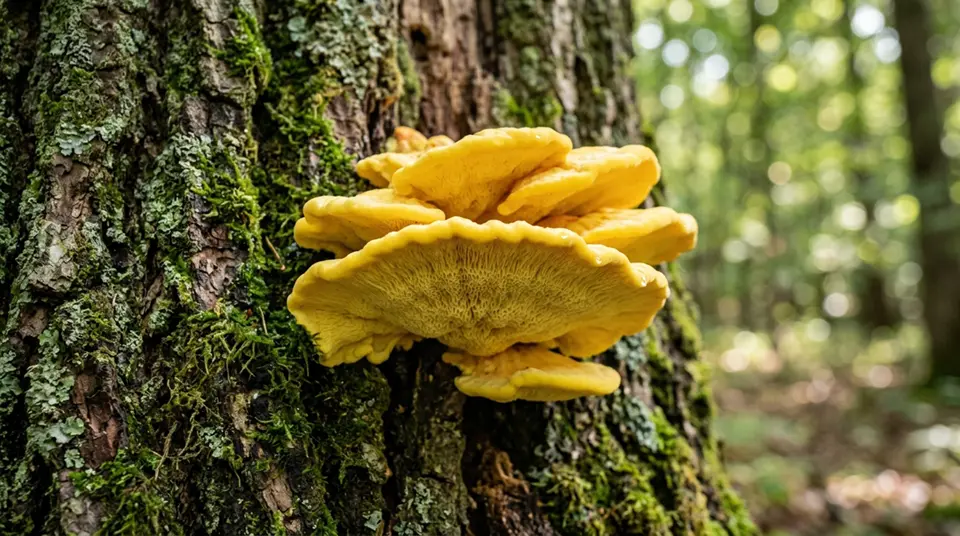
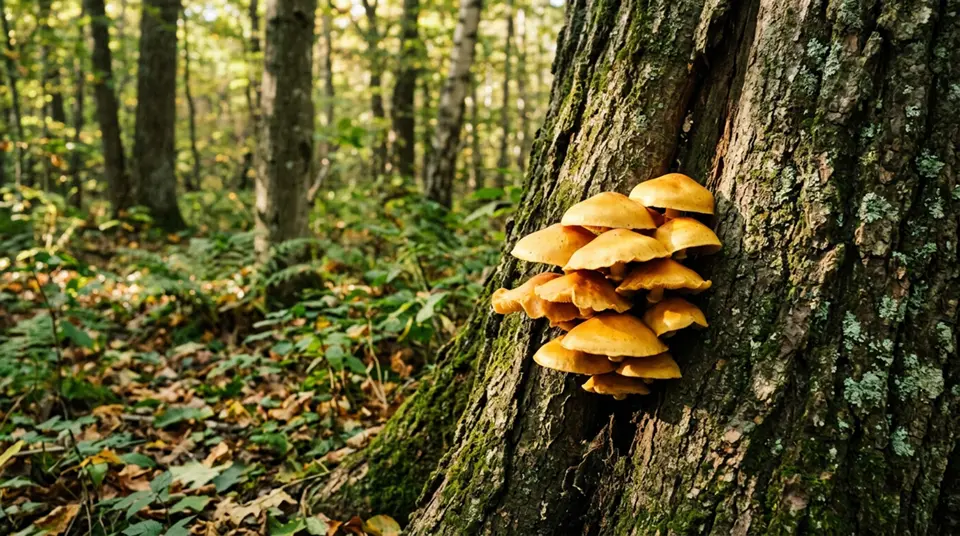
The golden oyster mushroom, once introduced to North America as a commercially cultivated edible fungus, is now emerging as a growing ecological concern in forests across Missouri and other parts of the United States. Recent observations in Boone County reveal how the species, scientifically known as Pleurotus citrinopileatus, has expanded aggressively through moist hardwood forests, raising alarm among mycologists and conservation researchers.
Although the mushroom is visually attractive and widely consumed as food, scientists warn that its rapid spread may disrupt native fungal ecosystems and alter forest ecological balance in ways that are difficult to reverse.

From Culinary Import to Wild Invasion
Golden oyster mushrooms are native to Asia and were introduced to North America in the early 1990s for culinary cultivation. The fungus became popular among growers because of its bright yellow color, rapid growth, and edible qualities.
However, over time the species escaped cultivation and established itself in wild forest environments. Since then, its spread has accelerated across central and northeastern regions of the United States, including Missouri.
Researchers note that continued commercial cultivation and the mushroom’s massive spore production contribute significantly to its expansion.
Why the Spread Is Concerning
Unlike some fungi that coexist relatively quietly within ecosystems, golden oyster mushrooms appear highly competitive. They colonize dead hardwood rapidly and may dominate decaying wood habitats before native fungi can establish themselves.
This aggressive growth behavior has raised concerns about declining fungal diversity within affected forests. Native decomposer fungi play essential roles in nutrient cycling, wood decomposition, and ecological stability. When one invasive species dominates these processes, ecosystem balance may be disrupted.
Scientists studying the issue emphasize that fungal biodiversity is crucial for healthy forest systems.

Evidence from Forest Research
Researchers investigating the spread of golden oyster mushrooms have begun documenting measurable ecological impacts. Studies involving dead elm trees in the Madison, Wisconsin area revealed that trees colonized by golden oyster mushrooms hosted significantly fewer native fungal species compared to unaffected trees.
This suggests the invasive fungus may outcompete local fungal communities for resources and habitat space.
The findings are particularly concerning because fungi are deeply interconnected with forest nutrient cycles and microbial ecosystems.
The Hidden Importance of Fungal Biodiversity
Fungi are often overlooked compared to invasive plants or animals, yet they are among the most important organisms within forest ecosystems. They decompose dead organic matter, recycle nutrients, support soil health, and interact with countless other organisms.
Many fungi form underground relationships with plants, while others influence insect populations, microbial communities, and carbon cycling.
Reducing fungal diversity may therefore have consequences extending far beyond the disappearance of individual mushroom species.
Invasive Fungi Are Difficult to Control
One of the major challenges highlighted by researchers is that invasive fungi are extremely difficult to manage once established in the environment.
Fungi spread primarily through microscopic spores capable of traveling long distances through air currents. Golden oyster mushrooms release billions of spores, increasing the likelihood of continued dispersal into new habitats.
Once fungal networks establish themselves within dead wood or forest substrates, eradication becomes nearly impossible.
Lessons from Previous Fungal Invasions
Scientists point out that invasive fungi have caused devastating ecological damage before. Diseases such as Dutch elm disease and chestnut blight dramatically altered North American forests after being introduced from outside regions.
These fungal pathogens led to widespread tree mortality and permanent ecological changes.
Although golden oyster mushrooms do not kill living trees directly in the same way, researchers warn that invasive decomposer fungi may still reshape ecosystems through competition and biodiversity loss.
Public Awareness Remains Limited
Unlike invasive plants that are often visible and easy to recognize, fungal invasions tend to receive far less public attention. Many people associate mushrooms primarily with food or seasonal forest growth rather than ecosystem function.
Researchers say this lack of awareness makes fungal invasions particularly difficult to address proactively.
The report emphasizes that fungi deserve greater consideration within invasive species management discussions.
Mushroom Cultivation and Ecological Risk
The popularity of home mushroom cultivation kits has also contributed to broader conversations about environmental responsibility. Introducing non-native organisms into local ecosystems, even unintentionally, carries ecological risks.
Experts caution that every imported fungal species has the potential to spread beyond controlled environments under favorable conditions.
The golden oyster mushroom serves as a reminder that cultivated organisms may behave unpredictably once released into natural ecosystems.

Potential Solutions and Prevention Efforts
Researchers and commercial growers are exploring possible mitigation strategies. One idea involves developing sporeless strains of cultivated mushrooms to reduce dispersal risks.
While such approaches may not eliminate ecological concerns entirely, they could slow the spread of invasive fungi into surrounding forests.
Scientists stress that prevention remains the most effective strategy. Once invasive fungal species become widespread, long-term control options are extremely limited.
A Warning for Future Fungal Introductions
Researchers involved in studying the golden oyster mushroom emphasize that the issue extends beyond a single species. The broader concern is how future introductions of non-native fungi could affect ecosystems if preventive measures are not improved.
As global trade, cultivation, and environmental change continue increasing species movement worldwide, fungal invasions may become more common.
The current situation is therefore viewed as both a present ecological problem and a warning about future biological introductions.
The Ecological Complexity Beneath Forest Floors
Forests depend on complex fungal networks operating largely out of sight beneath bark, soil, and decaying wood. Introducing highly competitive species into these systems can create ecological shifts that may take decades to fully understand.
The spread of the golden oyster mushroom illustrates how even edible and seemingly harmless organisms can influence biodiversity and ecological stability when introduced outside their native range.
Looking Ahead
Scientists continue monitoring the expansion of golden oyster mushrooms throughout North America to better understand their ecological impact. Future research will likely focus on fungal competition, forest nutrient cycling, and methods for reducing invasive spread.
The situation highlights the growing importance of fungal ecology in environmental science and conservation policy. As awareness increases, researchers hope the lessons learned from this invasion may help prevent future disruptions caused by non-native fungi.
Ultimately, the story of the golden oyster mushroom demonstrates that fungi—though often hidden from view—can profoundly shape the health and balance of forest ecosystems.
References
Fisher M.C. et al. (2012). Emerging fungal threats to animal, plant and ecosystem health. Nature.
According to columbiamissourian