According to INDEPENDENT
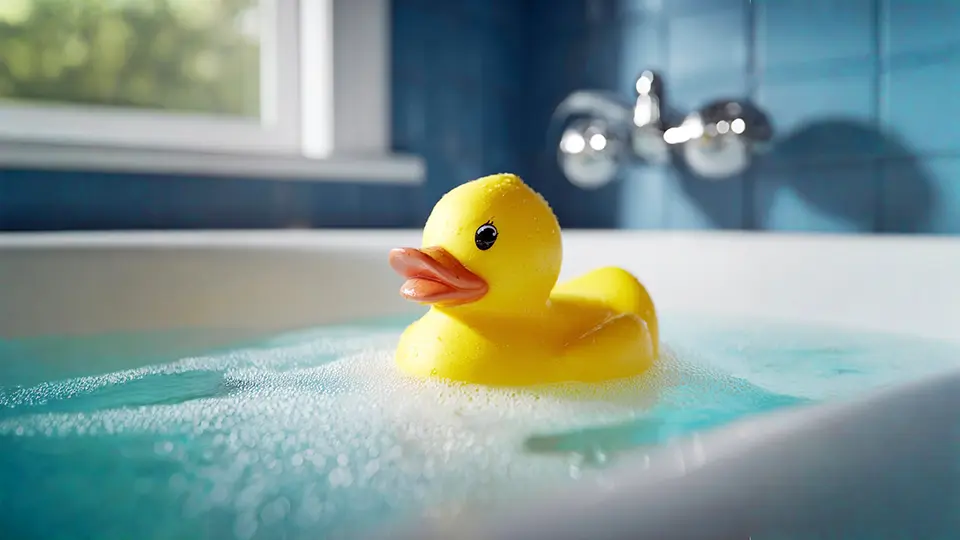
Rubber ducks and similar bath toys are widely recognized as playful companions during children’s bath time. Their cheerful appearance often makes them symbols of safety and comfort in household bathrooms. However, scientific research examining the microbial communities living inside these toys has revealed a more complex and less visible reality. Studies investigating the interior environment of rubber bath toys have found that they frequently contain dense colonies of microorganisms, including bacteria and fungi, that develop under the warm and moist conditions present during repeated bathing cycles.

Source: Wikimedia Commons, CC BY-SA 4.0
Researchers studying the microbial ecology of bath toys discovered that the internal cavities of many rubber ducks create ideal environments for microbial colonization. During use, bathwater is often drawn into the toy through small holes designed to allow water to squirt out when squeezed. Once the bath ends, water can remain trapped inside the toy. This stagnant water, combined with warmth and organic residues such as soap, body oils, and environmental particles, creates a nutrient-rich environment where microbes can multiply.
Scientific examinations of used bath toys revealed that the interior surfaces were often coated with biofilms—thin, slimy layers formed by communities of microorganisms that attach to surfaces and protect themselves within a matrix of organic material. Biofilms are commonly found in natural and built environments, including pipes, medical equipment, and water systems. In bath toys, they can form rapidly because of repeated exposure to water and organic compounds.
Microbiological analyses of bath toy biofilms have identified a wide range of bacterial species. Some of these organisms are harmless environmental microbes, but others have been associated with opportunistic infections. Among the bacteria detected in studies are species linked to ear infections, eye infections, and gastrointestinal illness. In particular, researchers reported the presence of Legionella, a bacterium known for causing Legionnaires’ disease, and Pseudomonas aeruginosa, a pathogen capable of causing infections in the skin, ears, eyes, and lungs.

Source: Wikimedia Commons, CC BY-SA 4.0
The presence of these bacteria does not automatically mean that bath toys will cause illness. Infection risk depends on multiple factors, including the amount of microbial exposure, the health of the individual, and whether pathogens are able to enter the body through susceptible tissues. However, the discovery of potentially harmful microorganisms in bath toys highlights the importance of understanding how everyday household objects can support microbial growth.
One of the key drivers behind microbial colonization in bath toys is the combination of water chemistry and material properties. Many bath toys are made from flexible plastics such as polyvinyl chloride (PVC) or other polymer-based materials. These materials may release small amounts of biodegradable organic compounds over time. These compounds can act as nutrients for microbes, allowing them to thrive on interior surfaces.
At the same time, bathwater itself often contains trace nutrients. Human skin sheds cells during bathing, and residues from soap, shampoo, and personal care products contribute additional organic material. When this mixture enters the toy through the water intake hole, it creates a microenvironment that supports microbial communities.
Researchers also found that water quality plays an important role. In experimental studies, bath toys exposed to tap water combined with soap residues showed significantly greater microbial growth than toys exposed only to clean water. The combination of microorganisms present in tap water, organic nutrients from soap products, and the plastic surfaces inside the toys created ideal conditions for biofilm formation.
Another factor contributing to microbial colonization is the limited airflow within the toy. Once water enters and remains trapped, oxygen levels may fluctuate and evaporation is limited. This creates stable moisture conditions that allow microbial populations to persist and multiply between baths.
In addition to bacteria, fungal organisms were also detected within bath toy biofilms. Fungi are well adapted to moist environments and are capable of colonizing surfaces where organic materials are present. In bathroom settings, airborne fungal spores can easily settle on damp surfaces and begin to grow if conditions are favorable.
The fungal species identified in bath toy environments often belong to genera commonly found in indoor spaces and water-damaged environments. These fungi can contribute to biofilm complexity by interacting with bacterial populations, forming mixed microbial communities that are more resilient than single-species colonies.

Source: Wikimedia Commons, CC BY-SA 4.0
Researchers emphasize that the presence of microorganisms in bath toys reflects a broader principle of microbiology: almost any moist environment containing organic nutrients can support microbial life. Bathrooms, kitchens, and plumbing systems are particularly favorable environments because they provide the moisture necessary for microbial growth.
Despite these findings, experts caution against interpreting the results as a cause for alarm. Microorganisms are present in nearly all environments humans encounter, and most exposures do not result in illness. Instead, the findings highlight the importance of good hygiene practices when using objects that retain water.
To reduce microbial buildup in bath toys, several practical measures can be adopted. Allowing toys to dry thoroughly after use can limit the moisture required for microbial growth. Some experts recommend squeezing out as much water as possible and storing toys in well-ventilated areas where they can dry between baths.
Periodic cleaning can also help control microbial populations. Washing bath toys with mild disinfectant solutions or hot water may reduce biofilm formation and remove accumulated residues that serve as nutrients for microbes. Some parents choose bath toys designed without holes, which prevents water from entering the interior and reduces the risk of microbial colonization.
Manufacturers have also begun exploring improved materials and designs aimed at minimizing microbial growth. These innovations include sealed bath toys, antimicrobial plastic additives, and designs that allow toys to be opened for cleaning and drying.
The discovery of microbial communities in rubber bath toys serves as a reminder that everyday household items can become miniature ecosystems when environmental conditions allow. Moisture, warmth, and organic residues provide the ingredients necessary for microbial colonization, regardless of whether the object is a water pipe, medical device, or bath toy.
Understanding these microbial dynamics helps researchers and public health experts develop better strategies for managing microbial exposure in domestic environments. Rather than eliminating microbes entirely—which is impossible in most settings—the goal is to manage conditions that allow harmful organisms to proliferate.
Ultimately, the study of microbial biofilms inside bath toys illustrates a broader concept: microorganisms are deeply integrated into daily human environments. By recognizing the environmental conditions that support microbial growth and adopting simple preventive measures, households can reduce the likelihood of excessive microbial buildup while maintaining safe and healthy living spaces.
References
According to INDEPENDENT