According to LEICESTERSHIRE LIVE
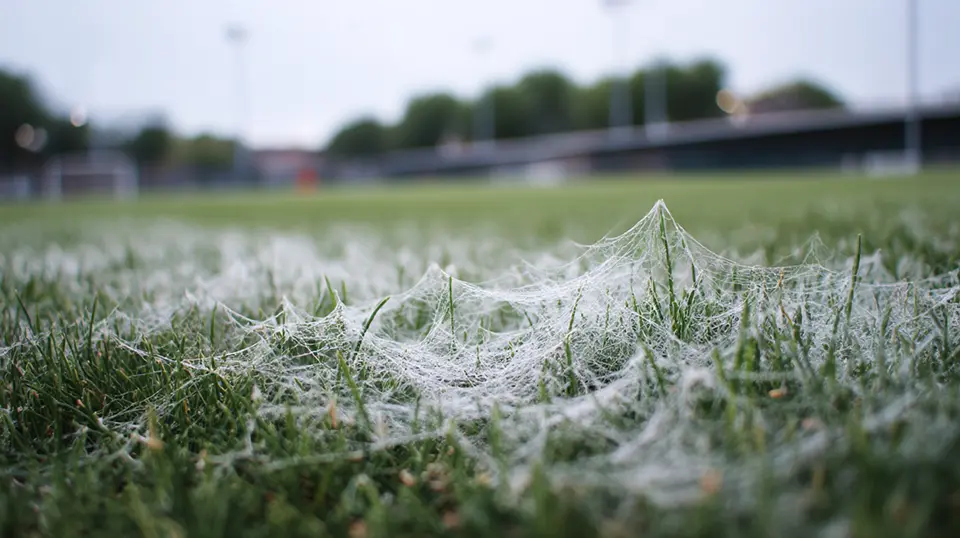
Gardeners across colder regions are being urged to remain vigilant against snow mold, a seasonal fungal disease that can cause significant lawn damage during and after winter. As periods of snow, frost, and persistent dampness become more common, experts warn that snow mold may emerge unnoticed until the weather warms and lawns fail to recover.
Snow mold is not a single organism but a group of fungi that attack grass when cold, wet conditions persist for extended periods. While the damage is rarely permanent, affected lawns can appear patchy, discolored, and weakened well into spring.
What Is Snow Mold
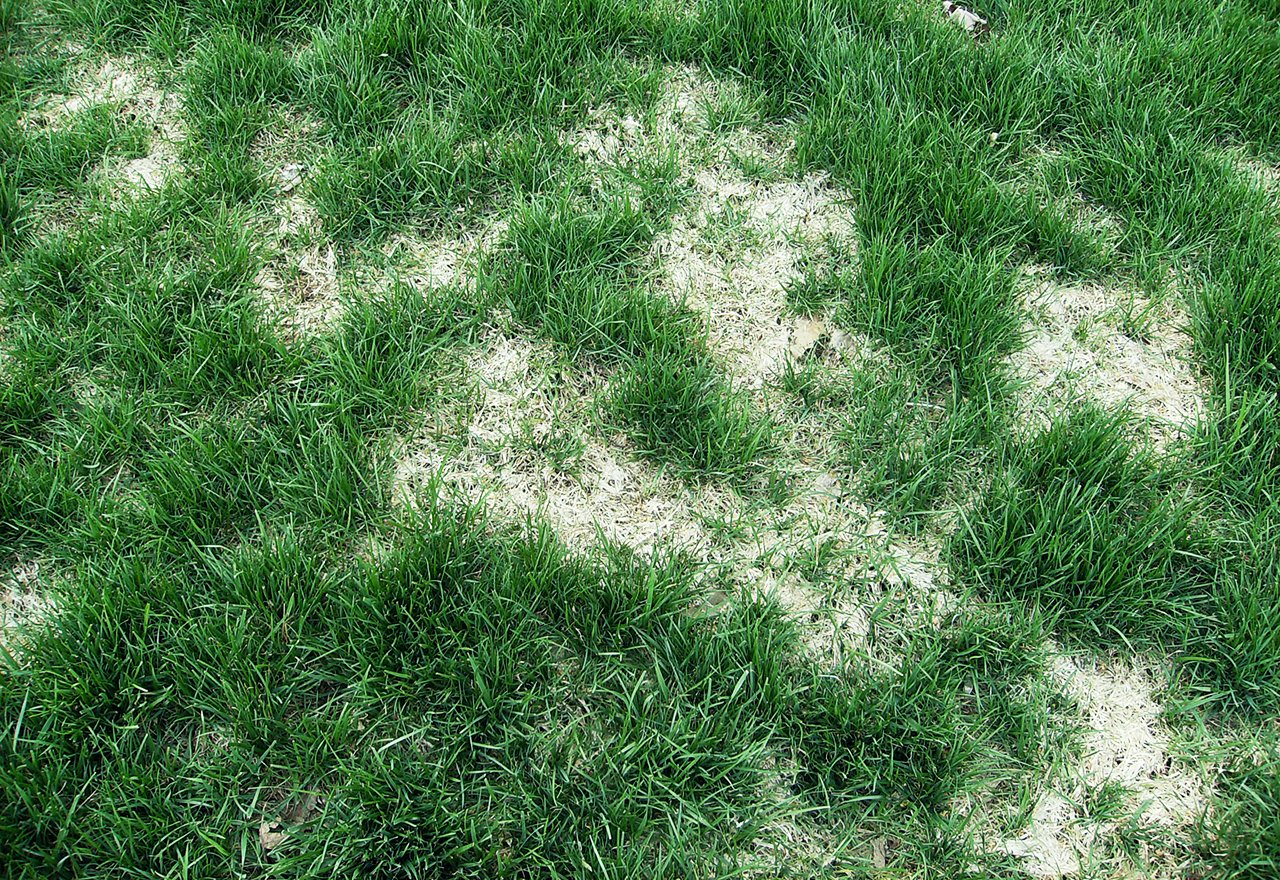
Snow mold refers to fungal diseases that develop on turfgrass under snow cover or in prolonged cold and wet conditions. Unlike many garden fungi that thrive in warmth, snow mold becomes active when temperatures hover just above freezing point and moisture remains trapped near the soil surface.
The disease often goes unnoticed during winter because it develops beneath snow or frost. Symptoms typically become visible only after snow melts, when gardeners discover circular patches of damaged grass.
Why Snow Mold Develops in Winter
Snow mold thrives under a specific combination of environmental factors:
- prolonged snow cover or frost
- cold but not deeply frozen soil
- high moisture levels
- limited airflow at ground level
Snow acts as an insulating blanket, trapping moisture and maintaining temperatures favorable for fungal growth. Grass beneath the snow remains damp and compressed, creating ideal conditions for infection.
Lawns that are already stressed before winter, due to poor drainage or excess thatch, are particularly vulnerable.
Visible Signs and Lawn Damage
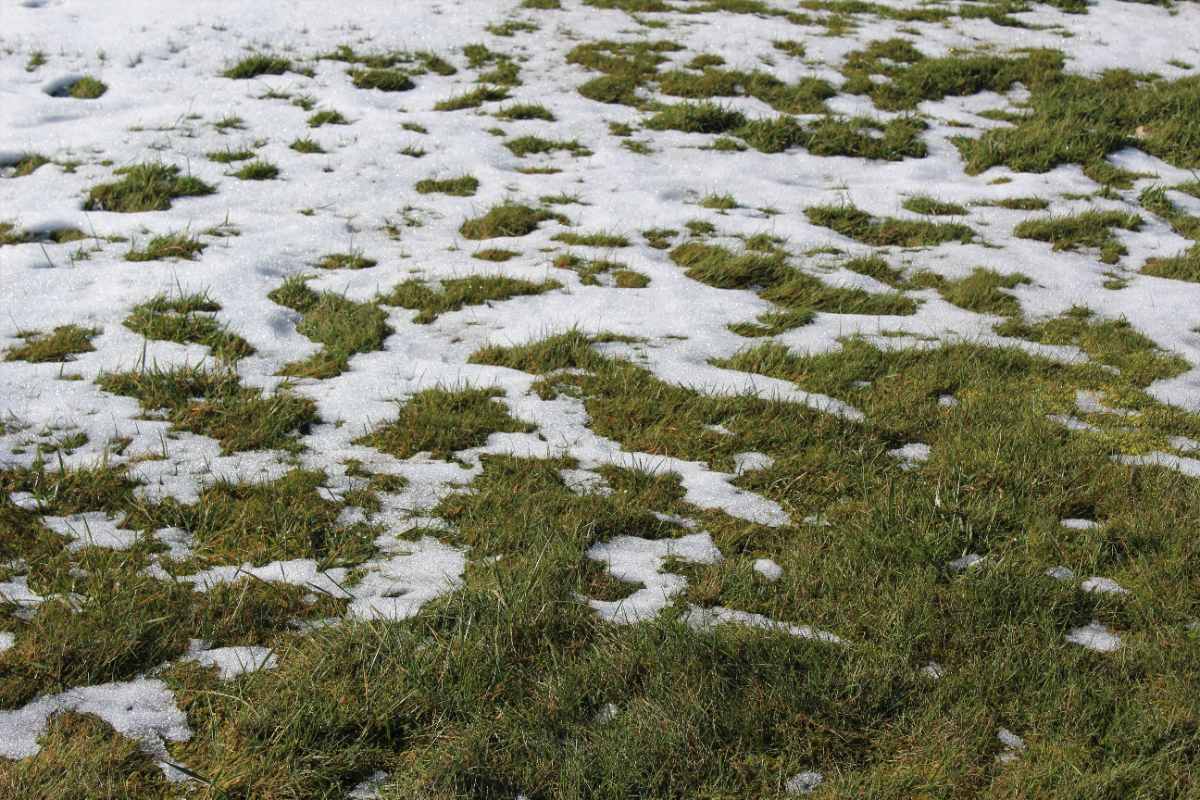
Once snow melts, snow mold damage becomes apparent. Common signs include:
- circular or irregular patches of flattened grass
- straw-colored or pinkish-gray discoloration
- matted turf that feels slimy or brittle
- slow or uneven regrowth in spring
In many cases, the grass itself is not completely dead, but weakened. With proper care, lawns can often recover over time.
Types of Snow Mold
There are two main forms of snow mold that affect lawns:
Gray Snow Mold
Gray snow mold is the more common and generally less destructive form. It typically causes superficial damage and affects the leaves rather than the roots.
Pink Snow Mold
Pink snow mold is less common but more aggressive. It can damage both leaves and crowns of grass plants, increasing the risk of long-term thinning.
Both types thrive under similar winter conditions, though pink snow mold does not always require snow cover and can develop during prolonged cold and damp weather alone.
Why Lawns Are Especially at Risk
Lawns are particularly susceptible to snow mold because grass blades remain in close contact with moisture for long periods. Additional risk factors include:
- long grass left uncut before winter
- heavy leaf litter left on lawns
- poor soil drainage
- excessive nitrogen fertilization late in the season
These conditions provide fungi with organic material and moisture, encouraging growth during winter dormancy.
Prevention Strategies Recommended to Gardeners
Experts emphasize that prevention is far more effective than treatment once snow mold has developed. Recommended measures include:
- mowing grass slightly shorter before winter
- removing fallen leaves and debris
- improving lawn drainage
- avoiding excessive late-season fertilization
- gently raking affected areas in spring to improve airflow
Reducing moisture retention and increasing air circulation are key to limiting fungal growth.
Spring Recovery and Lawn Care
If snow mold damage is discovered in spring, gardeners are advised not to panic. In many cases, lawns will recover naturally as temperatures rise and conditions dry.
Light raking can help lift matted grass and improve air exposure. Overseeding may be necessary in severely affected areas, particularly if the grass crown was damaged.
Experts caution against overwatering or applying unnecessary chemicals during recovery, as this can slow regrowth.
Climate Patterns and Snow Mold Risk
Changing climate change-related winter weather patterns may increase snow mold risk in some regions. Milder winters with intermittent snowfall and frequent freeze-thaw cycles can prolong damp conditions without deeply freezing the soil.
These conditions extend the window in which snow mold fungi can remain active. Gardeners may need to adjust traditional winter lawn care practices to account for these changes.
Common Fungal Species Associated With Snow Mold
Snow mold is primarily caused by cold-tolerant fungi that infect turfgrass. Commonly associated species include:
These fungi are adapted to survive under snow cover and low temperatures, making them persistent winter pathogens.

Why Awareness Matters
Snow mold rarely destroys lawns permanently, but repeated infections can weaken turf over time. Awareness allows gardeners to recognize the signs early and adjust maintenance practices accordingly.
Experts stress that snow mold is a natural seasonal phenomenon rather than a sign of poor gardening. However, informed lawn care decisions can significantly reduce its impact.
Conclusion
As winter weather continues to challenge gardens and lawns, snow mold remains a key concern for gardeners. By understanding how the disease develops and taking preventive steps before winter sets in, homeowners can protect their lawns and encourage faster recovery in spring.
Snow mold serves as a reminder that garden health does not pause during winter—it simply changes form beneath the snow.
References
According to LEICESTERSHIRE LIVE