According to ARS TECHINICA
Scientists are increasingly looking to fungi as a potential alternative to conventional chemical insecticides, driven by growing concerns over pesticide resistance, environmental damage, and human health risks. New research suggests that certain fungi could offer an effective, targeted, and more sustainable way to control insect pests, potentially reshaping how agriculture and public health manage harmful insects in the coming decades.
The findings come at a time when existing pest control strategies are under mounting pressure. Many insect species have developed resistance to widely used chemical insecticides, while evidence continues to accumulate about the negative impacts of these chemicals on ecosystems, pollinators, and non-target species. Against this backdrop, fungal-based insect control is being explored as a biologically informed alternative.

Source: Wikimedia Commons, CC BY-SA 4.0
The Limits of Chemical Insecticides
For decades, chemical insecticides have been the backbone of pest management in agriculture and disease control. However, their effectiveness is declining. Insects evolve rapidly, and repeated exposure to the same chemical compounds has led to widespread resistance. This forces farmers and authorities to apply higher doses or switch to stronger chemicals, increasing costs and environmental harm.
Chemical insecticides can also have unintended consequences. They often kill beneficial insects alongside pests, contaminate soil and water, and pose risks to human health through direct exposure or residues on food. These concerns have intensified calls for new pest control approaches that are both effective and ecologically responsible.

Source: Wikimedia Commons, CC BY-SA 4.0
Why Fungi Are Attracting Attention
Fungi represent a fundamentally different approach to insect control. Certain fungal species naturally infect and kill insects, using them as hosts for growth and reproduction. These fungi have evolved alongside insects for millions of years, developing highly specialized mechanisms to invade, disable, and ultimately kill their hosts.
Unlike chemical insecticides, which typically act through toxicity, insect-pathogenic fungi operate biologically. They attach to an insect’s outer surface, penetrate the exoskeleton, and grow inside the body, disrupting vital processes. This mode of action makes it harder for insects to develop resistance compared with single-target chemical compounds.
How Fungal Insecticides Work
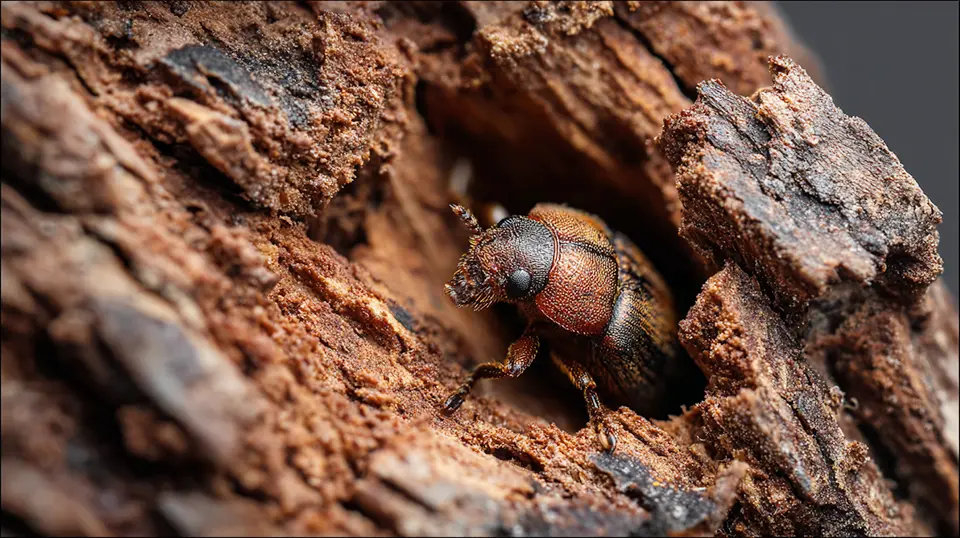
The fungal infection process begins when spores come into contact with an insect’s body. Under suitable conditions, the spores germinate and produce structures that breach the insect’s protective cuticle. Once inside, the fungus spreads through the insect’s tissues, consuming nutrients and releasing compounds that interfere with normal physiological functions.
Eventually, the insect dies, and the fungus may emerge from the body to release new spores into the environment. These spores can then infect other insects, allowing the fungus to persist and spread naturally within pest populations.
Genetic and Technological Advances
Recent advances in genetics and biotechnology are accelerating progress in fungal insect control. Scientists are identifying genes responsible for virulence, environmental tolerance, and host specificity, allowing them to select or enhance fungal strains with desirable traits.
Improved delivery systems are also being developed. Encapsulation technologies can protect fungal spores from harsh environmental conditions, extending their viability in the field.

Source: Wikimedia Commons, CC BY-SA 4.0
Public Health and Vector Control
Beyond agriculture, fungal insecticides are being explored for controlling insects that spread disease, such as mosquitoes. Traditional chemical methods used in vector control face similar challenges of resistance and environmental harm.
References
Biological control of insect pests using entomopathogenic fungi.
According to ARS TECHINICA