According to BBC
As geopolitical competition over rare earth elements intensifies, scientists are proposing a radically different approach to securing these critical materials—one that avoids traditional mining altogether. Instead of drilling into bedrock, researchers are looking to fungi and vast industrial waste piles as unconventional but potentially powerful sources of rare earth elements. These approaches promise not only to supplement global supplies, but also to clean up contaminated environments in the process.

Source: Wikimedia Commons – File:Mine_tailings_pile.jpg, CC BY-SA 3.0
Rare Earths: Essential but Hard to Extract
Rare earth elements are a group of 17 chemically similar metals that underpin modern technologies. They are essential for batteries, high-performance magnets, renewable energy systems, electronics, and advanced alloys. Despite their name, rare earths are relatively widespread across the Earth’s crust. The challenge lies in their low concentrations and the difficulty of separating them from surrounding materials.
Today, global supply chains are highly concentrated. China dominates both mining and processing, accounting for the majority of global output. This has prompted other nations to seek alternatives that reduce dependence on conventional mining and imported materials.
Turning to Biology: The Concept of “Mycomining”
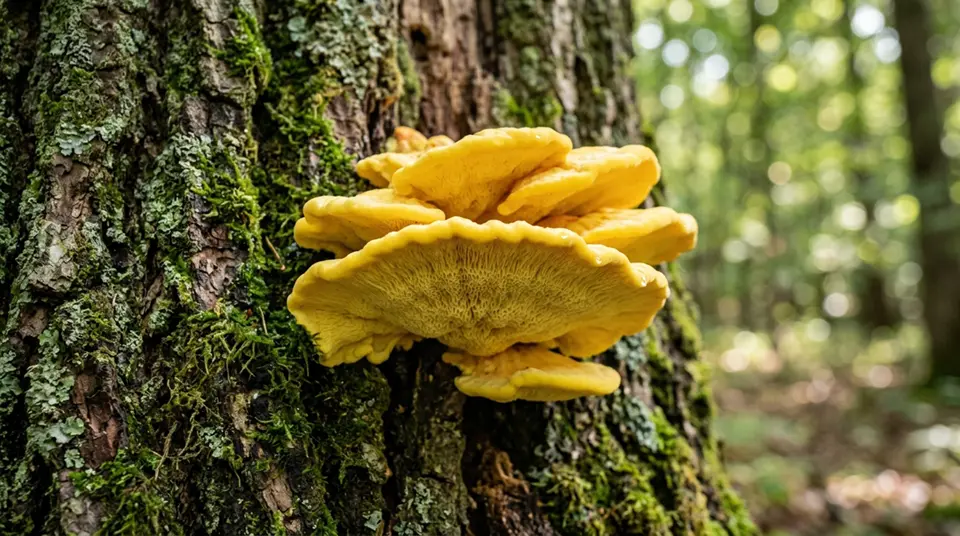
One of the most novel approaches under investigation is the use of fungi to recover rare earths. In laboratory experiments, scientists are growing fungi on specially prepared materials containing rare earth elements. As fungi develop their mycelial networks—dense webs of microscopic filaments—they absorb nutrients from their surroundings. Some species can also accumulate metals, including rare earths.
This process, known as bioremediation when used for environmental cleanup, is being reimagined as a form of resource recovery. Researchers describe it as “mycomining,” a method that repurposes fungi from environmental nuisances into biological extractors.
In controlled experiments, fungi are grown on clay or contaminated soils laced with rare earths. Over several weeks, the fungi incorporate small amounts of these elements into their biomass. While concentrations remain lower than those found in conventional ores, the process requires far less energy and avoids the environmental disruption of mining.

Source: Wikimedia Commons – File:Fungal_hyphae_SEM.jpg, CC BY 2.5
Scaling Up: Promise and Limitations
Scientists acknowledge that fungal recovery of rare earths is still speculative at large scales. Extracted concentrations are modest, and growing fungi across large areas raises ecological questions, such as potential disruption to natural microbial communities.
However, the appeal lies in dual-use potential. Fungi could be deployed on contaminated industrial land, extracting valuable elements while simultaneously reducing pollution. Once harvested, fungal biomass could be converted into biogas for energy, with rare earths later separated from the ash.
Researchers stress that mycomining is unlikely to replace traditional mining entirely. Instead, it may serve as a supplemental source, particularly valuable where waste materials already contain dispersed rare earths.
Waste as a Hidden Resource
Beyond fungi, scientists emphasize that enormous quantities of rare earths already exist in industrial waste. Coal ash, mine tailings, and bauxite residue (red mud) are produced in vast quantities and stored in large piles that pose long-term environmental risks.
When coal is burned, rare earth elements remain concentrated in the ash. Studies estimate that coal ash in the United States alone contains billions of dollars’ worth of rare earths. Similarly, red mud from aluminum production can contain rare earth concentrations significantly higher than those found naturally in the Earth’s crust.
Traditionally, recovering rare earths from such waste has been considered too costly or technically challenging. However, new extraction technologies are changing that calculation.
Flash Joule Heating and Chemical Recovery
Another emerging method involves advanced thermal and chemical techniques rather than biology. Flash joule heating rapidly raises waste materials to extremely high temperatures using electrical currents. At these temperatures, rare earth elements can bond with specific compounds and be captured as vapors.
This approach has been successfully demonstrated on waste magnets, coal ash, and red mud. Compared to conventional mining and processing, it uses less energy and can be deployed in portable systems, reducing transportation emissions. The main technical challenge remains separating individual rare earth elements from one another, as they share very similar chemical properties.
Industrial Interest and Future Facilities
Several companies are now developing pilot plants aimed at recovering rare earths from waste streams. Planned facilities are designed to extract elements such as gallium and scandium, which have high strategic value. Scandium, for example, can be used in lightweight metal alloys that significantly reduce aircraft weight and fuel consumption.
These projects often aim to recover multiple materials at once. Alongside rare earths, iron, carbon, and other byproducts can be sold for use in construction, filtration, or energy production. This multi-material strategy is seen as essential for economic viability, given that rare earths themselves do not command prices as high as precious metals like gold or platinum.
Environmental and Economic Implications
If successful, waste-based rare earth recovery could transform environmental liabilities into assets. Coal ash piles, mine tailings, and red mud reservoirs are costly to manage and pose long-term risks to soil and water. Extracting valuable materials while stabilizing or reducing these waste sites could align industrial and environmental goals.
Experts caution, however, that economic feasibility remains uncertain. Historically, waste-derived rare earths were ignored precisely because extraction costs outweighed benefits. Whether new technologies can overcome this barrier will depend on market demand, regulatory frameworks, and continued innovation.
A Shift in Perspective
The broader significance of these efforts lies in changing how scarcity is perceived. Rather than viewing rare earths as hidden deep underground, scientists increasingly see them dispersed across landscapes shaped by decades of industrial activity. With the right tools, these dispersed resources may become accessible.
This shift also reflects a growing emphasis on circular economy principles—recovering value from waste rather than extracting ever more raw material. By combining remediation with resource recovery, these approaches aim to reduce environmental damage while strengthening material security.
Conclusion
From fungi that quietly absorb metals to high-energy processes that unlock value from waste, scientists are rethinking how rare earths can be obtained. None of these methods alone is likely to replace traditional mining in the near term. But together, they point toward a future in which nations rely less on new excavation and more on innovation, biology, and waste reuse.
If these approaches prove economically viable, the reward could be substantial: cleaner environments, reduced geopolitical tension over resources, and a more sustainable supply of materials essential to modern life. In this emerging landscape, even fungi—once seen primarily as contaminants—may become unlikely allies in securing the resources of the future.
References
U.S. Geological Survey (USGS) – Rare Earths
According to BBC