According to ASGARDIA
Fungi Could Help Build the Future of Martian Agriculture
As international space agencies and private aerospace companies continue developing plans for future Mars missions, one of the greatest challenges remains how humans will produce food and maintain self-sustaining ecosystems on a planet that lacks fertile soil. New research highlighted by Asgardia suggests that fungi may play a crucial role in transforming Martian regolith into productive farmland, potentially becoming a cornerstone of long-term human settlement beyond Earth.
Unlike Earth, Mars does not possess biologically active soil capable of supporting agriculture. The Martian surface is covered by regolith, a layer of dust, rock fragments, and mineral particles created through billions of years of geological activity and meteorite impacts. Although regolith contains minerals that plants need, it lacks organic matter, microbial communities, and nutrient cycling systems that naturally support plant growth on Earth.
Scientists believe fungi could help bridge this gap.

How Fungi Could Transform Martian Soil
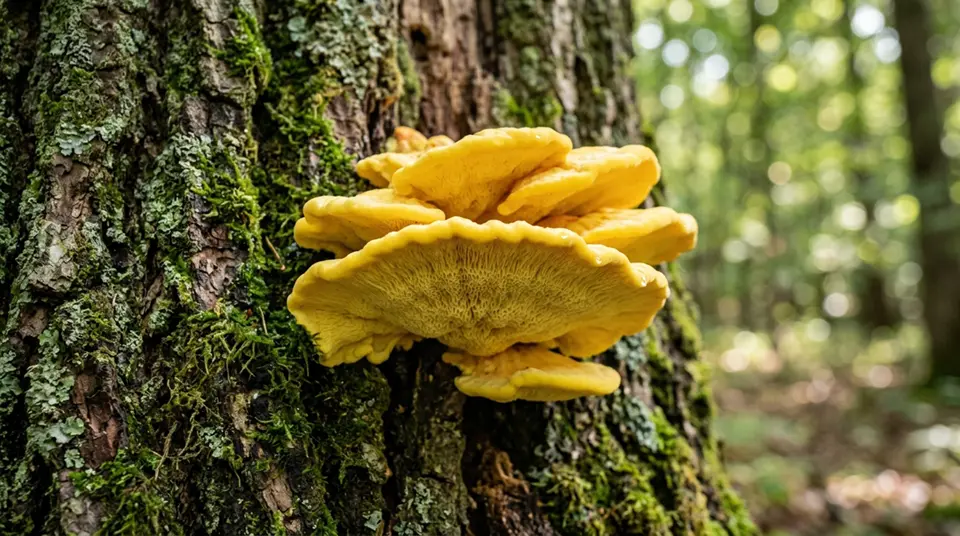
Fungi are among Earth’s most efficient biological recyclers. Through vast networks of microscopic filaments known as mycelium, fungi decompose organic material, release nutrients, and contribute to soil formation. These same abilities may allow fungi to convert nutrient-poor Martian regolith into a substrate capable of supporting crops.
Researchers suggest that fungi could serve as biological pioneers in extraterrestrial agriculture. By breaking down organic waste and interacting with minerals in the regolith, fungal communities may gradually create growing conditions suitable for food production.
One of the most important functions of fungi is nutrient mobilization. Many fungal species can extract essential elements such as phosphorus, potassium, magnesium, and iron from mineral sources. These nutrients are critical for plant development but are often unavailable in forms that plants can directly absorb.
Through biochemical processes, fungi can convert these minerals into plant-accessible nutrients, potentially turning Martian regolith into a more fertile growing medium.
Mycorrhizal Partnerships Could Support Martian Crops
Another major advantage comes from mycorrhizal fungi, which form symbiotic partnerships with plant roots. On Earth, these relationships are found in the majority of terrestrial plants. The fungi extend far beyond root systems, increasing access to water and nutrients while receiving carbohydrates produced through photosynthesis.
In future Martian greenhouses, mycorrhizal fungi could help crops survive under challenging environmental conditions by improving nutrient uptake and reducing stress.
Plant–Fungi Symbiosis
Water Conservation Will Be Critical on Mars
Water management is another critical concern for Mars agriculture. Water will be a limited and valuable resource for any human settlement. Fungal mycelium naturally improves soil structure and water retention, helping to maintain moisture around plant roots.
Scientists believe that integrating fungal systems into agricultural infrastructure could significantly increase water-use efficiency and reduce resource consumption.
Benefits of Fungal-Enhanced Agriculture
| Function | Potential Benefit on Mars |
|---|---|
| Nutrient Mobilization | Increased crop productivity |
| Mycorrhizal Partnerships | Improved nutrient uptake |
| Water Retention | Reduced irrigation requirements |
| Organic Waste Recycling | Closed-loop sustainability |
| Soil Formation | Conversion of regolith into growing substrate |
Generated by AI based on NASA, ESA, and fungal ecology research.

Fungi Could Power Closed-Loop Recycling Systems
Beyond farming, fungi may also contribute to waste recycling systems. Long-duration space missions require efficient methods of converting biological waste into reusable resources. Fungi are capable of decomposing plant residues, food scraps, and other organic materials, returning nutrients to the agricultural cycle.
This closed-loop approach is considered essential for sustainable life-support systems in space.
Researchers are also exploring the potential of fungal mycelium as a construction material. Under controlled conditions, mycelium can grow into lightweight, durable structures that may be used for insulation, packaging, and even components of future habitats.
Such biological materials could reduce the need to transport large quantities of construction supplies from Earth, lowering mission costs and increasing self-sufficiency.
Why Fungi Are Ideal for Space Applications
Fungi are particularly attractive candidates for space applications because of their resilience. Certain species have demonstrated the ability to survive extreme temperatures, radiation exposure, dehydration, and nutrient-poor environments. Some fungi have even been observed thriving in highly radioactive locations on Earth.
These characteristics suggest that fungi may be better adapted to the harsh conditions associated with extraterrestrial environments than many other organisms.
Experiments conducted in space have further strengthened scientific interest in fungal applications. Studies aboard orbital research platforms have shown that fungi can grow and function under microgravity conditions, providing valuable data for future space agriculture programs.
Understanding how fungi behave in space environments may help researchers design biological systems capable of supporting long-term exploration missions.

Fungi as Ecosystem Engineers on Mars
The concept extends beyond simple food production. Scientists increasingly view fungi as ecosystem engineers capable of creating biological infrastructure on Mars. Their ability to recycle nutrients, support plant growth, process waste, and potentially contribute to construction makes them uniquely versatile organisms for extraterrestrial settlement.
Rather than relying entirely on technological solutions, future Martian habitats may combine engineering with biological systems modeled after Earth’s natural ecosystems.
Researchers caution that many technical challenges remain. Scientists must determine which fungal species perform best under Martian conditions, how biological communities can be maintained safely, and how these systems will interact with artificial habitats over extended periods.
However, growing evidence suggests that fungi may become one of the most valuable biological tools available for future space exploration.
Building Sustainable Life Beyond Earth
The research highlights a broader shift in thinking about human expansion beyond Earth. Sustainable settlement may depend not only on advanced spacecraft and life-support technology but also on the biological processes that have supported ecosystems on Earth for hundreds of millions of years.
If successful, fungi could help transform barren Martian regolith into productive farmland, providing food, recycling resources, and creating the ecological foundation necessary for long-term human presence on the Red Planet.
From Regolith to Farmland
Generated by AI based on NASA Mars habitat and fungal agriculture research.
What appears today as a humble organism hidden beneath forest floors may ultimately become one of humanity’s most important partners in the search for sustainable life beyond Earth.
References
Rillig MC., Mummey DL. (2006). Mycorrhizas and Soil Structure. New Phytologist.
According to ASGARDIA