According to CLIMATE WIRE
The Construction Crisis and the Quest for a Carbon Cure
The global construction industry is a colossus, responsible for a significant portion of the world’s carbon emissions and landfill waste. Concrete and steel—the foundational pillars of our modern urban landscape—come with a heavy environmental price tag. The pursuit of genuinely sustainable building materials has become one of the most urgent challenges for architects and engineers aiming for a “net zero” future.
This quest for a cleaner, greener alternative has led researchers not to a high-tech lab synthesis, but to a humble, living organism found beneath the forest floor: mycelium.
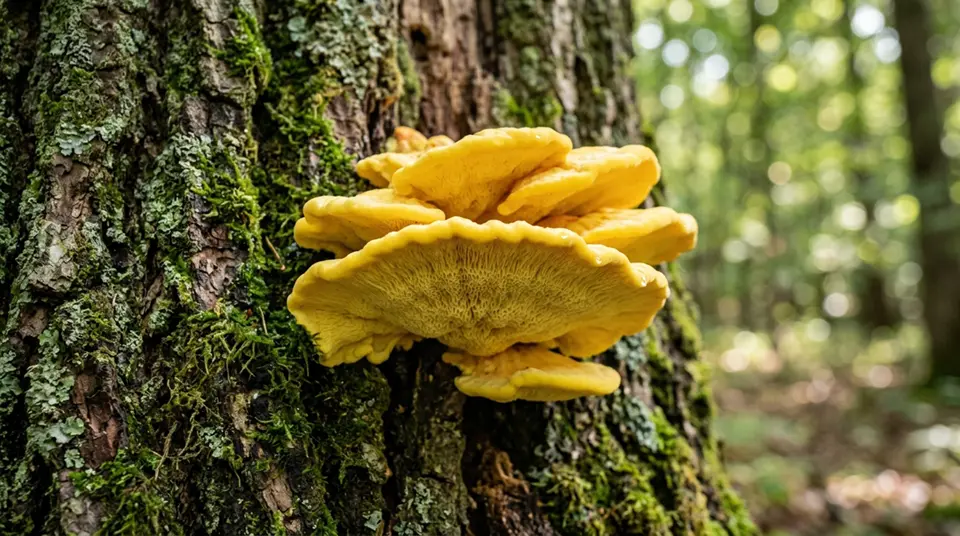
Mycelium is the intricate, root-like network of threads, or hyphae, that constitutes the vegetative part of a fungus. It is the invisible architect of nature, constantly decomposing organic matter. This natural process—occurring without heat, pressure, or toxic chemicals—holds the key to a revolutionary shift in construction: a shift from resource extraction to bio-fabrication.

Source: Wikimedia Commons — CC BY-SA 4.0
The Biomaterial Revolution: Growing Your Own Brick
The process of turning this delicate network into industrial-grade building material is elegantly simple and fundamentally circular. It begins with low-value agricultural waste—such as corn husks, straw, or wood chips—which serves as the nutrient-rich substrate. This waste is mixed with specialized fungal spores or mycelial cultures. The mycelium then begins to grow, consuming the organic waste and, in a matter of days, self-assembling into a dense, interlocking matrix.
This natural binding process, often termed “biocycling” or “bio-fabrication,” produces a composite material that is then dried and compressed. The result is a material that can be molded into virtually any shape—bricks, panels, insulation boards, or custom architectural components—using minimal energy, often just room temperature and basic agricultural waste.
The material’s production is inherently carbon-negative or carbon-neutral, as the fungus is primarily using upcycled waste and sequestering carbon during its growth.
The Material’s Miraculous Properties
What elevates mycelium from a novelty to a genuine game-changer are its intrinsic physical properties. It possesses a suite of characteristics that challenge traditional building materials:
- Insulation: Mycelium-based composites exhibit excellent thermal and acoustic insulation properties, making them highly effective for energy-efficient buildings and noise reduction.
- Fire Resistance: Many mycelium materials are naturally fire-retardant. Unlike chemical-based retardants, they often burn cleanly, emitting only water and carbon dioxide (Frontiers in Materials, 2023).
- Sustainability and End-of-Life: Mycelium is biodegradable, meaning it can be composted at end-of-life, returning nutrients to the soil and leaving zero toxic residue—a true circular economy achievement.

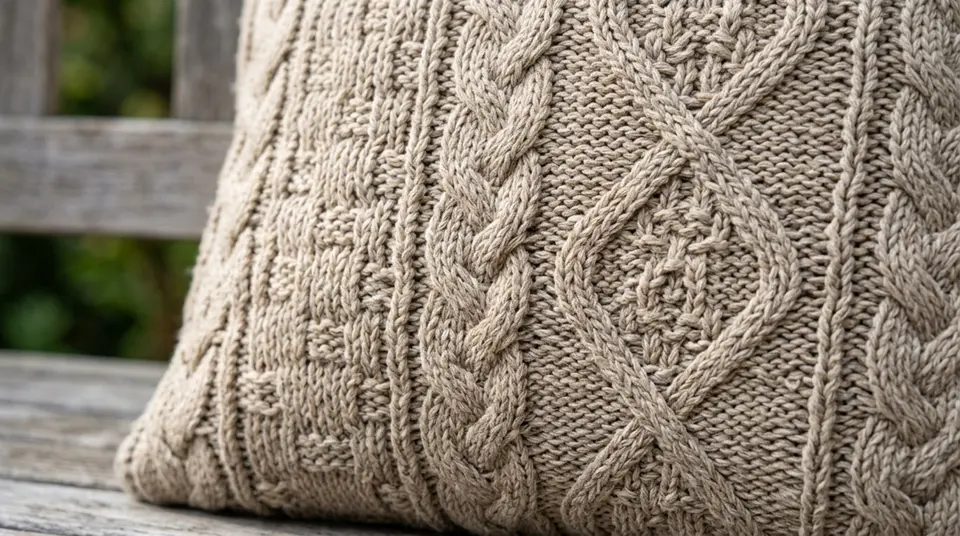
Source: Wikimedia Commons — CC BY-SA 4.0
The Practical Limits and the Road Ahead
Despite its revolutionary potential, mycelium is not yet ready to completely replace our current heavy-duty materials. The primary limitation lies in its structural strength. While mycelium boasts a remarkable strength-to-weight ratio, its compressive strength remains far below that of reinforced concrete.
For now, its most promising applications lie in non-load-bearing elements such as:
- Insulation and Acoustic Panels: Replacing synthetic foams and plastics.
- Interior Partitions and Cladding: Lightweight, aesthetic finishes.
- Packaging: Substituting petroleum-based foams.
Researchers are experimenting with hybrid materials that combine mycelium with polymers, cellulose, or bio-resins to increase mechanical stability and meet global building codes.
Projects like Hy-Fi—a 40-foot tower built from 10,000 mycelium bricks in New York—and a pilot house in Namibia developed with NASA showcase the scalability and creative possibilities of this living material.
A Paradigm Shift in Architecture
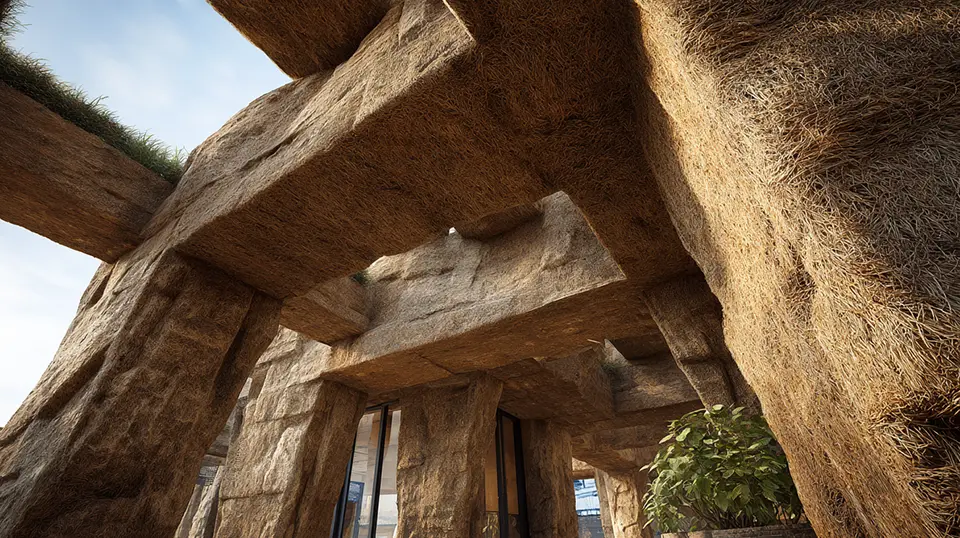
The excitement surrounding mycelium is palpable not just in laboratories, but in architectural firms around the world. This material gives designers a new creative vocabulary—structures that mirror nature’s logic through organic geometry and local production.
It signals a profound philosophical shift: moving from extracting resources to cultivating them. Instead of burning fuel and emitting carbon, architects can literally grow buildings.
Mycelium is more than an eco-friendly substitute; it’s a living technology offering a viable path to a sustainable, low-carbon construction future. Though standardization and certification remain hurdles, its invisible root network has already started reshaping the foundations of green architecture.

Source: Wikimedia Commons — CC BY 4.0
References
- MDPI Materials, 2022. Thermal and Acoustic Properties of Mycelium-Based Insulation Panels.
- NASA Feature: Mycelium Bricks Could Revolutionize Habitat Construction on Mars and Earth.
According to CLIMATE WIRE