According to YAHOO! NEWS
A Fungus Rooted in Mountains and Medicine
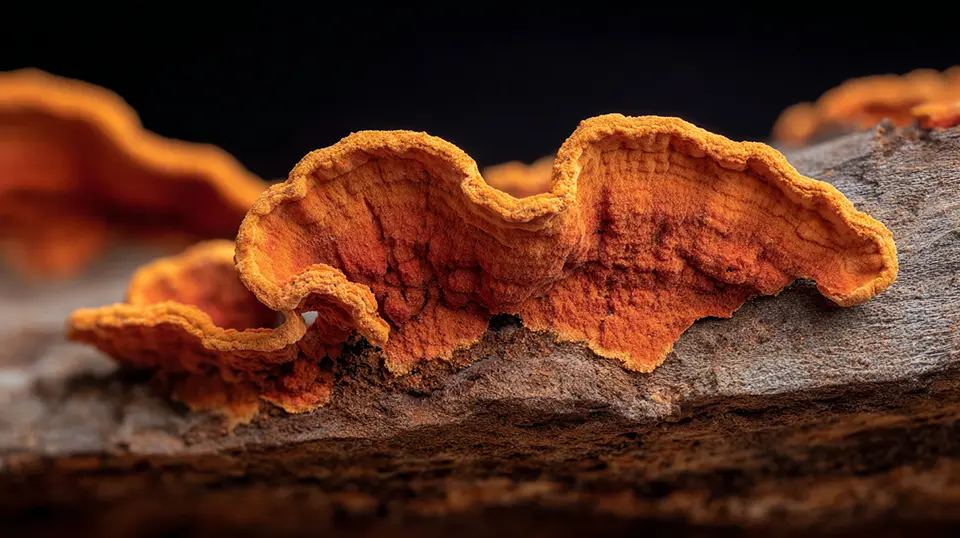
Deep in the mountainous forests of Taiwan, tucked into the decaying heartwood of the endangered Cinnamomum kanehirae tree, lives one of the rarest and most sought-after fungi in Asia: Antrodia cinnamomea, also known as Taiwanofungus camphoratus.
For centuries, this orange-red fungus has been used in traditional Taiwanese medicine to treat everything from liver disease to fatigue. Regarded as a healing treasure, it’s long been prized in the herbal marketplace — often fetching sky-high prices. Yet despite its cultural and anecdotal acclaim, its medicinal efficacy has remained a mystery to modern science.
Now, in a breakthrough study led by researchers from National Taiwan University (NTU) and National Yang Ming Chiao Tung University (NYCU), that mystery is beginning to unravel — and the implications could ripple far beyond Taiwan.
The team has identified a sulfated sugar molecule produced by Antrodia cinnamomea that can kill cancer cells in the lab. This compound, known as N50 F2, may be one of the most promising natural anticancer agents discovered in recent years.

Source: Wikimedia Commons, CC BY-SA 4.0
The Sugar That Fights Cancer
At the heart of this discovery lies a group of molecules called sulfated polysaccharides (SPS) — complex sugars that combine glucose, galactose, and sulfate. These molecules aren’t just structural byproducts of fungal growth; they’re biologically active compounds with potential pharmacological power.
In this case, one particular SPS, N50 F2, showed two remarkable effects in cell-based studies:
- Anti-inflammatory action: It significantly reduced markers of inflammation, which are often linked to chronic diseases and cancer progression.
- Anticancer action: It directly inhibited and killed lung cancer cells in vitro — a result that, while preliminary, is highly significant.
While earlier research had hinted at A. cinnamomea‘s anticancer potential, this is the first time a specific, isolated compound has been identified and linked directly to measurable anticancer effects.

Source: Wikimedia Commons, CC BY-SA 4.0
Why This Discovery Matters
Cancer remains one of the most pressing health challenges worldwide, with an estimated 10 million deaths annually. Despite decades of progress in treatment, certain cancers remain resistant to existing drugs, and side effects from chemotherapy continue to limit quality of life.
Natural products — including those derived from fungi — have historically played a crucial role in drug discovery. Penicillin, cyclosporine, statins, and even some chemotherapeutic agents like paclitaxel all originated from nature.
This new research reinforces the idea that nature, especially fungi, remains one of our most underexplored pharmaceutical frontiers.
From Field to Flask: Controlling the Growth
One of the major hurdles with Antrodia cinnamomea has always been access. Naturally, it grows only on Cinnamomum kanehirae, a tree now considered endangered. For years, harvesting the fungus involved destructive practices that harmed fragile ecosystems.
However, the current study has taken a major step forward: researchers have successfully cultivated A. cinnamomea in lab-controlled environments, bypassing the need to harvest from the wild.
More importantly, they developed methods to stimulate the fungus into producing greater quantities of SPS molecules, including N50 F2 — an essential step toward scalability and pharmaceutical development.
This lab-based approach not only protects native ecosystems but also opens the door to mass production of the fungus for both research and therapeutic use.

Source: Wikimedia Commons, CC BY-SA 4.0
What the Science Shows (So Far)
In a series of laboratory experiments, the research team observed:
- A significant reduction in pro-inflammatory cytokines — chemical messengers that drive inflammation and disease
- Strong inhibition of lung cancer cell growth, including signs of apoptosis (programmed cell death)
- No adverse effects on healthy cell lines (in vitro), suggesting selectivity
While these findings are promising, the scientists are quick to caution: cell studies are just the beginning. What works in a petri dish may not always succeed in the human body. Nonetheless, N50 F2 has earned a place on the growing list of bioactive fungal compounds worth pursuing.
What Makes This Fungus Special?
Several features set Antrodia cinnamomea apart:
- Geographical rarity – Endemic to Taiwan, it has evolved in a unique ecological niche, likely contributing to its distinct chemical profile.
- Traditional use – Its long-standing role in herbal medicine suggests a foundation of safety and bioactivity.
- Cultivability – Unlike some rare fungi, A. cinnamomea can be grown under lab conditions, making drug development feasible.
- Compound diversity – Beyond SPS, the fungus contains triterpenoids and benzenoids, which may also have pharmacological roles.
The discovery of N50 F2 is just the beginning; researchers believe more novel compounds await within the fungus’s metabolite library.
Looking Ahead: From Petri Dish to Patient
What needs to happen next?
- Animal trials – Testing efficacy, dosage, and toxicity in living systems
- Clinical trials – Human studies to confirm safety and effectiveness
- Pharmacokinetics – Understanding how the body absorbs, distributes, metabolizes, and excretes the compound
- Drug formulation – Developing ways to deliver the compound effectively (e.g., capsules, injections, infusions)
Dr. Chia-Chuan Chang, a pharmaceutical scientist on the team, remains cautiously optimistic:
“With a fully controlled production and extraction process, we are optimistic about future applications in both health supplements and clinical treatments.”
Natural Solutions in a Synthetic World
The modern pharmaceutical industry often leans on synthetic chemistry, yet some of its most powerful treatments are drawn from natural organisms. As drug resistance rises and side effects become more burdensome, interest in natural compounds with multi-targeted effects has surged.
Fungi, with their rich biochemical arsenals and symbiotic histories, are emerging as stars in this renaissance.
The inclusion of Antrodia cinnamomea into the global drug discovery conversation is a reminder that innovation often begins where science and tradition meet — in forests, in folklore, and in fungi.
The Broader Potential of SPS Molecules
Interestingly, sulfated polysaccharides like N50 F2 aren’t limited to this fungus. They’ve been studied in marine algae, bacteria, and other fungi for potential uses in:
- Antiviral therapies
- Blood clot prevention
- Immunomodulation
- Wound healing
This means that beyond cancer, the SPS produced by A. cinnamomea may one day serve broader therapeutic roles — especially in immune-related and chronic inflammatory conditions.
Conclusion: A Fungus Worth Watching
This rare Taiwanese fungus is more than a traditional remedy — it may be a gateway to the next generation of cancer treatments. By linking ancient wisdom with modern bioscience, researchers are unveiling the power hidden within one of Earth’s most humble organisms.
There’s still much work ahead. But as the story of Antrodia cinnamomea unfolds, it offers a powerful lesson: sometimes the future of medicine begins not in a laboratory, but in the quiet, damp corners of a mountain forest.

Source: Wikimedia Commons, CC BY-SA 4.0
References
Wikipedia. Taiwanofungus camphoratus (Antrodia cinnamomea).
According to YAHOO! NEWS