According to ABC.NET
Mold growth inside wardrobes is a common household issue, particularly in environments where humidity, limited airflow, and fluctuating temperatures create favorable conditions for fungal development. Recent guidance from household experts highlights practical strategies that individuals can adopt to prevent mold formation in closets and clothing storage spaces. The recommendations focus on moisture control, ventilation improvement, and proper clothing storage practices to reduce the risk of fungal contamination.
Wardrobes are enclosed spaces where clothing and textiles are often stored for extended periods. When moisture becomes trapped inside these confined areas, mold spores that naturally exist in indoor air can settle on fabrics and begin to grow. Because textiles such as cotton, wool, and leather contain organic materials, they provide a suitable nutrient source for fungal colonies.
Experts note that mold inside wardrobes may not always be immediately visible. Early signs often include musty odors or faint discoloration on fabrics. If environmental conditions remain unchanged, mold can spread across clothing and other stored items, potentially damaging materials and creating persistent odors.
Why Wardrobes Are Vulnerable to Mold
Wardrobes frequently experience limited air circulation, which can allow humidity to accumulate. When warm, moisture-laden air enters a cooler storage space, condensation may occur on surfaces such as walls, shelves, and clothing fibers.
This moisture can originate from several sources. Humid weather conditions, damp clothing placed inside wardrobes, or insufficient ventilation within a home may all contribute to elevated humidity levels inside storage areas.
Clothing that has not been completely dried before storage is another common factor contributing to mold growth. Even small amounts of residual moisture can provide enough water for fungal spores to germinate.
Additionally, wardrobes positioned against exterior walls may be particularly susceptible to mold growth. Cold surfaces can encourage condensation, especially during cooler months when temperature differences between indoor air and external walls are more pronounced.
Early Signs of Mold in Clothing Storage
The presence of mold in wardrobes often becomes noticeable through subtle warning signs. One of the earliest indicators is a musty smell that develops within the enclosed space.
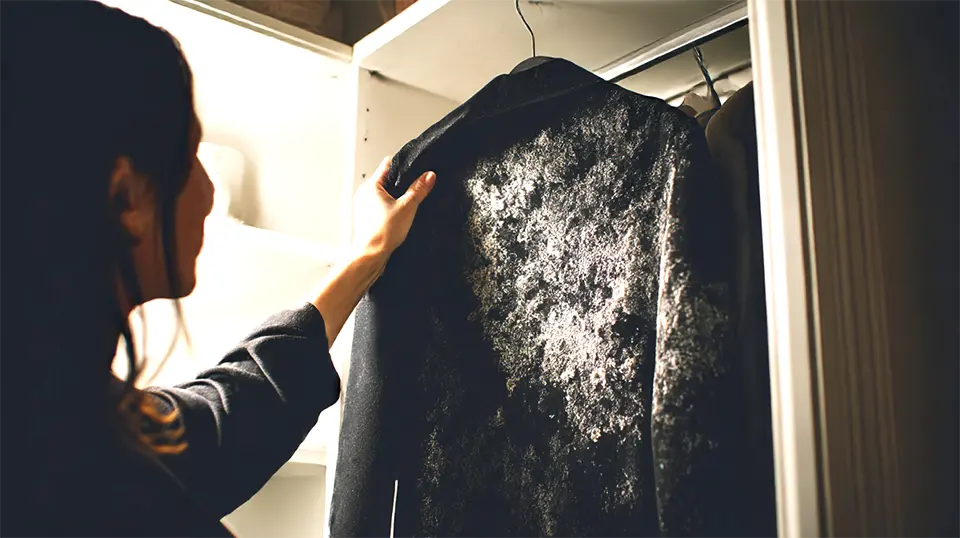
Fabrics may also show faint spots, discoloration, or powdery growths that indicate fungal colonies. In some cases, mold appears as black, green, or white patches on clothing or on the interior surfaces of wardrobes.
If left untreated, mold growth can cause permanent damage to textiles, particularly natural fibers. Leather products, wool garments, and cotton fabrics are especially vulnerable because they contain organic compounds that fungi can metabolize.

Source: Wikimedia Commons, CC BY-SA 3.0
Managing Humidity to Prevent Mold
Controlling humidity is considered the most important strategy for preventing mold growth in wardrobes. Experts recommend maintaining indoor humidity levels within a moderate range to limit fungal development.
Improving airflow within wardrobes can help reduce moisture buildup. Leaving wardrobe doors open periodically allows air to circulate and helps equalize humidity levels between storage spaces and the surrounding room.
Some households also use moisture-absorbing products to reduce humidity within enclosed spaces. Desiccant materials such as silica gel, charcoal, or other moisture absorbers can help capture excess moisture in the air.
In particularly humid climates, mechanical solutions such as dehumidifiers may also be used to regulate indoor humidity levels.

Source: Wikimedia Commons, CC BY-SA 3.0
Proper Clothing Storage Practices
Ensuring that clothing is completely dry before storing it is another key preventive measure. Damp fabrics placed inside wardrobes can quickly create conditions suitable for fungal growth.
Experts recommend allowing clothes to dry thoroughly after washing or exposure to rain before returning them to storage. This practice reduces the amount of moisture introduced into enclosed wardrobe spaces.
Spacing between garments is also important. Overcrowded wardrobes restrict airflow and can trap humidity between layers of fabric. Providing adequate space between clothing items allows air to circulate more freely and helps keep fabrics dry.
Regularly rotating and airing clothing can also reduce the likelihood of mold formation.
Cleaning and Maintenance
Routine cleaning of wardrobes can help remove dust and organic debris that may support fungal growth. Dust particles may contain spores or nutrients that enable mold colonies to establish themselves on surfaces.
Wiping shelves and interior surfaces with appropriate cleaning solutions can help maintain hygienic storage conditions. If mold spots are detected, affected areas should be cleaned promptly to prevent further spread.
Clothing that has been contaminated with mold may require special cleaning methods depending on the type of fabric. Washing garments in appropriate conditions and ensuring thorough drying can help remove spores from textiles.
Environmental Factors in Mold Development
Mold spores are naturally present in indoor and outdoor air, meaning that completely eliminating them is not possible. Instead, prevention focuses on controlling environmental factors that allow spores to grow into visible colonies.
Temperature, humidity, and the availability of organic matter all influence fungal growth. Because wardrobes contain fabrics and often remain closed for extended periods, they can provide an ideal microenvironment for mold development if moisture levels rise.
Understanding how these environmental factors interact allows individuals to adopt practical strategies that reduce the likelihood of contamination.
Common Household Molds
Several fungal species are frequently associated with mold growth on clothing and household materials. These fungi are capable of colonizing textiles and other organic surfaces when moisture is present.
Species belonging to the genera Aspergillus, Penicillium, and Cladosporium are among the most commonly encountered indoor molds. These fungi produce microscopic spores that disperse easily through the air and settle on surfaces.
Another species sometimes found in damp environments is Alternaria, which can grow on fabrics and other organic materials when humidity levels remain elevated.
While these molds are widespread in nature, their growth indoors can be minimized by reducing moisture and improving ventilation.

Source: Wikimedia Commons, CC BY-SA 3.0
Protecting Clothing and Household Items
For households with seasonal clothing storage, mold prevention becomes especially important. Items stored for long periods without airflow may develop fungal contamination if humidity fluctuates.
Experts recommend periodically inspecting stored garments and ensuring that storage spaces remain dry. Using breathable storage containers or garment bags can also help reduce moisture accumulation.
Proper maintenance of wardrobes not only protects clothing but also contributes to healthier indoor air quality within homes.
Preventive Awareness
Mold prevention in wardrobes ultimately depends on understanding the environmental conditions that allow fungal growth. By controlling humidity, improving airflow, and ensuring proper clothing storage practices, households can significantly reduce the risk of mold contamination.
Although mold spores are naturally present in indoor environments, maintaining dry and well-ventilated storage spaces helps prevent them from developing into visible colonies.
As experts emphasize, simple household habits—such as drying clothing thoroughly, avoiding overcrowded closets, and monitoring humidity levels—can play an important role in preserving clothing and maintaining clean storage environments.
References
WHO Guidelines for Indoor Air Quality: Dampness and Mould
U.S. Environmental Protection Agency (EPA) – Mold and Moisture Control
According to ABC.NET